Small Apartment Bedroom Makeovers: Before and After Styling Secrets You Need to Know
Summary
- Introduction: The Magic of a Bedroom Transformation
- Assessing Your Small Bedroom Space: The 'Before' Phase
- Secret 1: Maximizing Vertical Space and Lighting
- Secret 2: Visual Illusions with Paint and Mirrors
- Secret 3: Budget-Friendly Bedding and Texture Upgrades
- The Final Reveal: Curating Your 'After' Moment
- Frequently Asked Questions (FAQ)
Introduction: The Magic of a Bedroom Transformation
Living with a cramped sleeping corner often feels like a daily negotiation between storage boxes and personal style. You don't need a landlord's renovation approval or deep pockets to pull off a dramatic refresh. Thoughtful styling and clever budget bedroom ideas make small apartment bedroom makeovers achievable and distinctively yours.
- Prioritize floor clearance over bulky standalone furniture.
- Layer textural elements to introduce dimension without adding visual clutter.
- Rely on ambient wall illumination to create perceived depth.
Assessing Your Small Bedroom Space: The 'Before' Phase
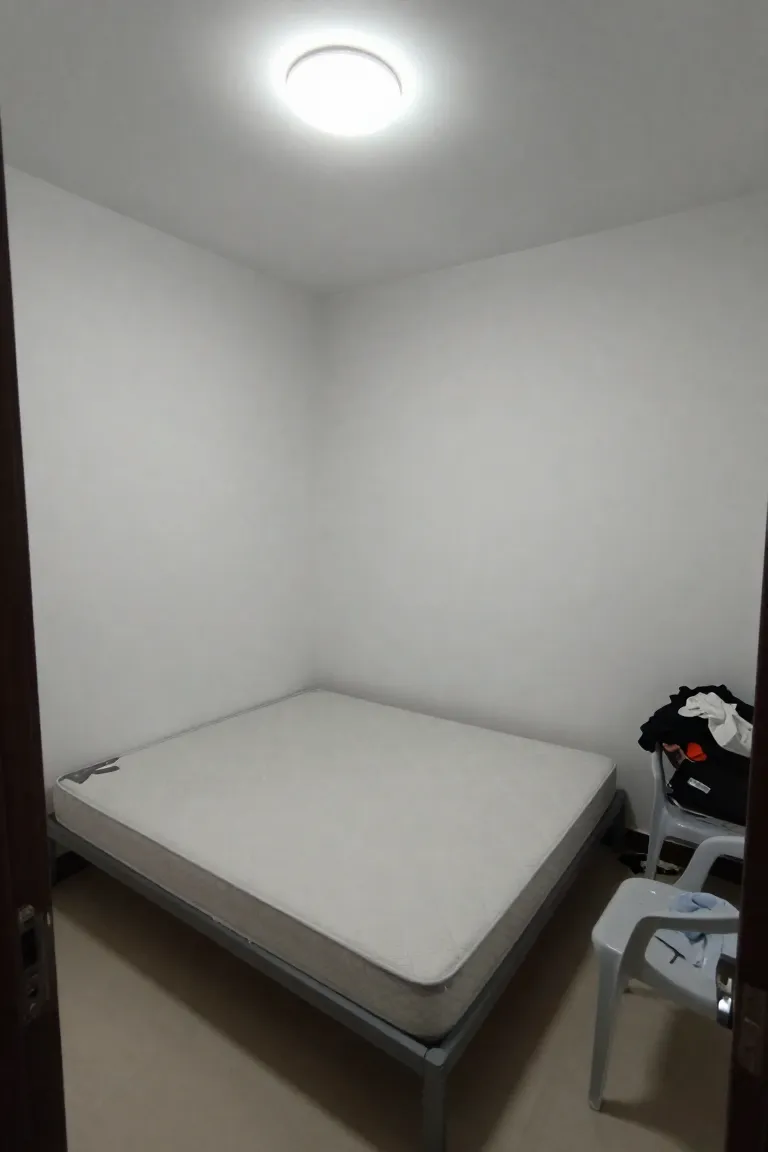
Before ordering new accent pillows or mood lighting, strip the room down to its bare essentials. Removing visual noise lets you study the raw architecture of the space, noting where natural daylight hits during the morning and how doors swing open. Mapping out your apartment bedroom layout in this stripped-down state prevents expensive impulse purchases that crowd awkward corners or block baseboard heaters.
In rooms with offset windows or shallow alcoves, precise measurements become your strongest design tool. A thoughtful small bedroom before and after relies on working alongside existing quirks rather than forcing symmetry where it simply cannot fit. Once you map out clearances around the bed frame and closet door swing, every future addition has an intentional home.
Secret 1: Maximizing Vertical Space and Lighting
When floor area is scarce, your walls offer the most underutilized real estate in the entire room. Drawing sightlines upward toward the ceiling immediately creates an open, unburdened atmosphere that counteracts tight perimeter walls. By prioritizing wall-mounted storage and lifting fixtures off the floorboards, maximizing vertical space changes how you physically navigate the room every single morning.
Tabletop lamps consume precious bedside surface area that could otherwise remain clean and uncluttered. Smart small bedroom lighting hacks, such as mounting swing-arm brackets or slender pendants beside the headboard, direct warm illumination right where you need it while preserving clear sightlines across the floor. This simple shift keeps shadows from pooling in corners and makes the entire perimeter feel expansive.
Swap Clunky Nightstands for Floating Shelves
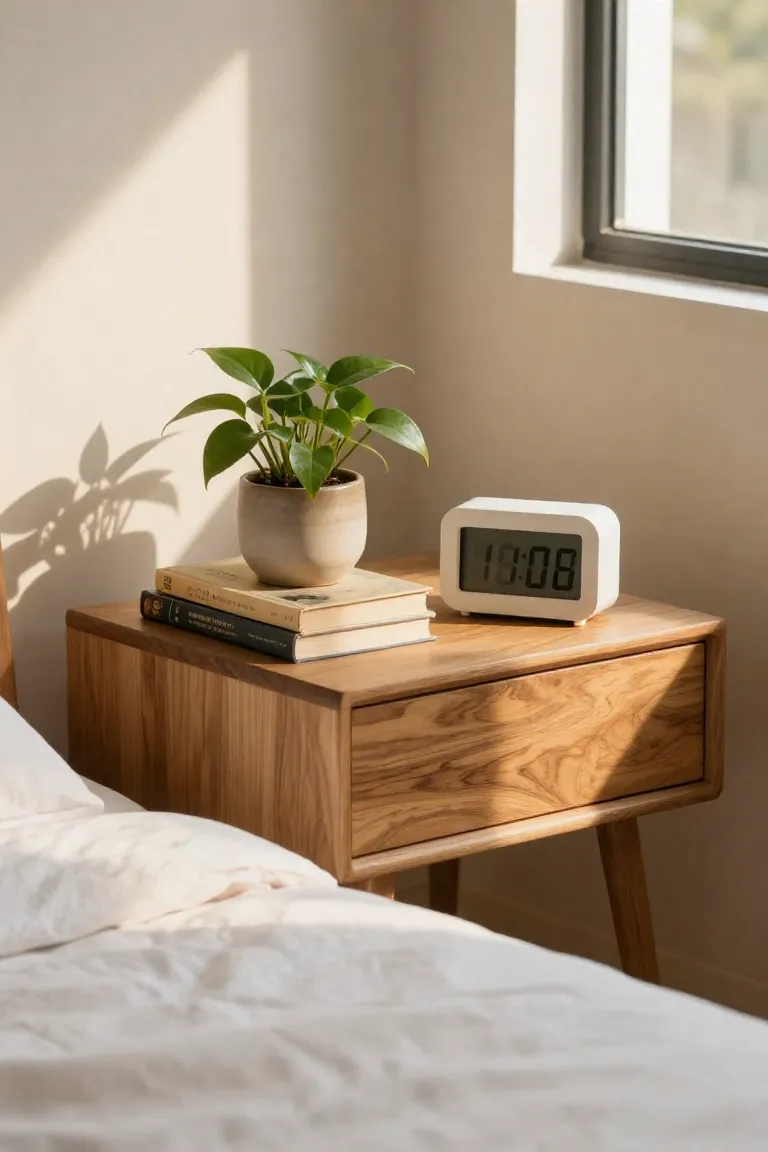
Anchor the open floor feeling by mounting a streamlined wall ledge right beside your mattress instead of squeezing in heavy drawer units. Solid box tables choke off valuable perimeter flooring, whereas airborne surfaces allow light to travel uninterrupted from wall to baseboard. When you explore practical floating nightstand ideas, select a piece finished in warm oak or crisp matte white that sits level with the top of your sleeping setup. This visual lightness instantly tricks your eyes into reading the surrounding zone as uncluttered and spacious.
On the curated surface, follow a strict three-piece balance so the small ledge never turns messy. A pocket-sized ceramic clock gives you analog timekeeping, accompanied by a single hardcover book tucked flat beneath a trailing mini pothos. By restricting clutter to intentional essentials, this space saving bedroom furniture choice frees up room for floor baskets beneath while preserving an airy tailored bedside aesthetic.
Install Plug-In Wall Sconces
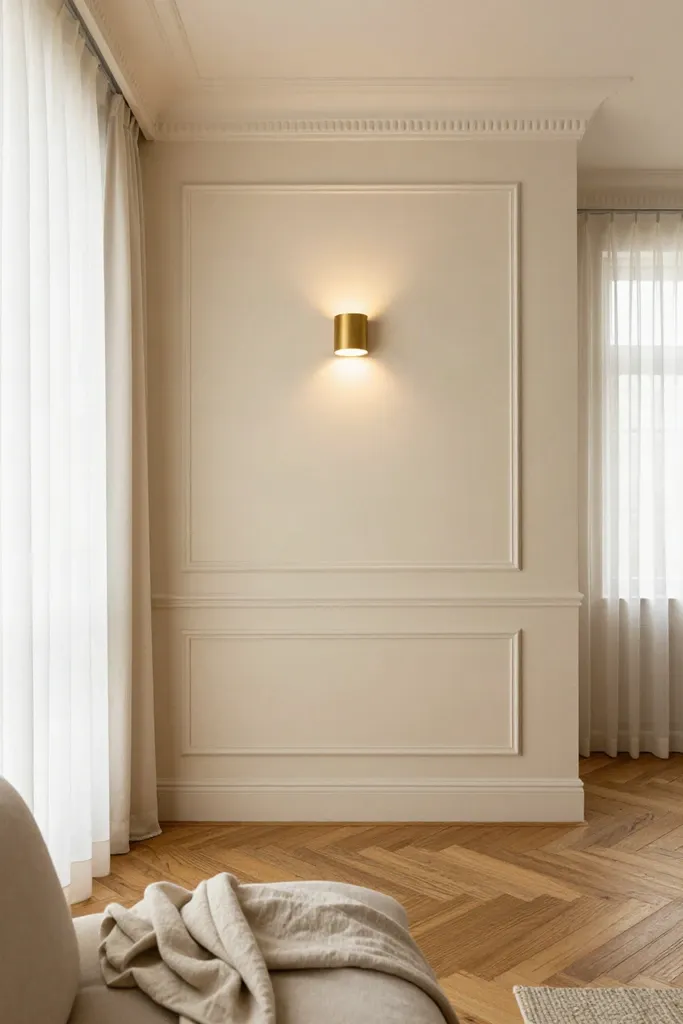
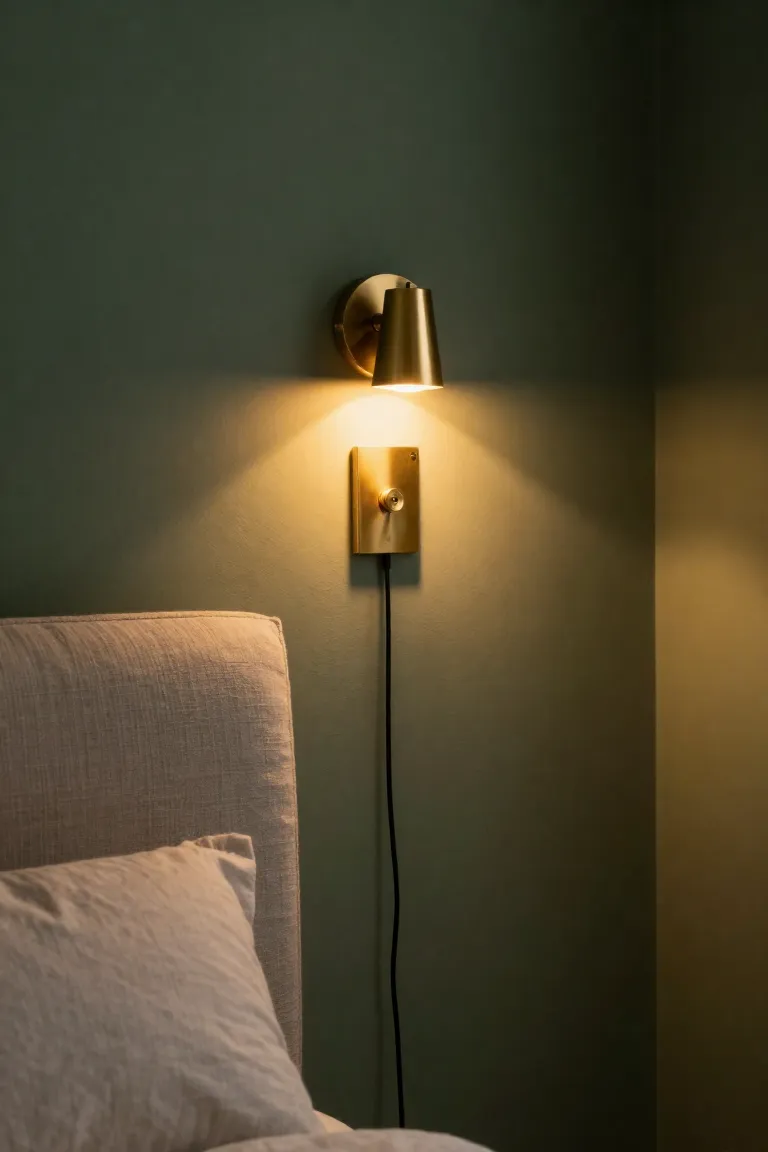
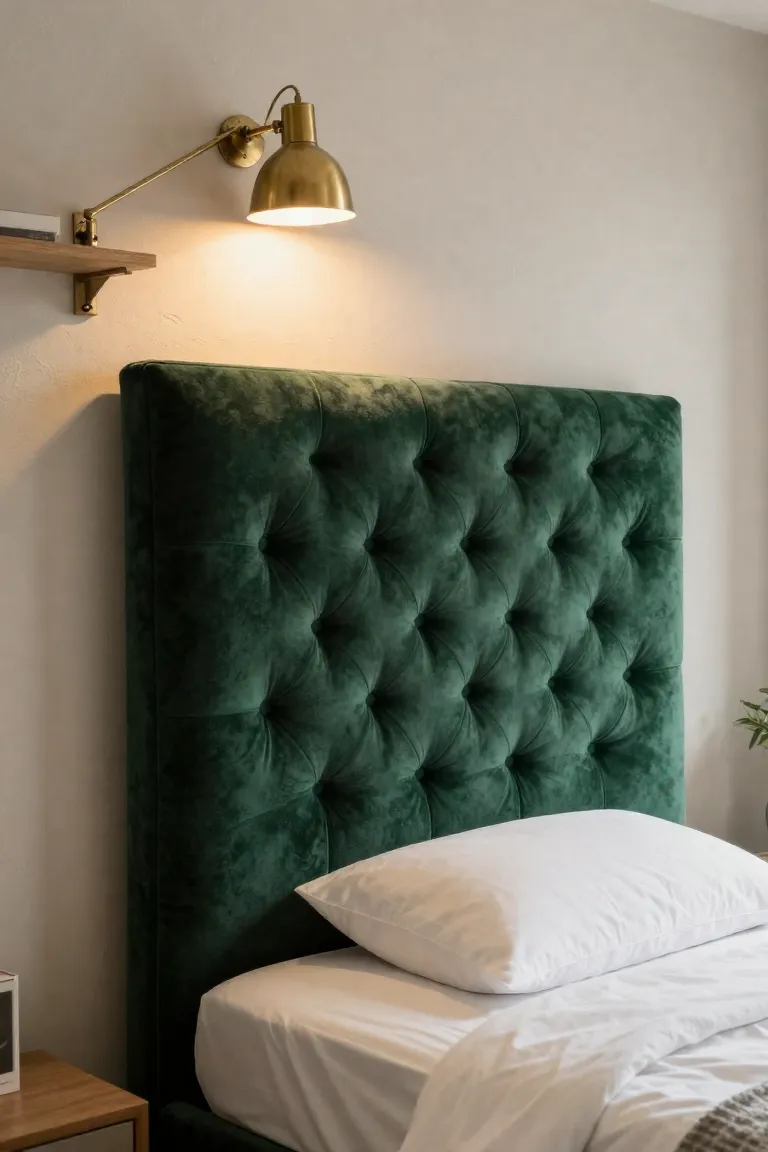
Tearing into drywall to hardwire electrical boxes rarely makes sense in leased quarters, where deposit safety is paramount. Mounting paired plug in wall sconces bedroom styles provides an immediate architectural upgrade without requiring an electrician or permanent wiring alterations. Secure each swing-arm or brass fixture roughly six inches outside your headboard boundary and twenty-four inches above mattress height. The exposed textile cords drop down cleanly, converting utilitarian cable lines into intentional design details when paired with adhesive cord channels.
Both sides of your sleeping quarters gain symmetry from this arrangement, mimicking the serene order of an upscale boutique suite. As a practical renter friendly lighting solution, wall fixtures keep your bedside perches free for morning essentials while providing tailored reading angles. You get warm, directional glow right where your evening routine demands it, completely sidestepping harsh overhead ceiling bulbs that wash out small interiors.
Secret 2: Visual Illusions with Paint and Mirrors
Physical square footage might stay fixed on your floor plan, but clever sightline manipulation can rewrite how boundary lines register to the human brain. Mastering visual illusions small bedroom layouts require starts with harnessing bounced illumination and softening hard architectural corners. When you align high-sheen glass panels directly across from a natural window, ambient rays double their reach, dissolving the sensation of boxed-in perimeter walls. Pair this bounce with smart apartment painting hacks like feathering ceiling trim in the identical undertone as vertical drywall. This deliberate blurring of boundaries prevents your vision from snagging on abrupt color breaks, causing ceilings to look taller and compact nooks to feel substantially more expansive.
The Power of an Oversized Floor Mirror
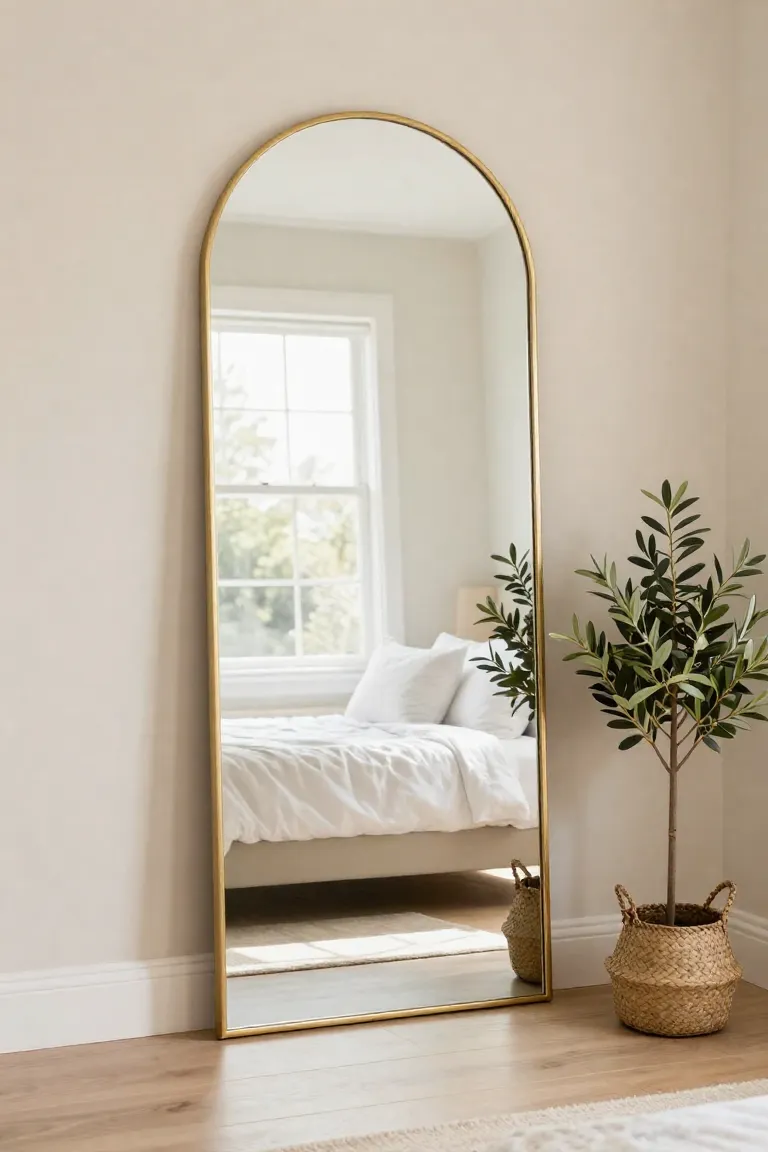
Leaning a tall, slim glass panel against your shortest wall immediately alters how daylight behaves in tight quarters. Positioning an oversized floor mirror bedroom layout directly across from your primary window catches raw morning sun and reflects outdoor scenery back into the interior, giving the impression of extended square footage. Because reflective surfaces bounce natural illumination deep into shadowed corners, you get the visual effect of an extra window without knocking down any drywall.
Under soft evening lamps, this reflective angle continues to work in your favor by doubling the reach of bedside sconces. Thin wood or blackened metal profiles keep the footprint slim so you never sacrifice precious walking clearance alongside the mattress. Angled glass remains one of the simplest mirrors to make room look bigger, turning a boxy layout into an airy restful retreat with zero structural renovation needed.
Color Drenching for Endless Depth
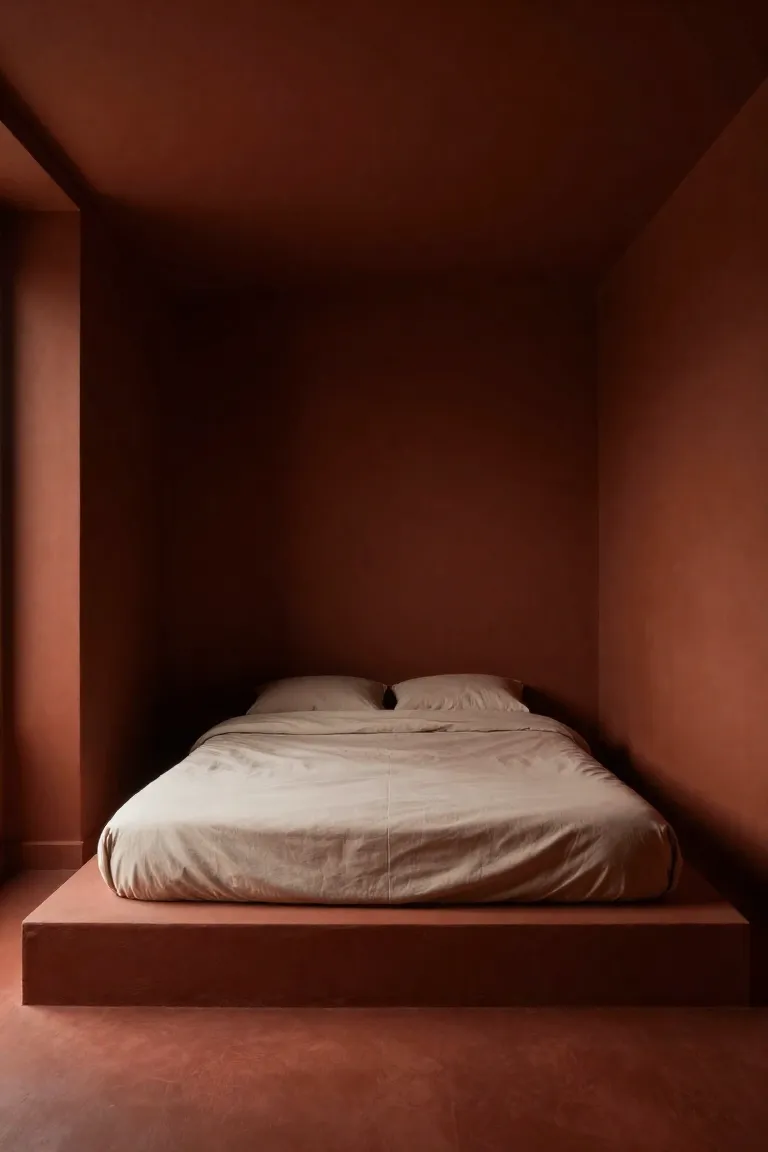
Wrapping every architectural surface in a single cohesive shade tricks the eye into seeing continuous planes. By coating the baseboards, window casings, drywall, and crown molding in the exact same hue, you effectively erase contrasting shadow lines that typically box in tight quarters. Committing to color drenching small room layouts softens harsh 90-degree corners, turning disjointed architectural cutouts into a unified envelope of color. While many shy away from deep tones in cramped layouts, applying rich forest green or velvety navy as dark paint in small bedroom setups actually produces a receding effect, making perimeter walls appear to fall away into background shadow. Pair this monochromatic sweep with eggshell on drywall and a durable satin on millwork to introduce subtle light refraction without breaking the flow of pigment. The finished space feels cocooning and layered rather than cramped, framing your furniture as intentional focal points against an expansive canvas.
Secret 3: Budget-Friendly Bedding and Texture Upgrades
Once your background walls and reflective glass are dialed in, shifting your attention toward tactile surfaces creates a strong visual payoff in the room. Because the mattress inevitably commands the vast majority of physical square footage, dressing it intentionally sets the tone for your whole visual layout. Implementing smart budget bedding ideas does not require replacing entire sheet sets; swapping out synthetic duvet covers for a breathable stonewashed cotton base immediately softens the look while inviting casual comfort. From there, thoughtful bedroom texture styling elevates basic utility through tactile layering. Drape a chunky waffle throw diagonally across the footboard, tuck in two crisp linen euro shams behind your sleeping pillows, and choose a ribbed lumbar cushion for subtle geometric contrast. This focused combination of smooth cotton, coarse weaves, and plush knits pulls the eye inward, delivering a boutique hotel aesthetic on a realistic personal budget.
Layering Linens for a Boutique Hotel Vibe
Creating a polished sleeping sanctuary comes down to three deliberate tiers that add volume without overwhelming your floor plan. Begin with crisp white or warm oat sheet sets made from washed cotton-linen blends, which offer relaxed texture at an accessible price point. Prop two oversized Euro shams against the wall to draw the eye upward and disguise a simple headboard, then spread your primary quilt flat across the mattress to achieve that crisp boutique hotel bedroom style.
At the foot of the mattress, fold a lightweight duvet into thirds and drape a waffle-knit or fringed throw across the corner for tactile contrast. This structured arrangement gives you the lush depth of a layered bedding look while muted taupes, soft greys, and warm ivories keep visual clutter at bay. Everything feels cohesive and tailored, naturally inviting you to sink right in at the end of the day.

DIY Upholstered Headboards
A towering backboard instantly grounds a compact sleeping quarters, establishing a clear focal point that makes the entire room feel taller. You can craft a striking DIY upholstered headboard over a single weekend by securing high-density foam to a half-inch sheet of cut plywood, wrapping it in polyester batting, and stapling a durable linen-look drop cloth or bouclé fabric tightly around the back edges. Mounting this tall panel directly to the wall with French cleats keeps your floor footprint completely clear while giving you designer proportions on a sensible custom headboard budget. The resulting padded silhouette softens ambient acoustics and provides cozy back support during late-night reading sessions, all while protecting your drywall.
The Final Reveal: Curating Your 'After' Moment
Stepping back to photograph your transformed space marks a satisfying milestone of your styling project. Natural morning light captures the true depth of your textiles and paint tones, framing a photogenic small bedroom reveal that proves square footage never limits good design. Preserving this calm, clutter-free energy requires simple daily reset rituals so your room stays camera-ready every single week.
- Keep flat surfaces completely clear of charging cables, daily mail, and loose pocket items by stashing essentials inside woven bedside baskets.
- Tuck spare throw blankets and seasonal pillows inside an under-bed storage bin immediately after dressing the bed each morning.
- Adopt straightforward apartment organization tips like nightly five-minute surface wipes to keep your compact retreat consistently organized.

Frequently Asked Questions (FAQ)
Maintaining that clutter-free routine is simpler when your setup accounts for real-world lease constraints and everyday habits right from the beginning. Planning your approach before spending money helps you avoid layout missteps and prevents buyer remorse while protecting your security deposit. A solid foundation involves understanding realistic expense allocations, selecting temporary fixtures that produce the cleanest look, and maintaining clear walkways around your furniture.
- Realistic expense allocations between secondhand finds and foundational bed linens.
- Damage-free fixture swaps that bypass hardwiring and keep surfaces patch-free.
- Scale and placement adjustments to ensure bulky furniture never cramps walkway flow.
- Practical cleaning routines to prevent dust accumulation on floating surfaces and open storage.
How much does a small bedroom makeover typically cost?
Transforming a compact sleeping area rarely requires an overwhelming investment when you direct funds toward the surfaces that catch your eye first. Your overall bedroom makeover cost can comfortably settle between $200 and $500 by prioritizing high-impact visual zones like the bed wall, ambient lighting, and natural fiber sheets. Sourcing quality budget bedroom decor through thrift stores, online marketplaces, and quick DIY refinishing projects lets you secure rich texture without retail markup.
- Paint and color drenching supplies: $40 to $70 for two gallons of durable eggshell paint and quality painter tape.
- Textiles and bedding layers: $90 to $190 for washed cotton duvets, textured linen throws, and plush pillow inserts.
- Secondhand furnishings and lighting: $50 to $140 for vintage wooden frames, glazed ceramics, and corded plug-in sconces.
- Floating hardware and wall mounts: $20 to $45 for adhesive strips, anchors, and brackets that protect plaster.
What are the most renter-friendly bedroom styling hacks?
Renting an apartment never means resigning yourself to bland cookie-cutter walls or sterile overhead light fixtures. Incorporating clever renter friendly bedroom ideas gives you total styling freedom while safeguarding your deposit when your lease wraps up. Start by framing the bed zone with removable peel-and-stick wallpaper, which strips away cleanly at move-out without peeling paint or leaving behind sticky residue. Hang floor-length linen drapes using spring tension rods tucked inside window recesses to avoid drilling anchor holes into drywall. Mount warm plug-in sconces alongside your headboard using heavy-duty adhesive strips, then run matching fabric-wrapped cords down near the baseboards. Mounting small framed sketches or botanical prints with command hooks for art completes your gallery wall, giving you layered damage free apartment decor that packs away in an afternoon without requiring spackle or sanding.