Moody Dark Academia: Small Apartment Decorating Rules for Dramatic Studio Spaces
Summary
- The Architecture of Shadow: Rethinking Small Studio Proportions Through Dark Academia
- Architectural Envelopes: Saturated Color Drenching and Vertical Joinery
- Atmospheric Illumination: Low-Kelvin Layering and Antiquarian Textures
- Studio LRV Calibration and Ambient Low-Light Layering Specification Matrix
- Small-Space Dark Academia Pitfalls: Muddy Undertones and Light Absorption Traps
- Curating Atmospheric Depth: The Balanced Studio Implementation Protocol
The Architecture of Shadow: Rethinking Small Studio Proportions Through Dark Academia
Painting a dark academia studio apartment in deep, saturated tones sounds risky when square footage is tight, yet crisp white walls often highlight cramped room boundaries. By softening distinct perimeter lines, moody small space design creates continuous visual depth that makes studio corners recede into shadow. When you balance matte surfaces with layered warm lamplight, these small studio apartment ideas produce a focused, quiet scholarly haven.
Architectural Envelopes: Saturated Color Drenching and Vertical Joinery
Standard rental drywall lacks historic character, but you can build structural presence using practical dark academia wall ideas that zone your living quarters cleanly.
- Map your primary functional zones by aligning tall vertical shelving against open floor runs to create deliberate room breaks without building permanent stud walls.
- Install removable small space architectural trim along perimeter borders to introduce authentic profile depth before applying paint.
- Unify your entire zone through moody color drenching across wall surfaces and trim moldings, locking the functional footprint into one cohesive backdrop.
This staged approach gives boxy studio layouts instant structural weight while keeping your security deposit safe.
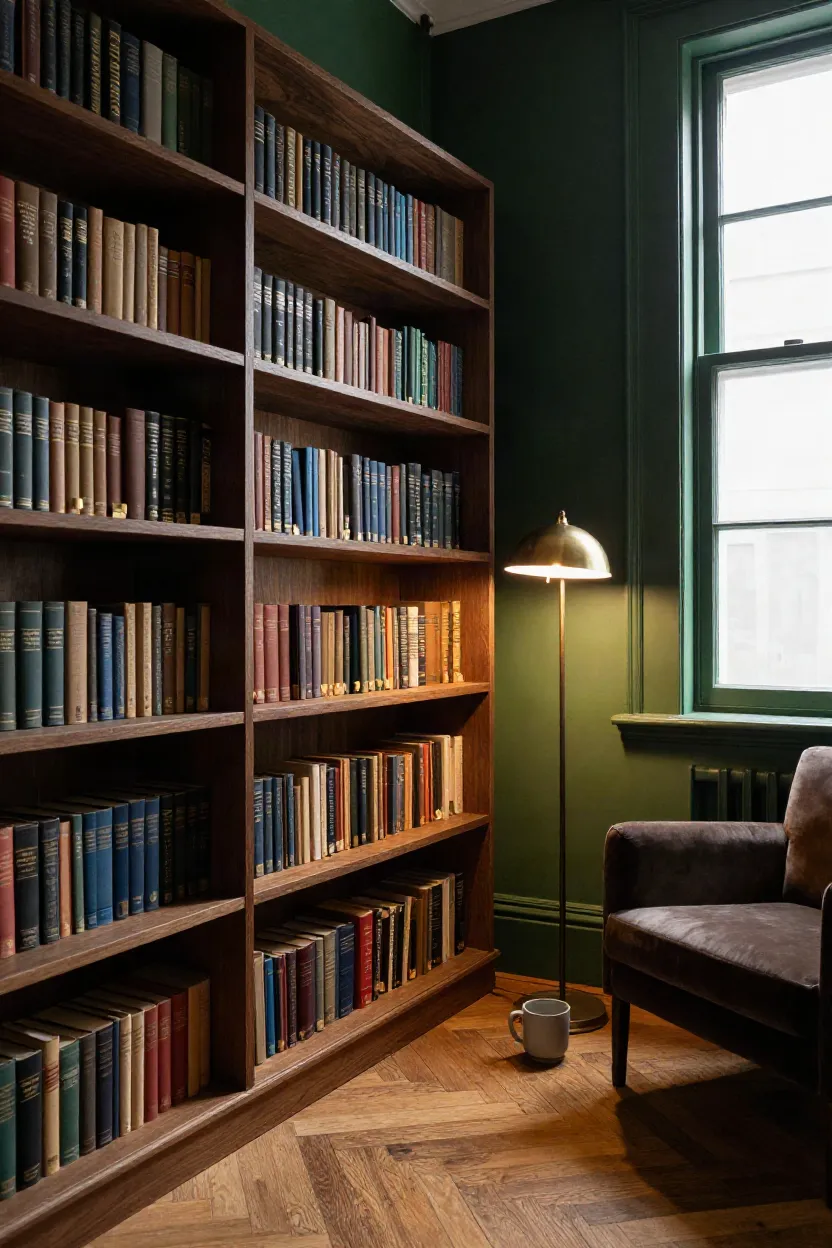
Floor-to-Ceiling Dark Walnut Bookcase Towers for Vertical Studio Scale
A dedicated floor to ceiling library studio setup draws the eye upward, transforming an underused corner into a focused storage installation of substantial height.
- Select 0.75-inch solid pine or reinforced cabinet-grade plywood rather than standard particleboard, which bows noticeably under heavy paper loads over time.
- Fasten heavy-duty steel L-brackets directly into wall studs at the top of each dark academia shelving unit to secure the heavy structure against tipping.
- Maintain an 11-inch shelf clearance between tiers to accommodate vintage clothbound hardcovers without crushing delicate top headbands.
- Alternate stacked horizontal volumes with upright rows supported by brass bookends, breaking up dark walnut planes across your diy dark wood bookshelf build.
These structural details guarantee your vertical book display holds genuine mass without sagging or overwhelming your floor area.
Deep Forest Green Color-Drenching Across Baseboards and Picture Rails
Carrying a single deep tone across every surface erases stark room boundaries, which makes compact spaces with modest ceiling heights feel unified and surprisingly open.
- Select a rich green pigment featuring a light-reflectance value between 8 and 12, following proven dark academia paint ideas that absorb glare without turning muddy.
- Apply a chalk-matte or dead-flat emulsion directly to your drywall surfaces, preventing glancing lamplight from highlighting minor rental wall bumps and seams.
- Coat baseboards, door trim, and picture rails in matching satin enamel for scrubbable scuff resistance, completing your forest green color drenching without jarring contrast lines.
Solid dark green studio walls eliminate distracting white perimeter breaks, creating an enveloping scholarly mood throughout your primary living zone.
Saturated Charcoal Sleeping Alcove with Heavy Velvet Drape Partitions
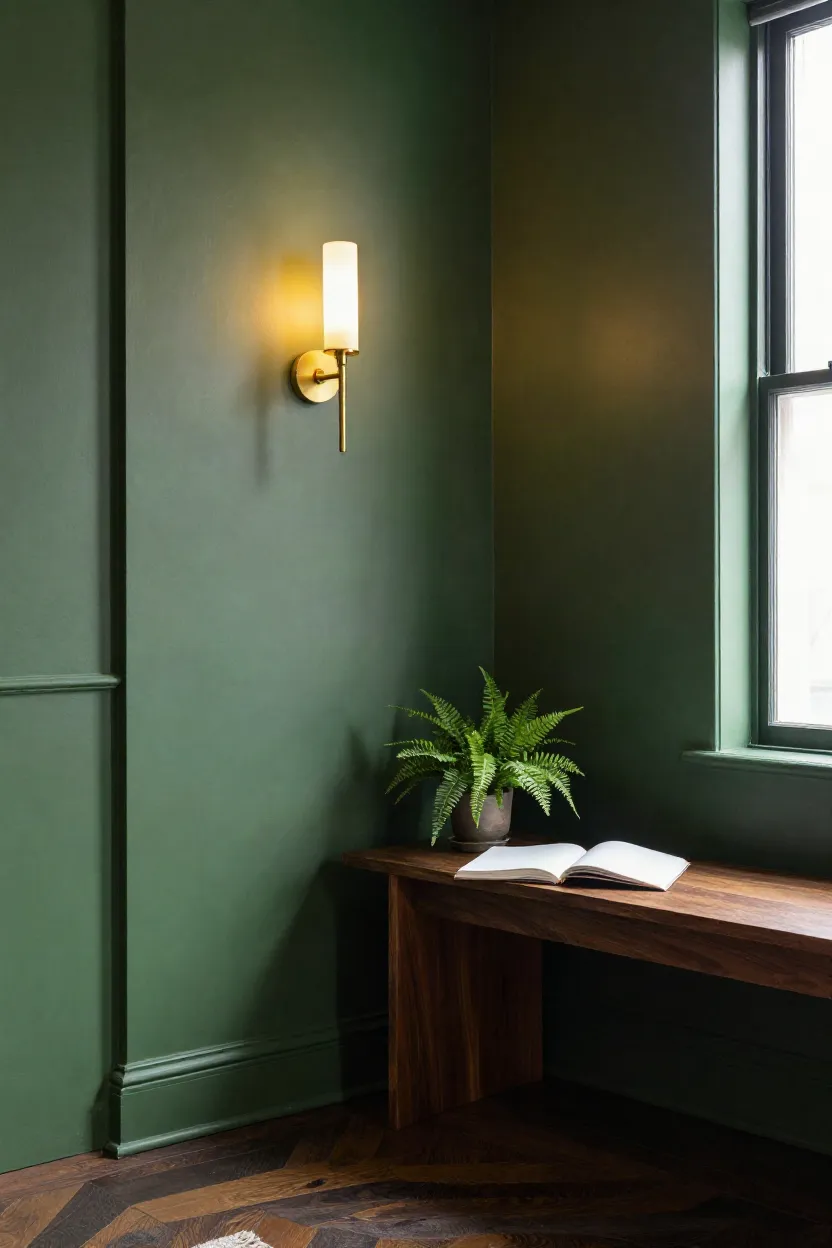
Shifting from the main sitting zone toward your bed calls for an intentional shift in shade and density. Coating the walls of your studio alcove bed nook in a matte charcoal mineral paint sets a clear boundary between daytime activities and rest. To physically close off the nook, mount a ceiling track set exactly 2 inches forward from the foot or outer edge of your mattress. Suspending a dark velvet curtain divider crafted from heavy 400 GSM fabric creates an immediate sound-dampening barrier against ambient apartment noise and hollow room echoes. Because dense cotton velvet exerts substantial downward pull across a ceiling track, you must anchor the assembly with heavy-duty toggle bolts rated for at least 50 pounds rather than standard plastic drywall plugs.
The solid visual barrier transforms your sleeping quarters into a dedicated, shadowed cocoon that tucks your bed out of view during working hours. Sheer cotton or breezy linen panels fail in this setup because transparent weaves allow ambient lamplight to bleed through, diluting the mood and ruining the functional separation of a single-room studio. By committing to a substantial moody bedroom partition, you block residual glare from your desk lamps while absorbing stray apartment reverberations, keeping the sleep zone quiet, secluded, and distinct.
Curated Gilded Frame Gallery Wall Over Antiqued Shadowline Wainscoting
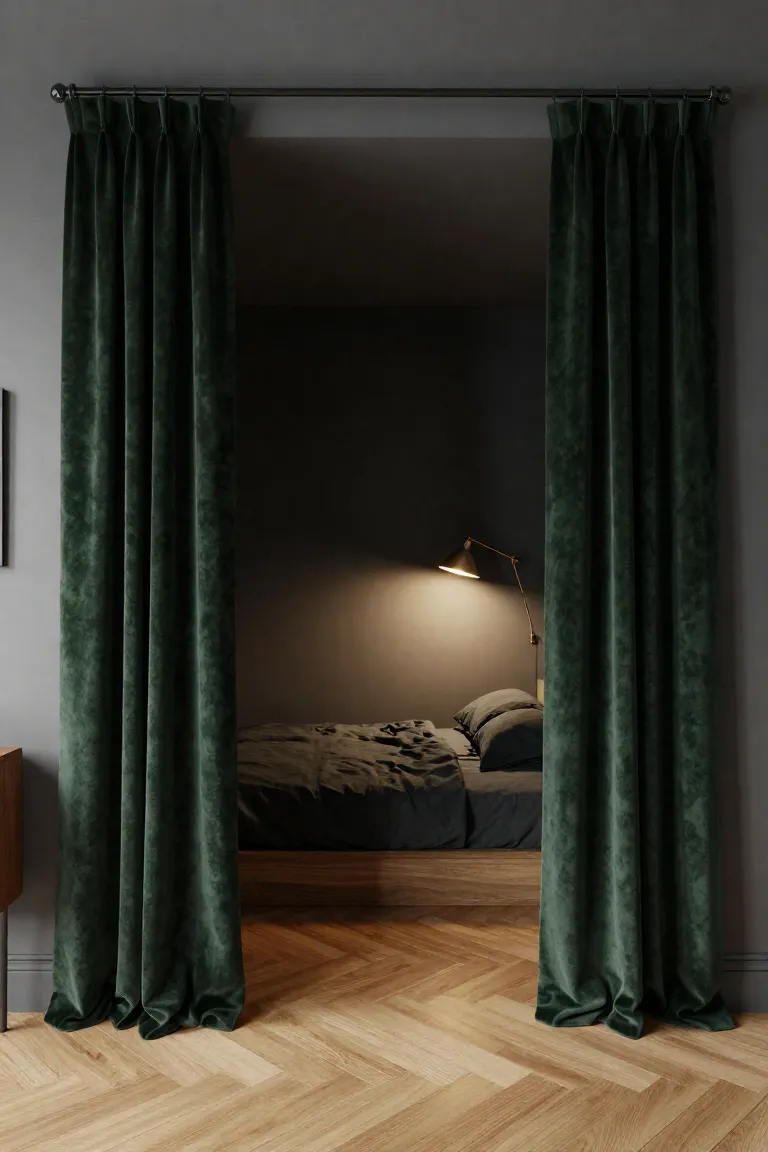
Dark, paneled woodwork provides an ideal historic backdrop for displaying aged art, but small rooms require deliberate structure so wall collections avoid looking scattered. Assembling a thrifted gallery wall dark academia arrangement lets you pair moody oil portraits with botanical studies while drawing attention upward toward higher ceiling planes.
- Group your artwork into a tight vintage gilded frame cluster by maintaining a strict spacing gap of 2 to 3 inches between each frame edge, guiding the eye vertically rather than spreading artwork out horizontally across narrow studio spans.
- Install braided brass picture wire across the back of each frame and suspend every piece using two-point metal wall hangers, which keeps your frames level when foot traffic or slamming corridor doors cause slight wall vibrations.
- Secure every hanger directly into drywall or studs using angled steel pins rather than lightweight adhesive strips, since sticky mounting tape will tear away matte paint layers and send heavy glass crashing to the floor.
This concentrated configuration turns compact wall space into curated moody salon wall art that carries rich historical depth without crowding your primary studio walkways.
Atmospheric Illumination: Low-Kelvin Layering and Antiquarian Textures
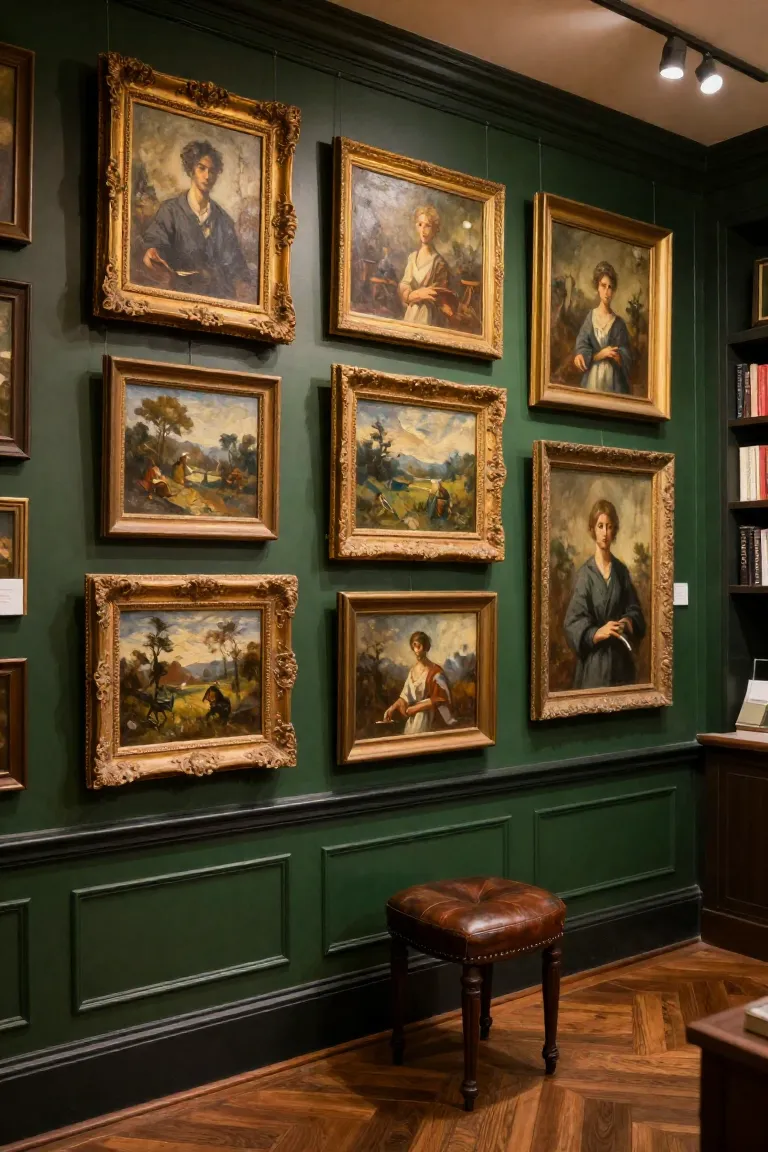
Dark, saturated walls require specific lighting temperatures and contrasting surface finishes to prevent a small studio from feeling like an uninviting cave. Introducing targeted points of moody apartment lighting reveals subtle dimension across dark paint, ensuring shadows provide comfort rather than visual confusion.
- Layer nubby wool tweeds and ribbed corduroy against plush cotton upholstery, generating tactile variation that catches low-angled task lighting cleanly.
- Introduce brushed or antiqued brass hardware alongside dark-stained oak or walnut furniture, reflecting subtle warm glints across shadowy room corners without producing harsh glare.
- Equip all small task fixtures and floor lamps with warm 2200K to 2700K LED bulbs, establishing rich low light studio decor that illuminates specific seating zones while preserving ambient mystery.
Careful pairing of contrasting textures ensures your dark academia interior textures remain distinct and inviting beneath soft, focused lamp illumination.
Low-Profile Olive Velvet Settee Anchored by Wool Houndstooth Textiles
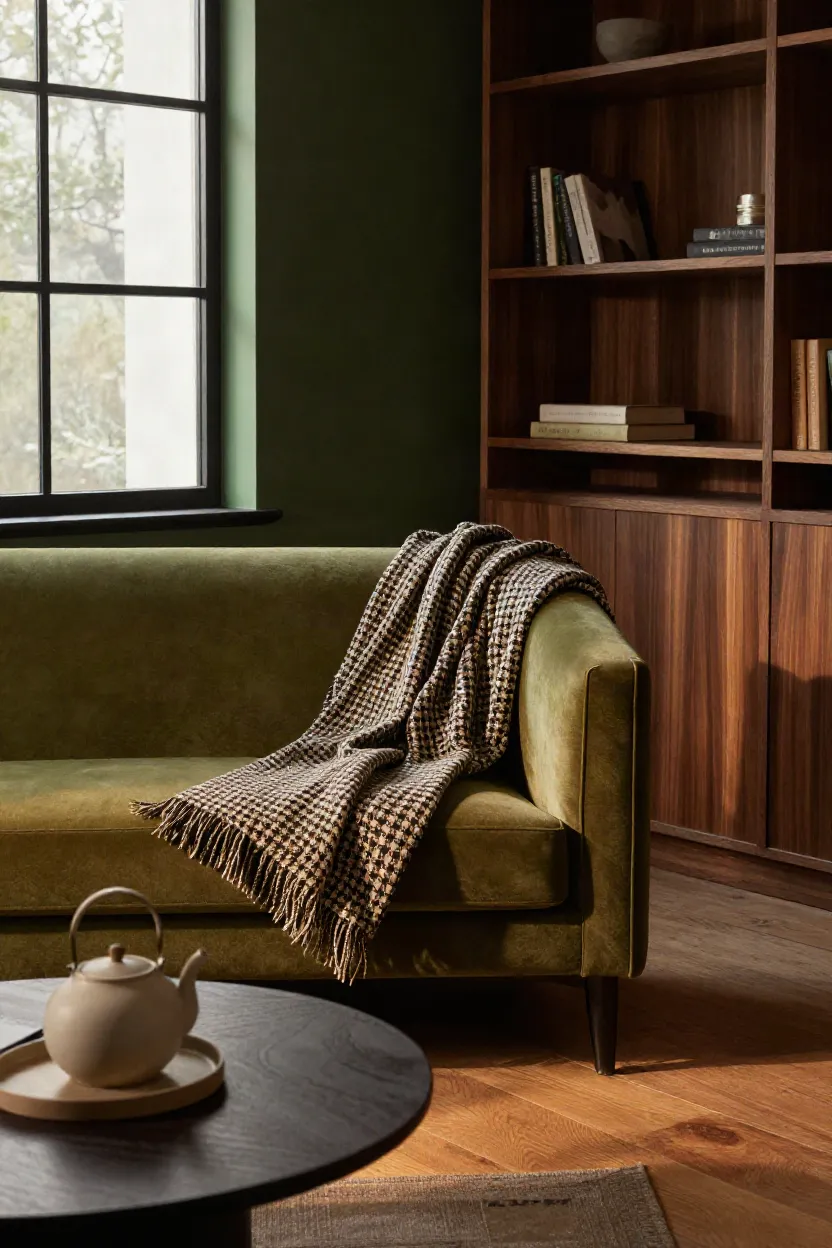
Selecting primary seating for a compact layout requires careful attention to physical volume and open sightlines across the floor plan. A low profile moody couch establishes a grounded focal point in your sitting area while keeping sightlines clear through the center of the apartment.
- Select a tailored frame with a total back height under 30 inches, featuring slim track arms and tapered walnut legs to elevate the base above the floorboards and preserve open floor area.
- Upholster your olive velvet settee studio piece in rich moss or forest velvet, then accent the bench seat with firm wool houndstooth pillows to add crisp textile contrast against your matte walls.
- Position the frame to maintain a strict 18-inch clearance between the front seat edge and your coffee table, preserving an unobstructed walkway for daily movement.
Steer clear of bulky rolled-arm sofas to prevent wasted floor space, ensuring your dark academia living room furniture delivers comfortable seating without dominating narrow studio proportions.
Tri-Point Warm Brass Task Lighting and Low-Lumen Bankers Lamp Formula
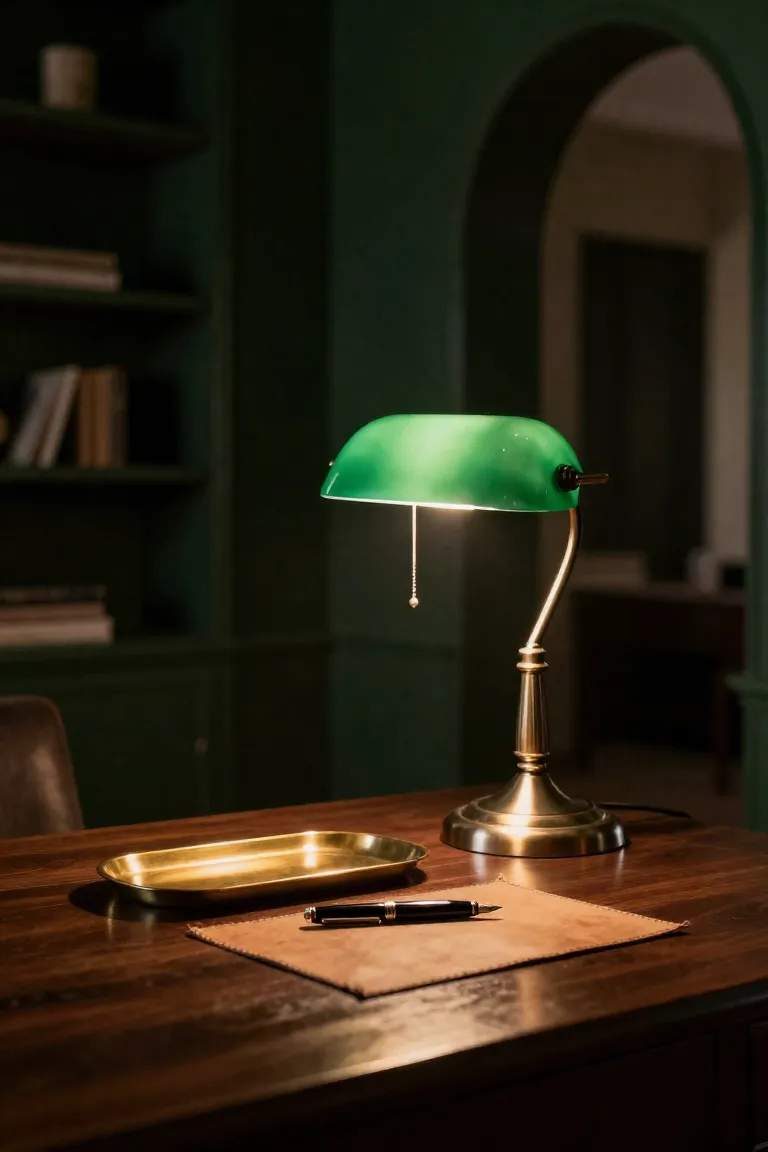
Switching off harsh overhead recessed ceiling fixtures immediately transforms a compact studio from feeling flat to deeply atmospheric. Instead of flooding every corner with uniform glare, build a moody ambient lighting formula by positioning three independent, low-level illumination points around the perimeter of your room. Placing fixtures at varied heights creates intentional islands of warm brightness while permitting quiet shadow zones to recede naturally. Anchor your main work surface with an authentic green banker lamp desk fixture, which casts downward task illumination through emerald cased glass without washing out surrounding dark woodwork.
Complement this desk anchor by installing articulating warm brass task lighting beside reading seating, balancing the opposite wall corner with a dimmable linen-shaded accent lamp. Outfit every fixture with LED filament bulbs rated between 2200K and 2700K that produce a gentle output of 150 to 250 lumens. Avoid standard 4000K daylight-white bulbs entirely, because cool blue-white color temperatures instantly flatten saturated rooms, turning rich espresso furniture finishes and hunter green walls into sterile, muddy gray expanses.
Antiqued Foxed Mirror Panels Behind a Compact Drop-Front Secretary Desk
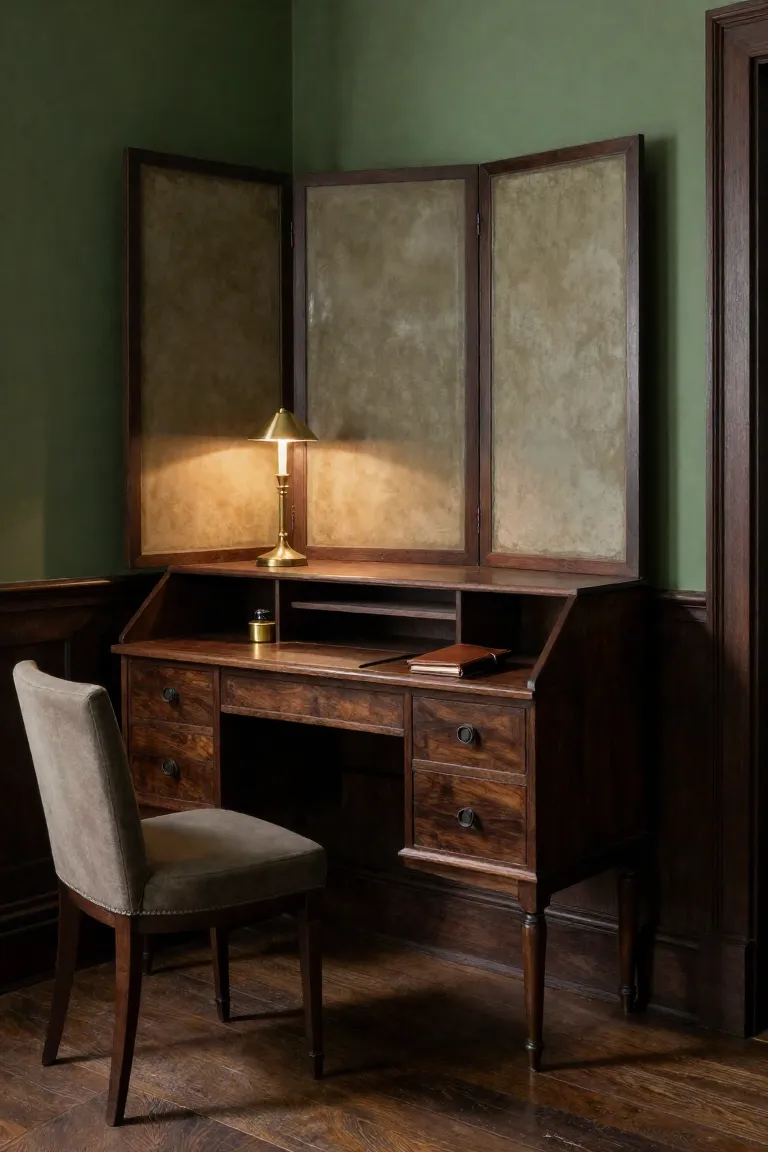
Tucking a compact writing station into an alcove requires smart reflection strategies to prevent tight work quarters from feeling claustrophobic. Installing an antiqued mirror secretary desk setup allows you to reflect ambient lamp glow back into the main room without introducing the piercing glare produced by contemporary mirrored glass. Lining the rear interior panel with 12-inch patinated glass squares softens bounced light and adds subtle historical character to your compact study corner.
- Mount aged glass tiles directly against the rear desk recess using neutral-cure mirror mastic to prevent silver backing damage.
- Anchor the tall secretary cabinet into wall studs using heavy-duty steel angle brackets to ensure stable weight distribution whenever the writing flap opens.
- Incorporate practical foxed mirror decor ideas inside a vintage drop-front desk nook to double perceived desk depth while maintaining an intimate reading atmosphere.
- Dust the mottled glass surface exclusively with dry microfiber cloths, steering clear of ammoniated spray cleaners that trigger rapid black-edge desilver degradation.
Once you close the fold-down desktop at the end of the evening, the muted reflections keep your living area calm and cohesive.
Double-Layered Distressed Persian Rugs Over Deep Walnut Stained Floorboards
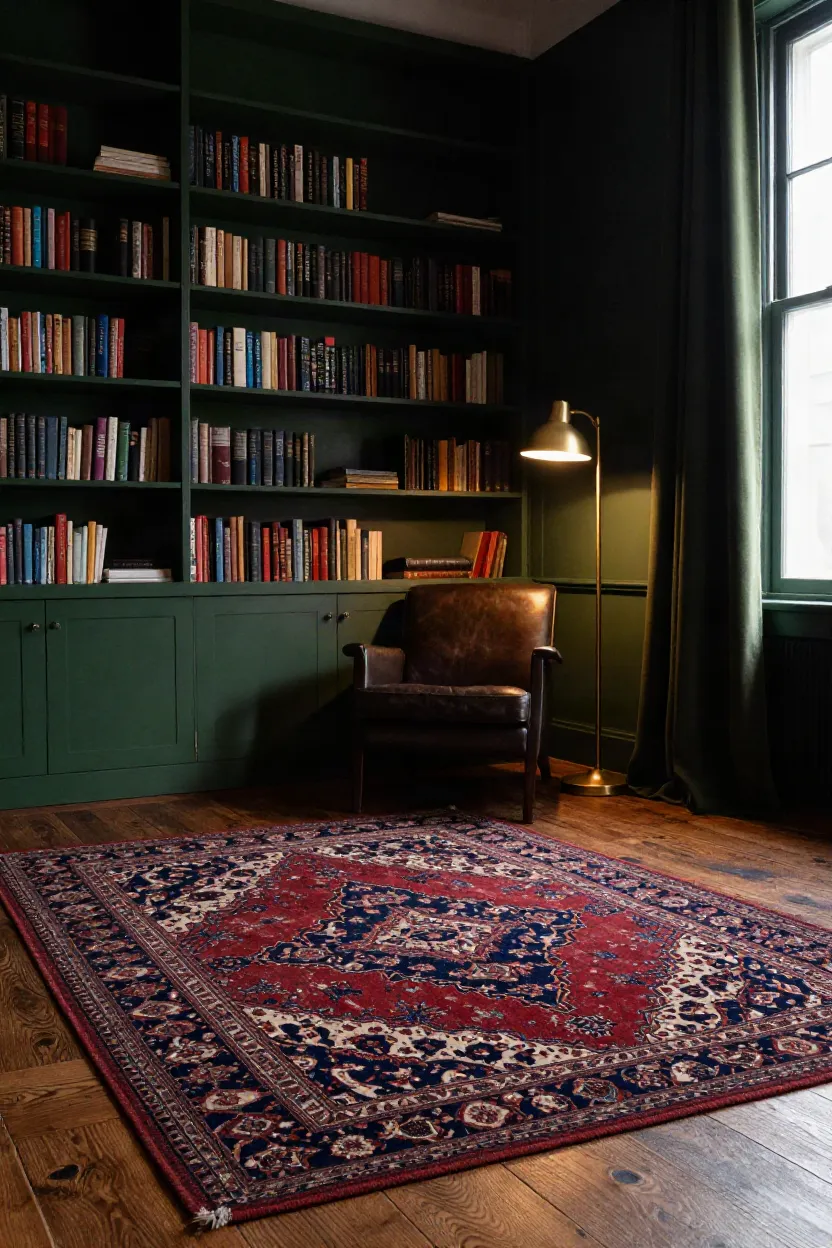
Grounding an open studio layout demands intentional floor definition, especially when working above dark stained floor styling that can swallow dark furniture legs without visual separation. Combining two complementary floor coverings introduces rich texture, creates distinct functional zones, and significantly dampens acoustic echo across open timber floorboards.
- Roll out a low-pile natural jute or flat-weave wool rug as your broad base, leaving a consistent border of 8 to 12 inches of exposed walnut flooring along the perimeter to frame the seating zone neatly.
- Position a dense vintage wool runner studio accent or compact tribal rug diagonally across the base layer, choosing intricate madder red and midnight blue weaves to introduce tonal interest beneath your coffee table.
- Place a dual-surface non-slip rug pad between the base floor and secondary rug to lock both layers firmly together, eliminating bunching, rippling, and persistent tripping hazards.
Layered Persian rugs soften daily foot traffic noise while providing thick wool underfoot comfort for quiet studio evenings.
Studio LRV Calibration and Ambient Low-Light Layering Specification Matrix
Successful dark room decorating relies on understanding exact light reflectance values rather than guessing under showroom fluorescents. When planning paint selection for dark walls, target an LRV bracket between 8 and 14 for primary wall planes finished in saturated espresso, charcoal, or deep forest green. This measured absorption range prevents harsh artificial light bounce while preserving the rich depth of your pigments during evening hours. In studios with limited northern window exposure, coat your ceiling plane in an LRV range of 16 to 22, offering a subtle upward lift that retains dramatic intimacy without dropping into an oppressive cave effect.
Balance this paint foundation with a strictly monitored ambient lighting kelvin formula across your apartment. Maintain general background glow at 2000K to 2200K producing 80 to 120 lumens, shift dedicated task fixtures up to 2400K or 2700K delivering 150 to 250 lumens, and cap accent spotlights at a strict 100 lumens. Monitoring your dark room lux clearance keeps your functional reading surfaces fully usable while preserving the dramatic shadow contrasts essential to dark studio design.
Small-Space Dark Academia Pitfalls: Muddy Undertones and Light Absorption Traps
Even with balanced lux levels, avoiding common small studio decorating pitfalls requires treating your surfaces and structural anchors with practical precision. When you introduce saturated pigments into a compact floor plan, misjudging paint undertones or wall anchors can quickly turn an atmospheric room into a dark, unworkable box.
- Test wall colors under low-kelvin evening light instead of midday sun to avoid classic dark paint small room mistakes. Direct noon daylight washes out pigments, masking green or violet undertones that turn into flat, muddy grays once you switch on warm artificial lamps. Paint generous sample boards for multiple walls, inspect them under 2200K to 2700K bulbs at dusk, and carry the chosen shade up across all baseboards and door casings so crisp white trim does not slice your vertical wall height.
- Introduce reflective metal and glass surfaces to counter light absorption collapse and moody decor lighting errors. Wrapping an entire studio in matte plaster, heavy wool rugs, and dry timber soaks up every lumen, creating an uncomfortable cave effect. Break up dense matte textures by positioning warm aged brass switch plates, oil-rubbed bronze trays, and foxed mirror panels where they catch peripheral glow and bounce soft reflections back into seating zones.
- Secure heavy walnut shelving directly into wall studs or heavy-duty steel toggle bolts instead of standard plastic drywall plugs. A solid timber bookcase loaded with hardcovers easily exceeds 150 pounds, creating severe shear stress on hollow plasterboard. Use a reliable stud finder to drive lag screws into wood framing, or install 1/4 inch toggle bolts rated for at least 90 pounds of working load per bracket whenever stud spacing does not align with your layout.
These physical checks prevent common structural failures and keep your moody studio comfortable to live in day after day.
Curating Atmospheric Depth: The Balanced Studio Implementation Protocol
A moody aesthetic inside a rental or modest footprint requires a clear sequence of steps rather than an impulsive shopping spree. Following an orderly studio apartment styling protocol helps you manage spending while building genuine atmospheric depth within landlord-friendly boundaries.
- Establish the surrounding envelope using peel-and-stick moody wallcoverings, tension rod drapery tracks, or landlord-approved dark paint. Setting this dark perimeter first defines your backdrop, allowing you to gauge true ambient light levels before buying bulky furniture.
- Anchor your main living zone with a single tall timber bookcase or a compact secretary desk sourced from secondhand vintage shops. Investing in one genuine hardwood anchor gives your budget dark academia room immediate historical substance without overcrowding your narrow walkways.
- Set up your three-point warm illumination before bringing in any art or tabletop decor. Installing 2200K bulbs in shaded task lamps and corner uplights lets you see exactly where shadows fall, ensuring your reading and working areas stay functional.
- Layer framed prints, wool throws, and brass accents gradually to avoid visual clutter. A practical dark academia interior guide prioritizes deliberate shadow and curated empty space over random antique accumulation, keeping your compact studio open and restful.
This methodical progression transforms a standard studio floor plan into an authentic, deeply personal study that balances historic drama with everyday utility.