Maximizing Square Footage: A Step-by-Step Guide to Invisible Bedroom Storage Solutions
Summary
- Introduction: The Secret to a Clutter-Free Small Bedroom
- Step 1: Auditing Your Bedroom for Hidden Storage Opportunities
- Step 2: Selecting Multi-Functional Hidden Storage Furniture
- Step 3: DIY Invisible Storage Hacks on a Budget
- Step 4: Micro-Organization Strategies for Concealed Spaces
- Frequently Asked Questions About Small Bedroom Storage
- Conclusion: Reclaiming Your Square Footage
Introduction: The Secret to a Clutter-Free Small Bedroom
Living in a compact footprint often means sacrificing floor space to everyday essentials, but your sleeping quarters never need to feel boxed in. By rethinking small apartment decorating ideas bedroom layouts through the lens of invisible storage, you can actively maximize square footage and keep visual lines quiet. Clever, concealed compartments turn unused pockets into practical organization zones, giving you a calm, clutter-free bedroom that keeps daily necessities within reach.
Step 1: Auditing Your Bedroom for Hidden Storage Opportunities
Before purchasing bins or assembling organizers, step back and examine the physical perimeter of your room with a fresh eye. Effective bedroom layout planning starts with measuring clearance paths and sketching current sightlines, rather than guessing what might fit. Conducting a methodical small space evaluation reveals pockets of hidden storage potential that standard furniture catalogs often overlook.
- Vertical perimeter checks: Look for blank expanses between the door frame and the ceiling, or shallow alcoves beside wardrobes.
- Circulation clearance: Measure doorway swing radii and drawer pullouts to ensure new modular pieces do not obstruct daily movement.
- Underutilized depth: Note deep window reveals and gaps between freestanding furniture that can house slim, slide-out rolling units.
Identifying Dead Space Under the Bed
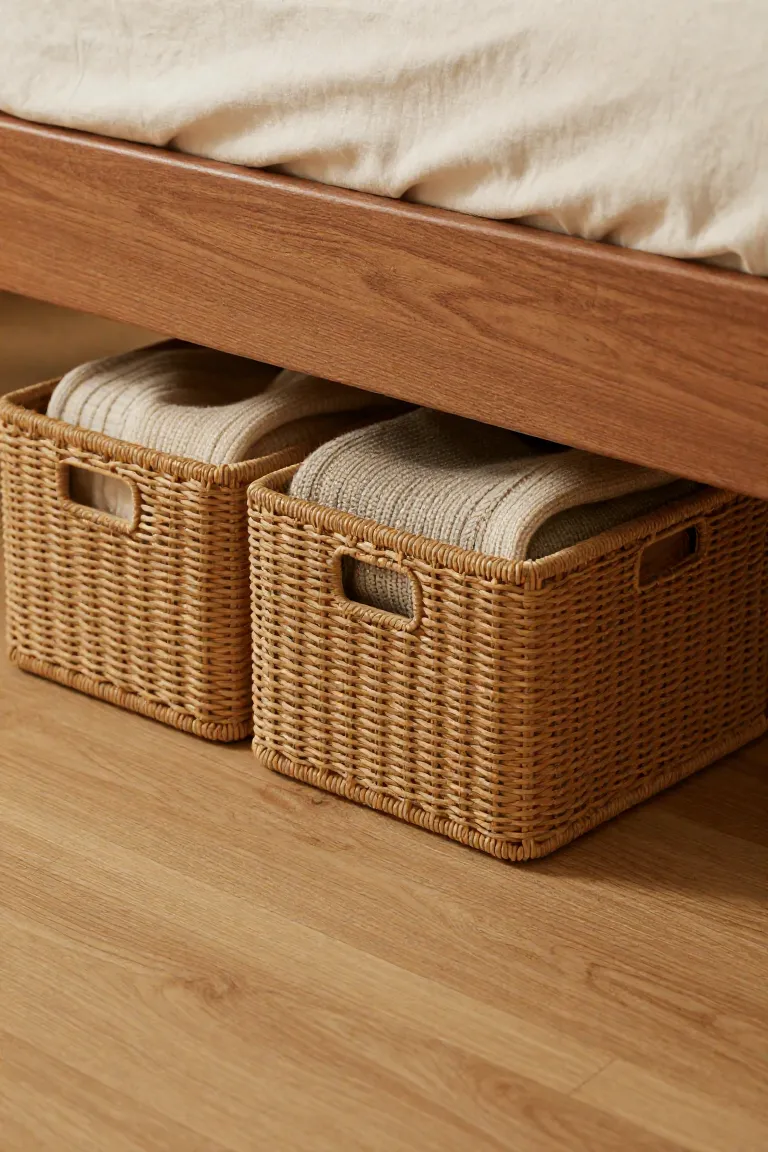
Grab a tape measure and assess the vertical bed frame clearance from the floorboards to the lowest point of your side rails. Even a standard six to eight inches of vertical depth offers substantial hidden floor space that keeps bulky items out of your daily field of vision. When calculating this cavity, account for center support legs or carpet pile that might restrict smooth sliding mechanisms.
In compact sleeping quarters, this concealed zone is tailored for flat canvas zippered cases holding off-season quilts or spare travel bags. Low-profile wheeled containers with tight-sealing lids protect textiles from dust bunnies while gliding out smoothly across floorboards. Selecting streamlined under bed storage bins that sit flush against your frame keeps the entire setup completely invisible to anyone entering the room.
Utilizing Vertical Wall Real Estate
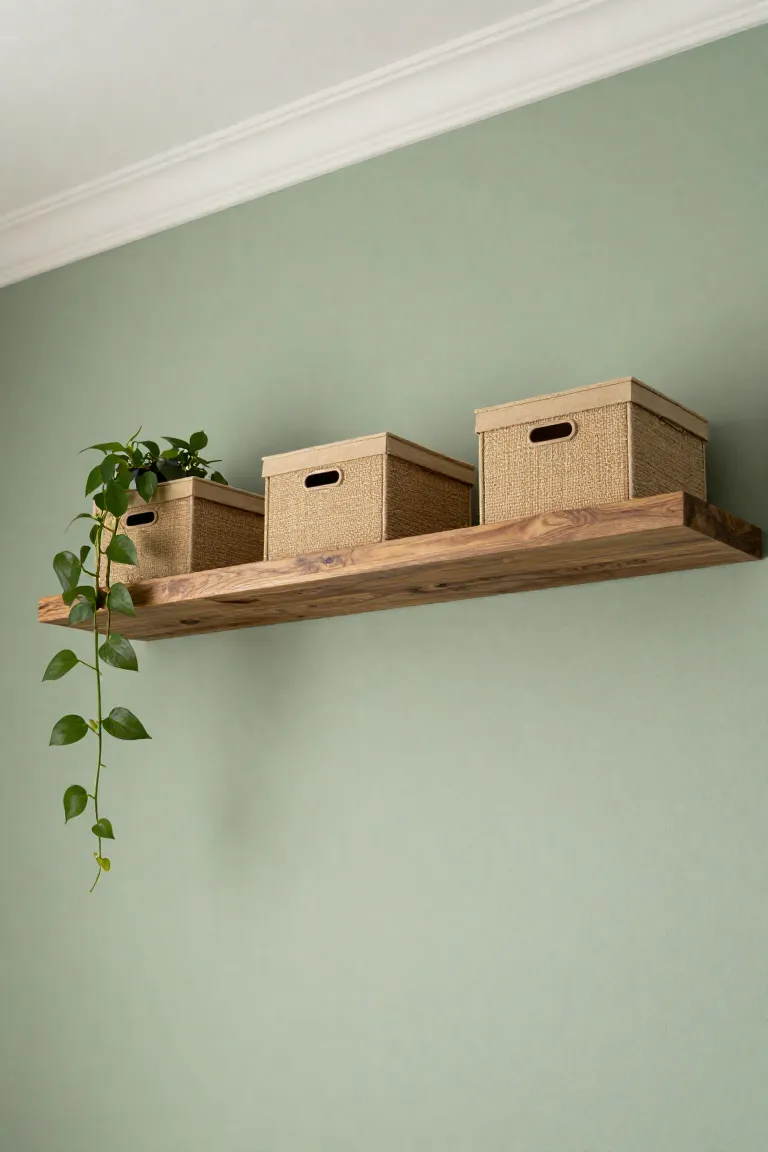
Once floor surfaces are streamlined, redirecting your focus upward uncovers square footage that often sits completely neglected. Most bedrooms leave the top quarter of perimeter walls unexploited, yet capitalizing on vertical wall space draws the eye higher while keeping walking paths open and breathable. Installing tailored picture ledges or slim, continuous high shelving just ten to twelve inches below the ceiling creates a clean perimeter gallery for overflow book collections alongside textured canvas bins containing items you only pull down occasionally.
The narrow clearance directly above a bedroom doorway offers another prime location for practical utility. A single floating wooden ledge mounted here provides above door storage for extra bedding sets or guest towels rolled neatly inside tonal fabric baskets. In compact layouts, you can extend this concept across the wall surface behind your headboard, mounting shallow enclosed floating cubbies that match your wall paint so they recede quietly into the architecture.
Step 2: Selecting Multi-Functional Hidden Storage Furniture
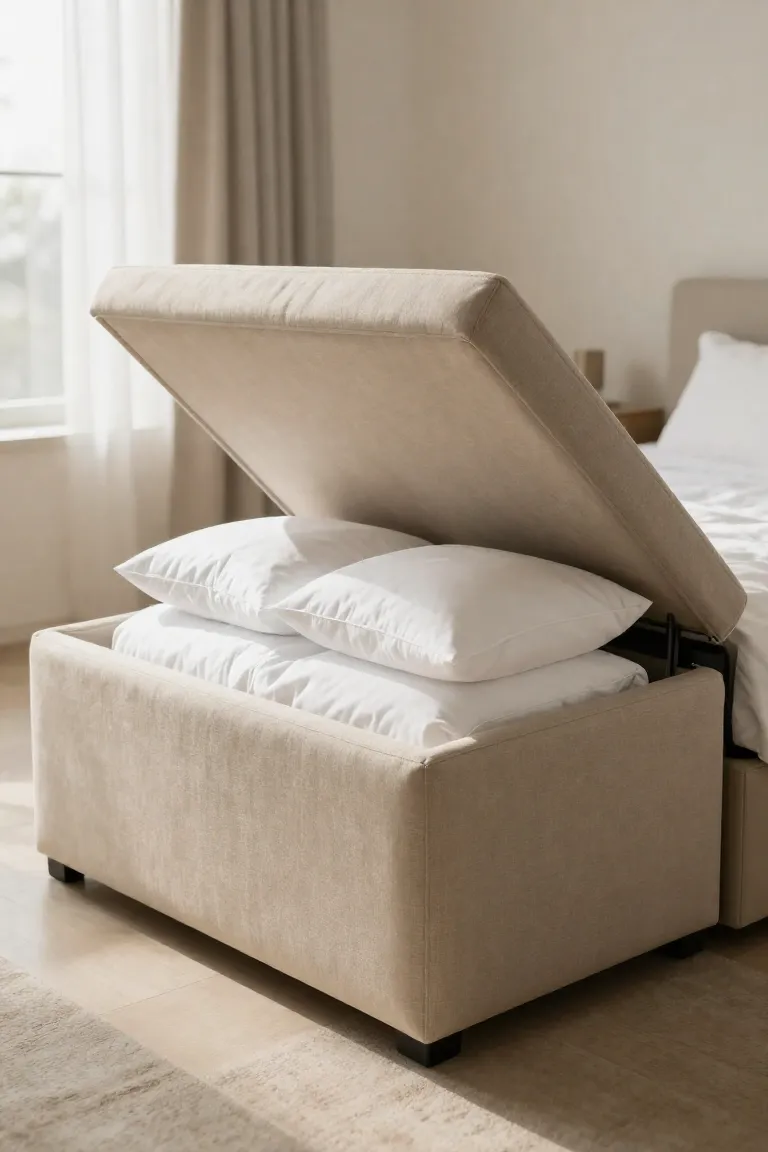
After identifying unused architectural perimeters, the next phase centers on rethinking your primary furnishings so every single piece pulls double duty. In tight layouts, single-purpose decorative furniture quickly turns into visual clutter, making smart multi-functional furniture a necessity for maintaining a calm, uncrowded atmosphere. Integrating thoughtfully tailored hidden storage furniture lets you preserve an airy, boutique aesthetic while tucking daily essentials out of sight behind tailored upholstery and solid wood panels.
- Upholstered storage ottomans positioned at the foot of the bed to stow away extra throw blankets and weighted quilts.
- Compact vanity consoles with flip-top mirror panels that conceal makeup palettes and skincare bottles within organized compartments.
- Slender lidded wooden benches positioned beneath a window frame to preserve clear walkway flow across your space-saving bedroom.
The Magic of Lift-Top Beds
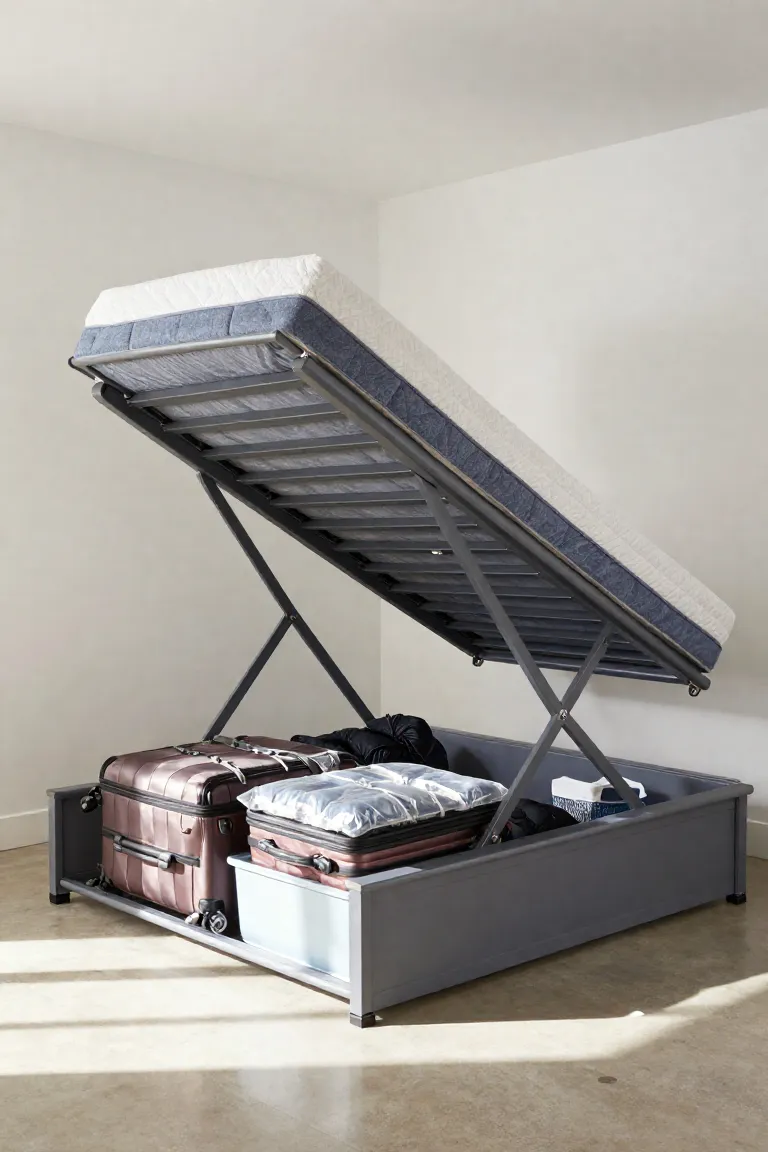
While sliding bins handle lightweight accessories, conventional under-bed drawers frequently hit adjacent bedside tables or get blocked by floor rugs. A well-constructed lift-top bed frame solves this perimeter problem by elevating the entire mattress deck upward on heavy-duty gas pistons with minimal effort. Because the platform lifts vertically rather than sliding outward into the room, you gain full access to the under-bed area without having to push aside nightstands or shuffle floor decor.
Underneath the sturdy wooden slats rests an expansive hollow interior engineered specifically for bulky item storage that typically overwhelms small closets. Hard-shell rolling luggage and winter down parkas nestle directly inside alongside oversized duvets without gathering lint or dust. Choosing an enclosed fabric-lined base ensures that your hydraulic bed storage keeps off-season textiles completely sheltered and out of sight all year long.
Nightstands with Deep Concealed Compartments
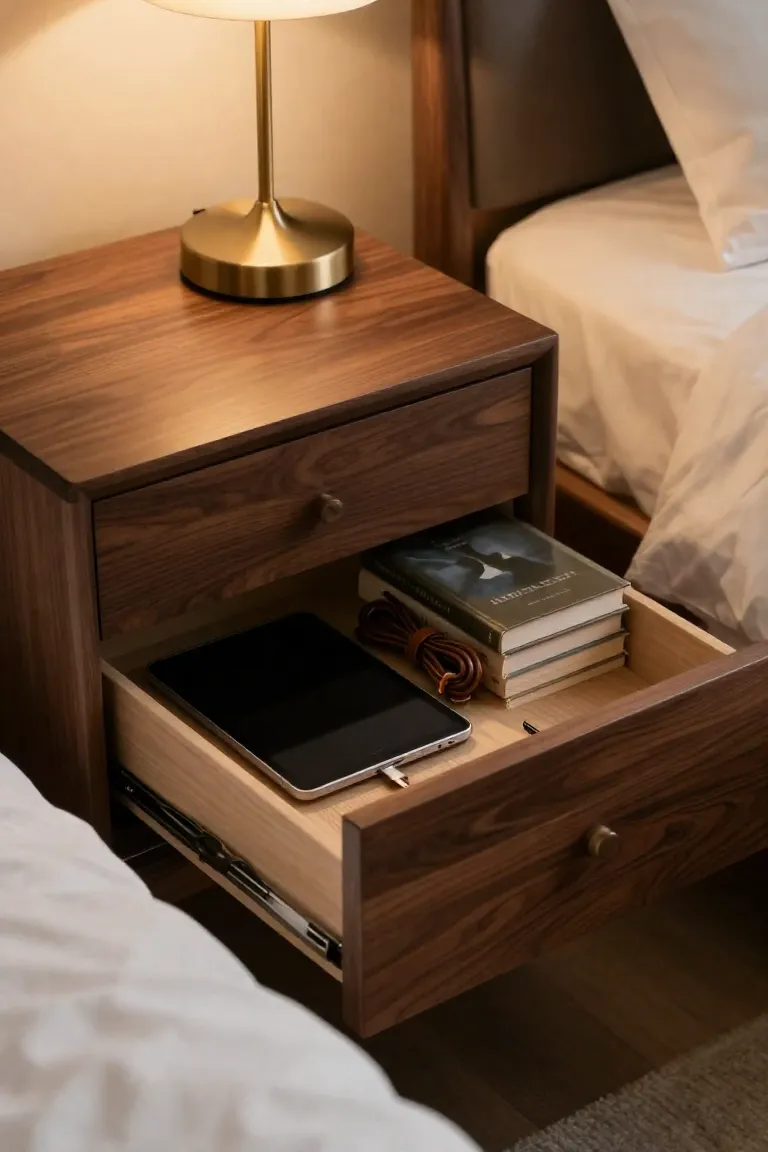
While enclosed under-bed bases handle bulky seasonal bedding, your immediate sleeping perimeter requires an equally thoughtful setup to eliminate wire tangles and loose books. Swapping open-frame side tables for enclosed storage nightstands corrals everyday bedside clutter behind warm, tactile wooden facades. Deep drawer boxes provide dedicated real estate for journals and hand creams while concealing charging cables, maintaining a visually quiet surface that sets a relaxing tone before sleep.
Vintage wooden trunks and modular nightstands with concealed drawers offer abundant interior volume without eating into valuable circulation paths. To keep your surfaces completely clean, mount a low-profile power strip directly inside the lower compartment so phones and tablets recharge overnight out of sight.
Step 3: DIY Invisible Storage Hacks on a Budget
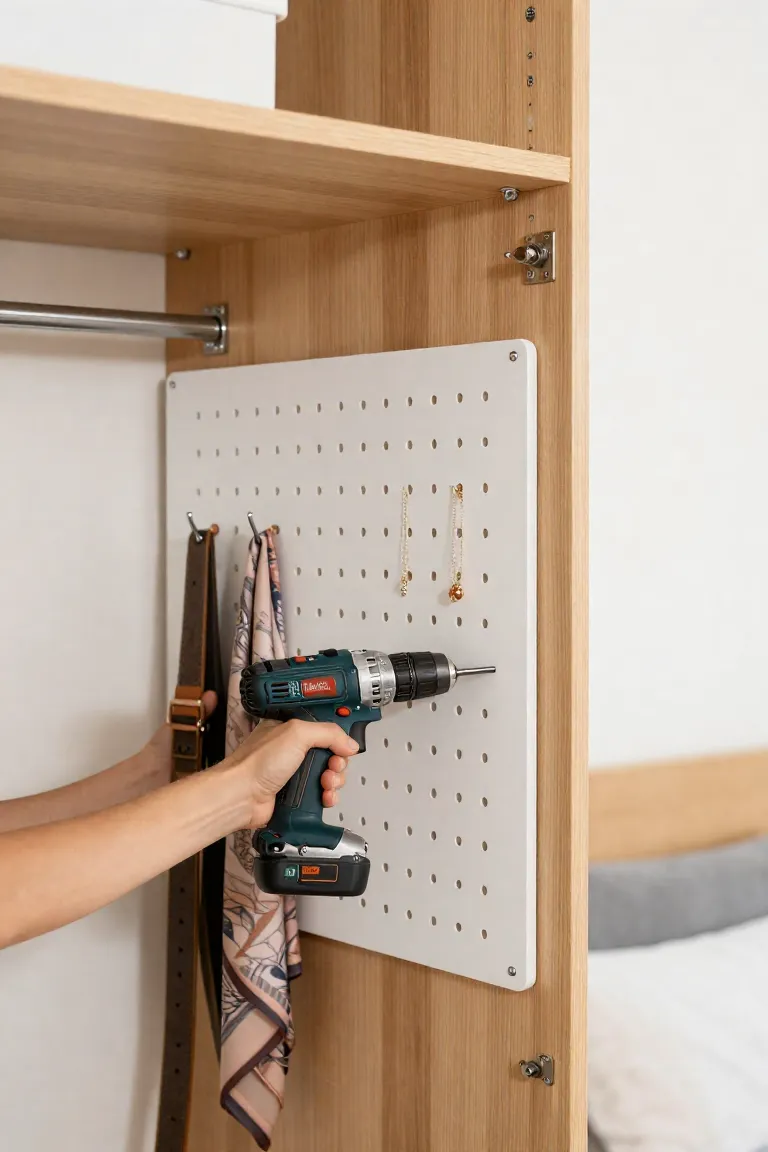
Transforming tight quarters does not require custom millwork or sacrificing your rental security deposit on permanent structural alterations. Practical DIY bedroom storage relies on claiming overlooked gaps and applying non-invasive hardware that leaves zero marks on landlord paint. You can attach heavy-duty felt pockets along inner bed frame rails and hang slim canvas racks behind closet doors. Lifting standard furniture frames on discreet risers also creates clearance to tuck away wide rollout bins. These renter friendly storage strategies unlock cubic feet of usable space from plain view without renovation permits. Adding a tailored linen bed skirt or attaching magnetic catches to open shelving units stands out as one of the quickest budget storage hacks to keep everyday essentials neatly tucked away.
Creating Faux Built-Ins with Bookcases
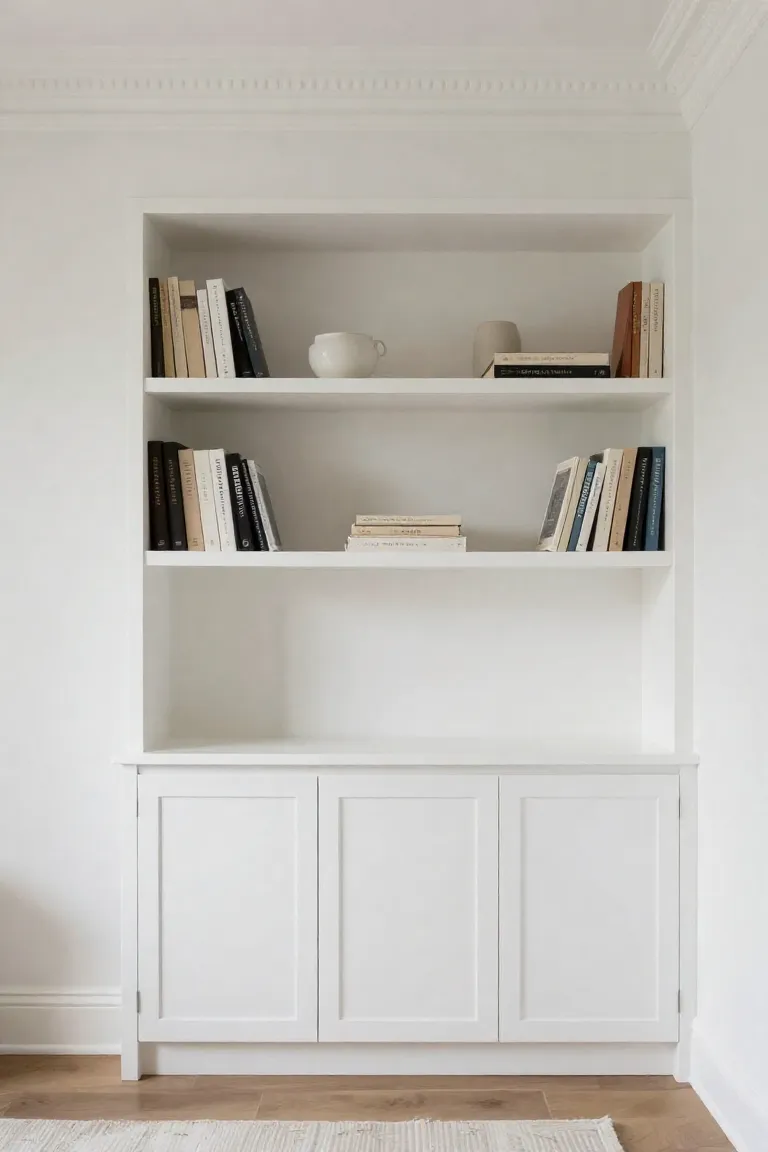
Flanking your headboard or a central bedroom window with twin flat-pack shelving towers delivers the balanced presence of custom millwork at a fraction of the cost. To execute this popular IKEA bookcase hack, anchor two narrow upright units flush against adjacent walls, then frame the exterior perimeter with baseboards and primed crown moulding along the ceiling seam. Adding solid panel doors across the bottom tier creates hidden cubbies for utility bins and extra linens, while the open upper levels remain reserved for decorative ceramic bowls and framed artwork. Sealing edge seams with paintable acrylic caulk and finishing the entire assembly in your room wall color creates unified custom bedroom storage. The completed installation yields architectural faux built-in shelves that draw the eye upward while keeping daily odds and ends completely out of sight.
Hollow Headboards and Behind-the-Bed Storage
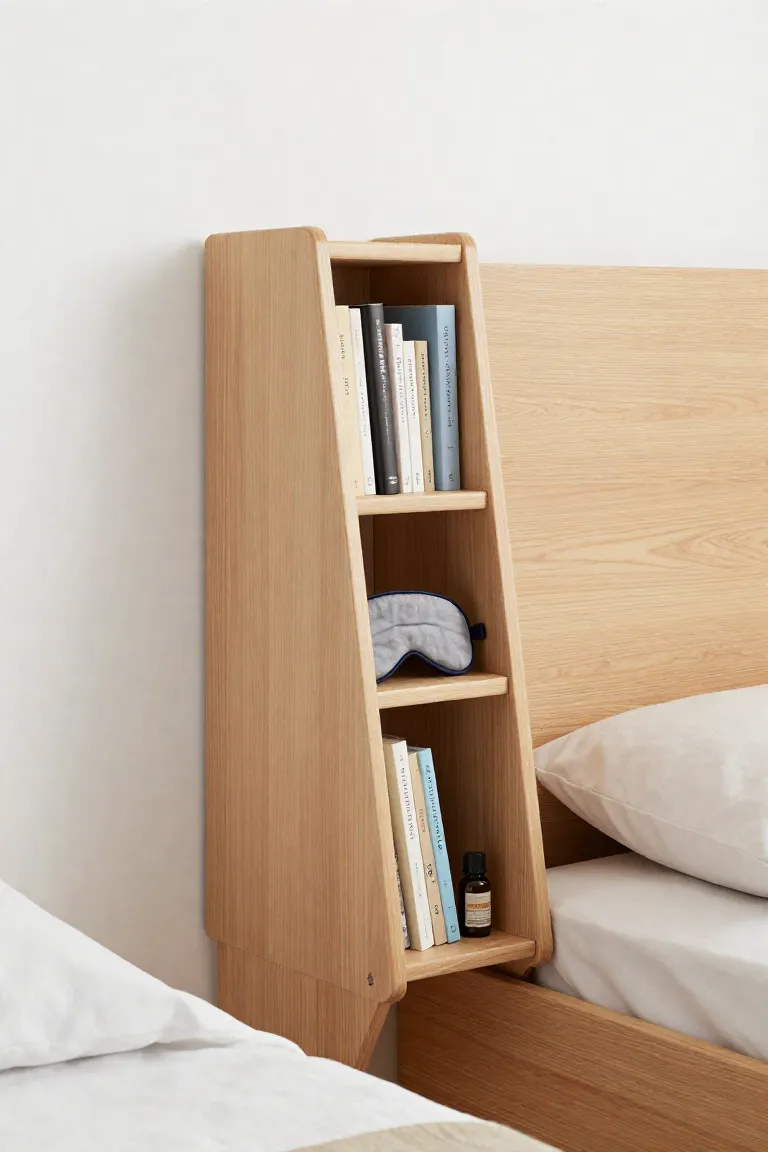
Shift your bed frame just six to eight inches forward from the drywall to unlock an often-overlooked pocket of square footage. Slipping a slim storage unit directly along that rear perimeter lets you stash reading stacks and spare linens alongside charging docks while keeping your sleeping zone crisp and uncluttered. A tailored hollow headboard storage setup features lift-up top lids or hidden side pullouts, functioning as a concealed ledge without projecting into your walking path.
For custom setups, narrow behind bed shelves fitted with sliding acoustic felt panels give you quick nighttime access without visual clutter. Cable routing notches drilled into the lower trim also keep lamp cords completely out of sight and off the floor.
Step 4: Micro-Organization Strategies for Concealed Spaces
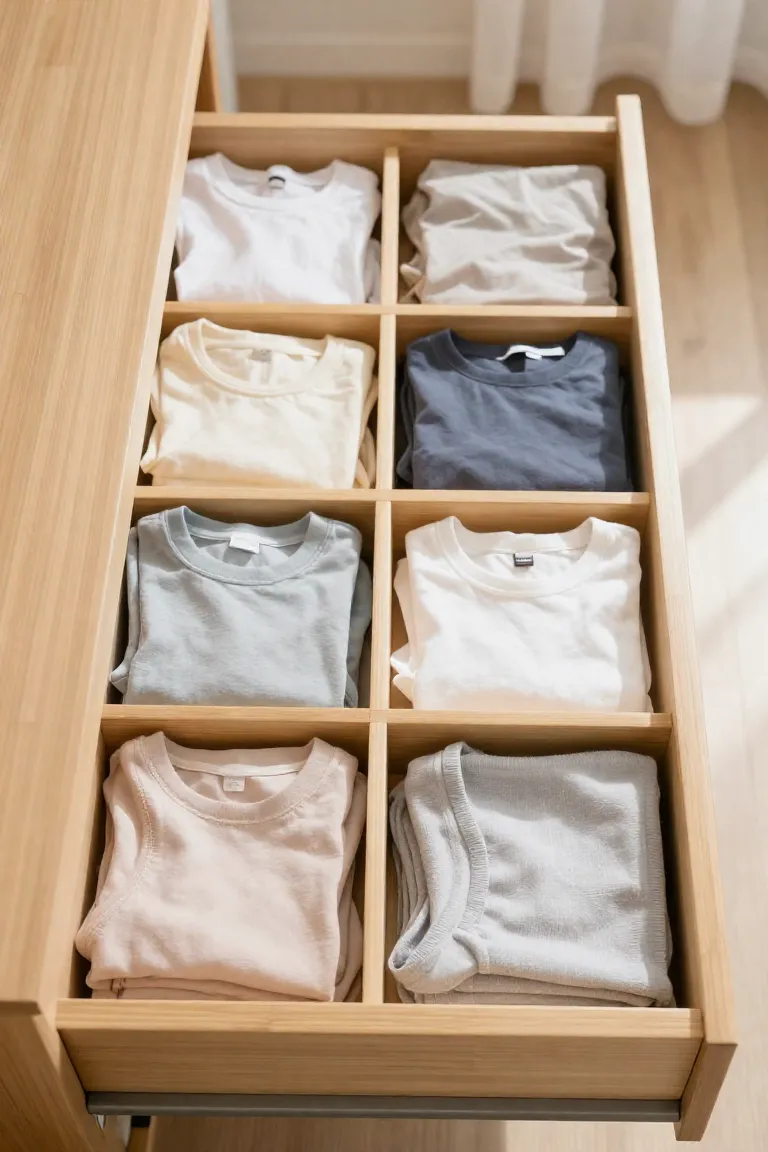
Carving out clever compartments solves only half the clutter equation, as loose items quickly turn into forgotten piles behind closed doors. Disciplined concealed space management relies on dividing every cavity into dedicated, single-category zones so you always know where spare tech cables and rolled textiles belong. Snapping adjustable drawer dividers into wide bins or shallow recesses stops everyday essentials from shifting into an unruly jumble when you pull out trays. Clear acrylic canisters or fabric-wrapped inserts keep odd-sized bedroom accents neatly corralled, preserving the calm look you worked hard to build. Committing to thoughtful micro organization ensures that every secret compartment remains instantly usable rather than turning into an out-of-sight repository for chaotic junk.
Vacuum Sealing for Maximum Compression
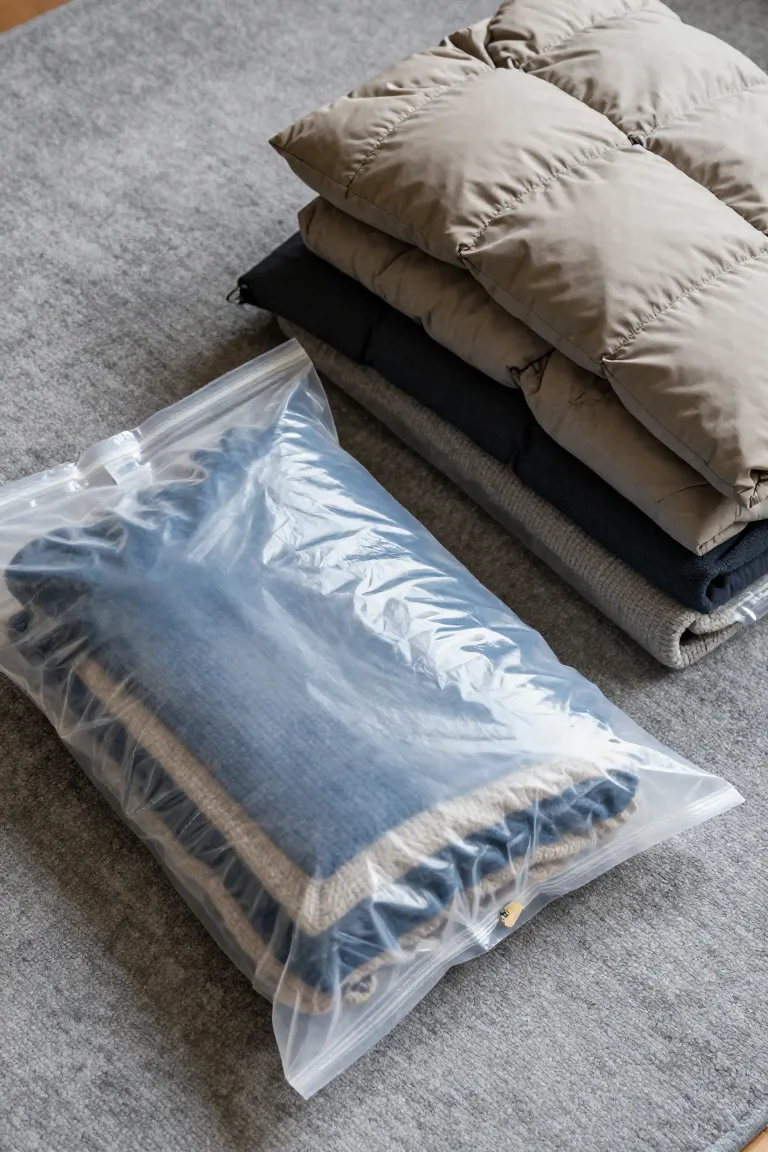
Bulky winter duvets and thick wool knits consume precious closet room when temperatures rise, yet they flatten down well under airtight pressure. Folding items neatly into transparent vacuum seal bags and drawing out the excess air via a standard household nozzle shrinks total package volume by up to 80%, creating compact slabs ready for seasonal wardrobe storage.
- Fold sweaters and jackets flat rather than rolling them, aligning zipper pulls toward the center so they never puncture the plastic film during clothing compression.
- Firmly pinch the double-zip slider across the seal track twice before attaching your vacuum hose to ensure an airtight lock that prevents gradual reinflation.
- Slide the compressed, rigid pouches into fabric under-bed bins or stack them cleanly along the highest perimeter shelf to safeguard textiles from dust and moisture.
Frequently Asked Questions About Small Bedroom Storage
Once your bulkier textiles are stowed away, navigating tight floor plans often stirs up sensible hesitation around daily accessibility and wall anchor weight loads. When organizing a compact room, your main priority is balancing disguised storage volume with frictionless morning routines. Real-world hidden storage troubleshooting involves preventing stagnant moisture buildup with breathable cotton liners and respecting strict clearance margins around radiator vents. Investing in soft-close drawer runners also ensures durability under frequent handling. Resolving these practical spatial considerations before purchasing specialized cabinetry ensures that every disguised compartment functions reliably without restricting natural light.
How do I store bulky items like suitcases in a tiny bedroom?
Rigid travel luggage demands substantial floor space, yet treating hollow hard-shell bags as passive dead weight is a missed opportunity in tight quarters. When storing suitcases in a compact layout, adopt the Russian nesting doll technique by turning empty luggage into durable, zippered trunks for winter parkas and spare guest quilts. Once filled, slide these packed containers directly into the deep, dust-shielded cavity beneath hydraulic lift-top beds where they stay concealed from view. Alternatively, hoist them onto reinforced brackets set above the upper closet rod, keeping the perimeter floor completely open. Tackling bulky item storage this way prevents hard-sided bags from crowding valuable closet niches, giving your travel gear a dual functional role throughout the months you stay home.
Does hidden storage make a room feel smaller or claustrophobic?
Enclosing your possessions behind flush architectural paneling and integrated drawers actually expands your perception of the room rather than constricting it. When every personal belonging has an out-of-sight home, you eliminate the visual clutter that overstimulates your eyes and disrupts overall room aesthetics. Clean, uninterrupted sightlines allow the eye to travel across baseboards and wall corners without stumbling over piled storage crates or overstuffed racks, establishing a clear sense of openness.
Furniture choices in soft, pale finishes and mirrored surfaces further support an airy bedroom design. Pale ash woodwork and soft alabaster panels, alongside slim mirrored wardrobe inserts, bounce natural daylight deeper into shadowed corners. By aligning disguised cabinetry flush against your walls and matching the cabinet faces to your wall color, the physical storage visually melts into the perimeter, leaving the floor plan open and bright.
Conclusion: Reclaiming Your Square Footage
Every lasting bedroom transformation starts with a single intentional choice rather than an exhausting weekend renovation. When you approach vertical surfaces and under-bed voids as active functional zones, you instantly reclaim bedroom space while preserving an airy, uncluttered aesthetic.
- Target one hidden zone first, such as sliding low-profile storage bins beneath your bed frame or adding a recessed picture ledge above the pillows.
- Gather practical small apartment decorating ideas bedroom that pull double duty, like using a lidded linen ottoman at the foot of the mattress to conceal winter duvets.
- Pin your favorite styling concepts to an organization board so you can build out each concealed storage nook gradually at your own pace.