How to Transform a Small Rental Bedroom Without a Single Drop of Paint
Summary
- Navigating Rental Limitations: High-Impact Visual Shifts Without Security Deposit Risks
- Vertical Plane Modifications: Non-Invasive Wall Layering and Architectural Illusion
- Tactile Grounding & Lighting Architecture: Shifting Focus from Monolithic Walls
- Load Capacity, Clearance, and Fastener Specification Matrix for Rental Bedrooms
- Critical Pitfalls: Preventing Adhesive Failure, Drywall Tearing, and Surface Warping
- Strategic Implementation Verdict: Balancing Budget, Spatial Constraints, and Lease Terms
Navigating Rental Limitations: High-Impact Visual Shifts Without Security Deposit Risks
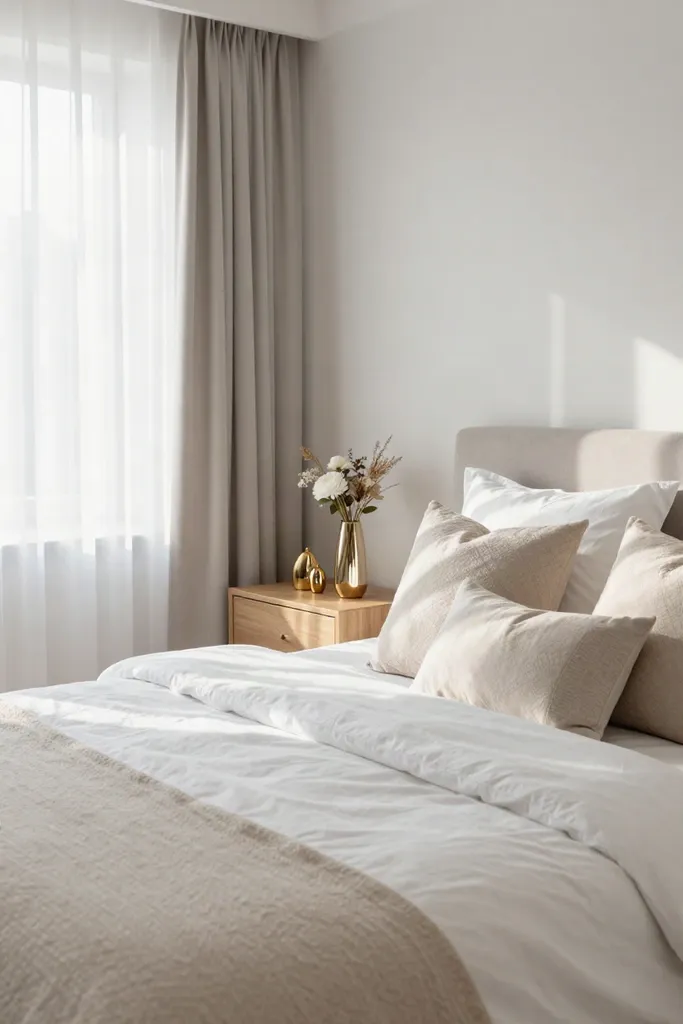
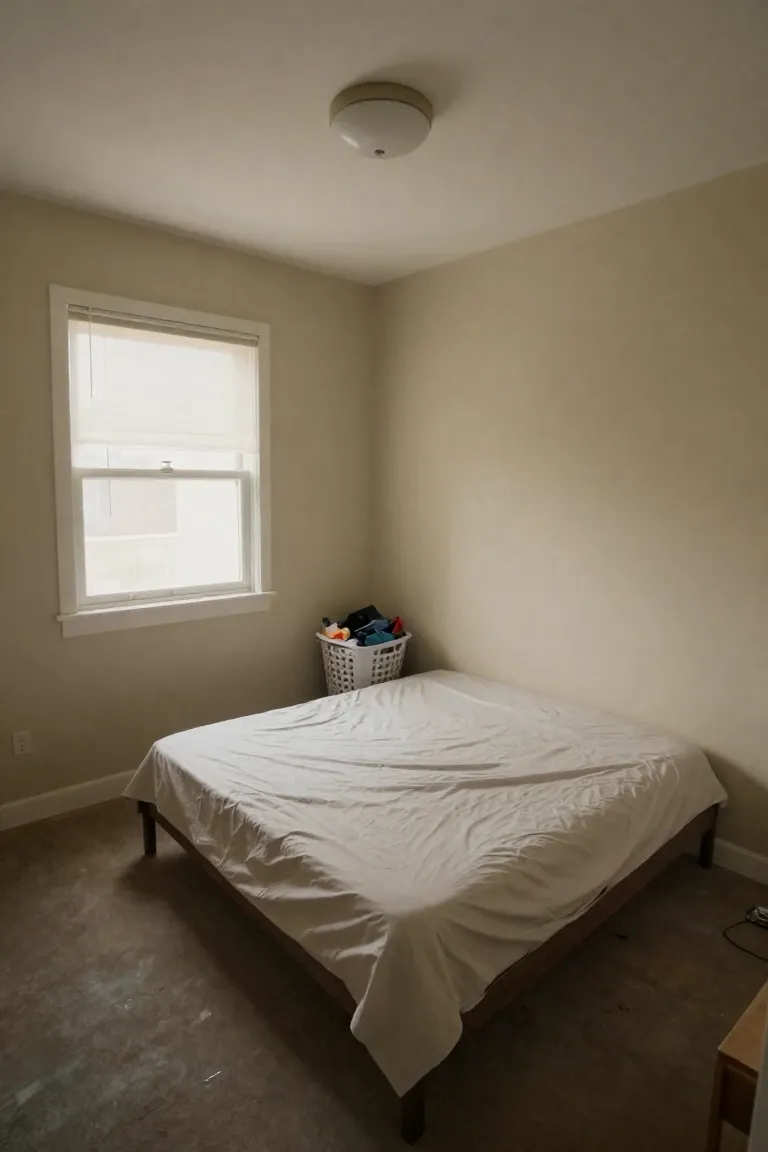
Staring at flat white walls doesn't mean your space has to feel cold or temporary. Smart rental design relies on vertical tension rods, warm layered textiles, and modular zones rather than a fresh coat of paint. With the right temporary decor strategies, you can build an inviting bedroom and pull off an impactful room update while keeping your full security deposit completely safe.
Vertical Plane Modifications: Non-Invasive Wall Layering and Architectural Illusion
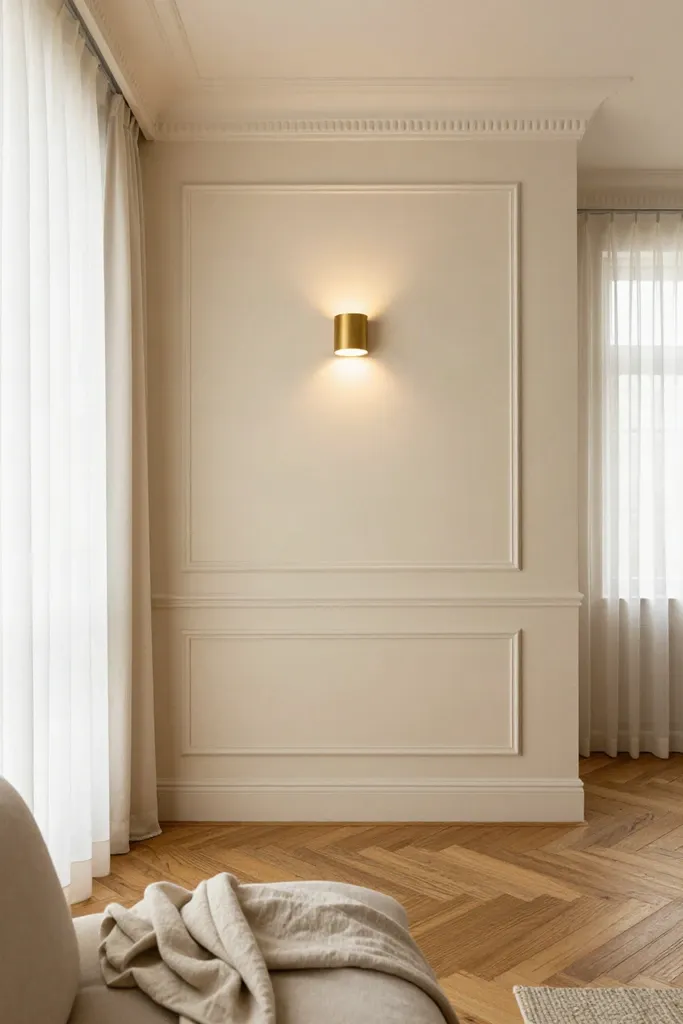
Flat rental drywall often feels stark, but you can build visual depth without driving a single nail into the studs. Removable surface backings and suspended textiles introduce depth and warmth across plain plaster without risking your lease agreement.
- Hang lightweight linen fabric panels from spring-loaded rods positioned flush against the ceiling line.
- Apply self-adhesive wainscoting strips along lower walls to produce subtle shadow lines.
- Assemble modular canvas screens behind low furniture to create a layered accent wall without paint.
Floor-to-Ceiling Heavyweight Linen Drapery Track Across Blank Drywall
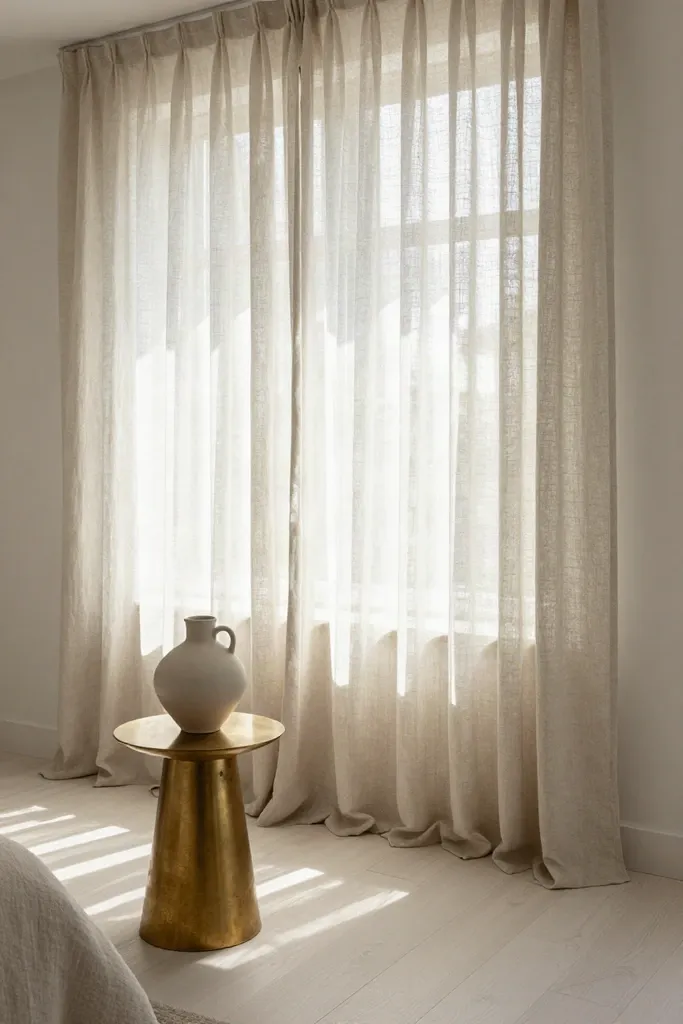
Installing a heavy-duty tension rod across an 84 to 96-inch perimeter wall masks plain drywall while improving acoustics. Hanging 300 gsm oatmeal linen panels establishes a full fabric wall that draws the eye upward. Hanging curtains close to the ceiling draws the eye upward and softens room echoes without altering the building structure.
Ribbed silicone grip pads seated at each contact point prevent the rod from slipping under the fabric weight. The result is a tactile wall treatment that leaves drywall completely unblemished.
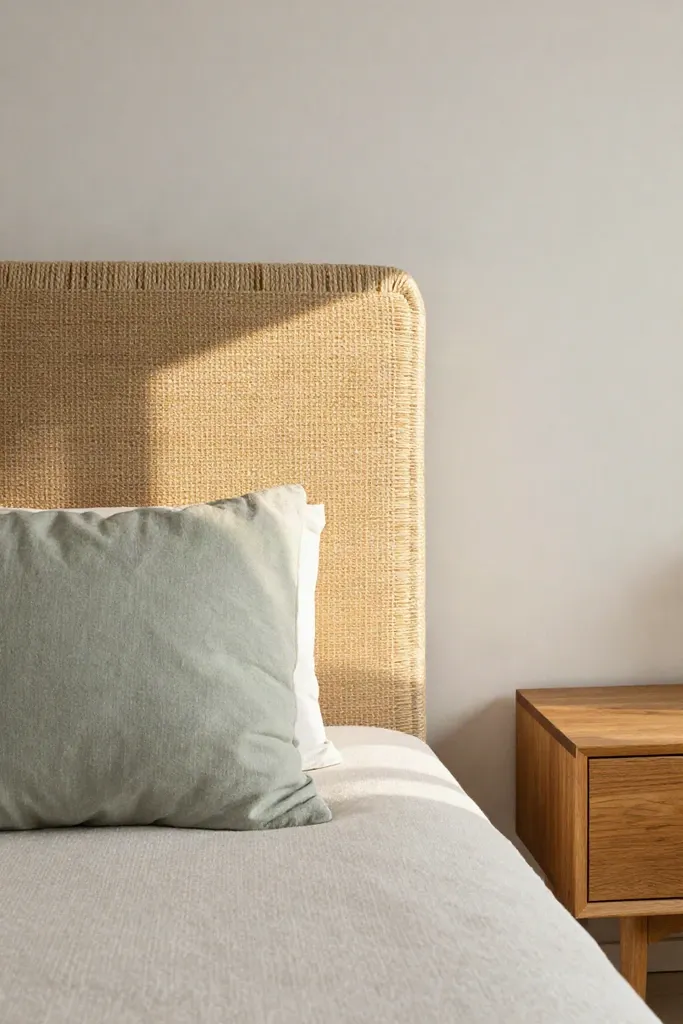
Removable Woven Grasscloth Headboard Screen with French Cleat Anchors
Building a lightweight 48-inch panel wrapped in natural sea-grass paper gives your bed frame definition while avoiding drywall damage. This textured grasscloth backdrop introduces warm contrast against flat eggshell paint, serving as an eye-catching focal point without drilling. Interlocking adhesive mounting strips rated for 16 pounds easily hold the panel flush against the wall, creating a refined headboard that lifts the entire room.
Stylist Rule: Wipe the drywall thoroughly with 70 percent isopropyl alcohol before mounting your woven textured headboard to prevent adhesive shear.
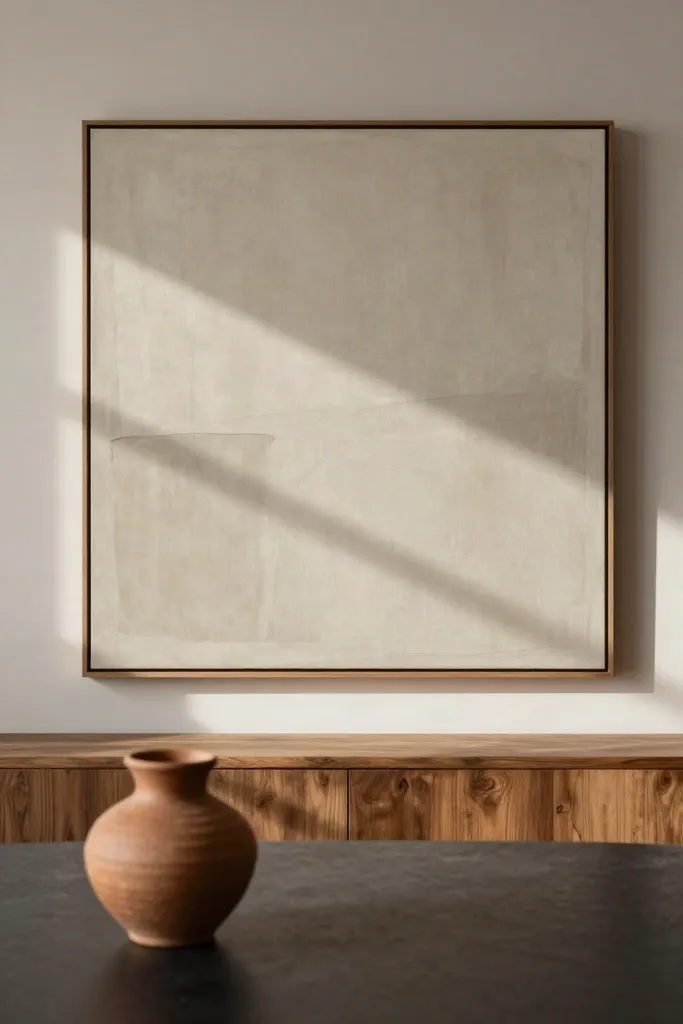
Large-Scale Linen-Framed Canvas Suspended by Museum-Grade Hardwall Hangers
Mounting an oversized raw canvas gives a compact room an immediate visual focal point without eating into precious floor area. Instead of a busy gallery arrangement that fragments tight boundaries, a substantial canvas creates a calm focal line that pulls attention away from standard rental drywall. For secure picture hanging without wall damage, use brass hardwall hangers fitted with angled steel micro-pins. These distribute shear weight effectively while leaving tiny pinholes that vanish with a quick touch of spackle at move-out.
Single-wire mounts tend to tilt and wobble over time under heavier frames. Instead, secure two D-ring brackets level along the back frame rail, spaced roughly two feet apart, so the frame hangs completely flat. This dual-point method keeps large wall art looking custom and balanced, proving an oversized piece can feel grounded without risking your security deposit.
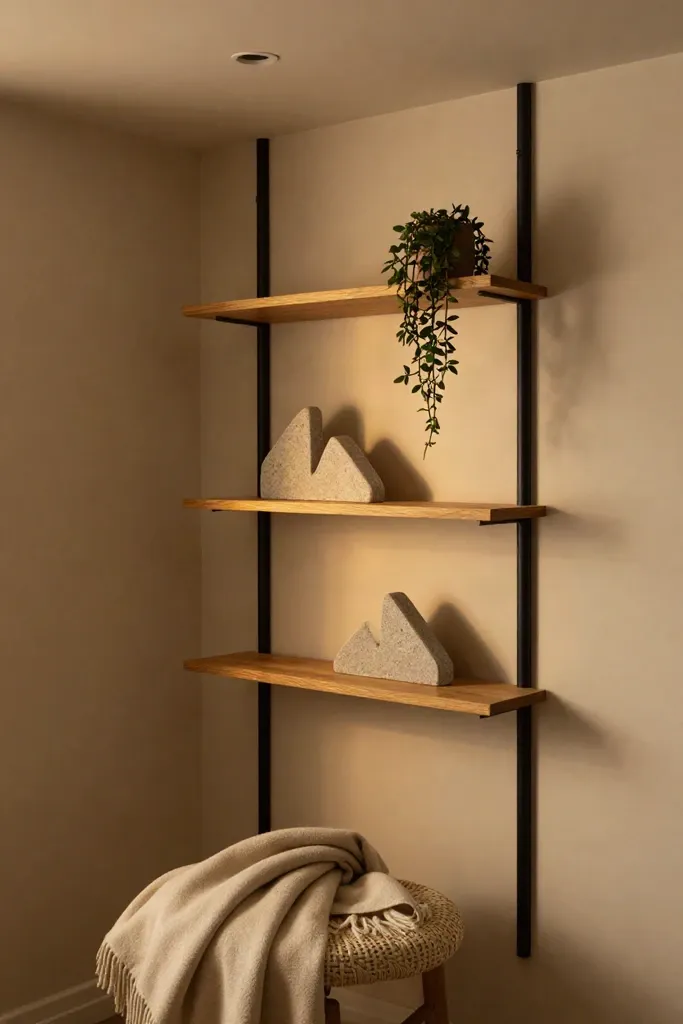
Tension-Mounted Floor-to-Ceiling Black Metal Open Display Column
When floor space runs short, taking storage upward opens up your layout instantly. A tension pole shelving unit uses vertical compression between the floor and ceiling joists, delivering practical vertical storage without a single screw. Fitted with shallow oak display shelves extending just ten inches out, this floor-to-ceiling column holds everyday essentials and ceramics while keeping walk paths completely unobstructed.
- Position the lower base plate firmly on solid flooring, keeping the vertical shaft plumb with a pocket level.
- Place non-reactive dense felt discs between the upper pressure pad and textured drywall to eliminate paint scuffing.
- Cap loading at fifteen pounds per shelf tier to prevent center shaft deflection and joint strain.
- Distribute weight evenly with heavier books placed nearest the central support column.
The result is clean, screw-free shelving that blends matte metal lines with warm wood tones for a modern display footprint.
Tactile Grounding & Lighting Architecture: Shifting Focus from Monolithic Walls
Neutral rental walls often feel cold, but you can redirect visual energy downward through intentional lighting and rich floor textiles. Layering your lighting breaks up flat wall surfaces by scattering warm illumination at different heights. Low-profile credenzas and bedside chests provide ample storage while drawing the eye toward tactile materials rather than stark plaster.
A well-planned rug placement grounds the bed frame, defining clear zones and softening footfall sounds across thin rental floorboards. By pairing ambient lamp glow with coarse weaves and smooth timber finishes, you build rich character through movable surfaces that travel with you to your next home.
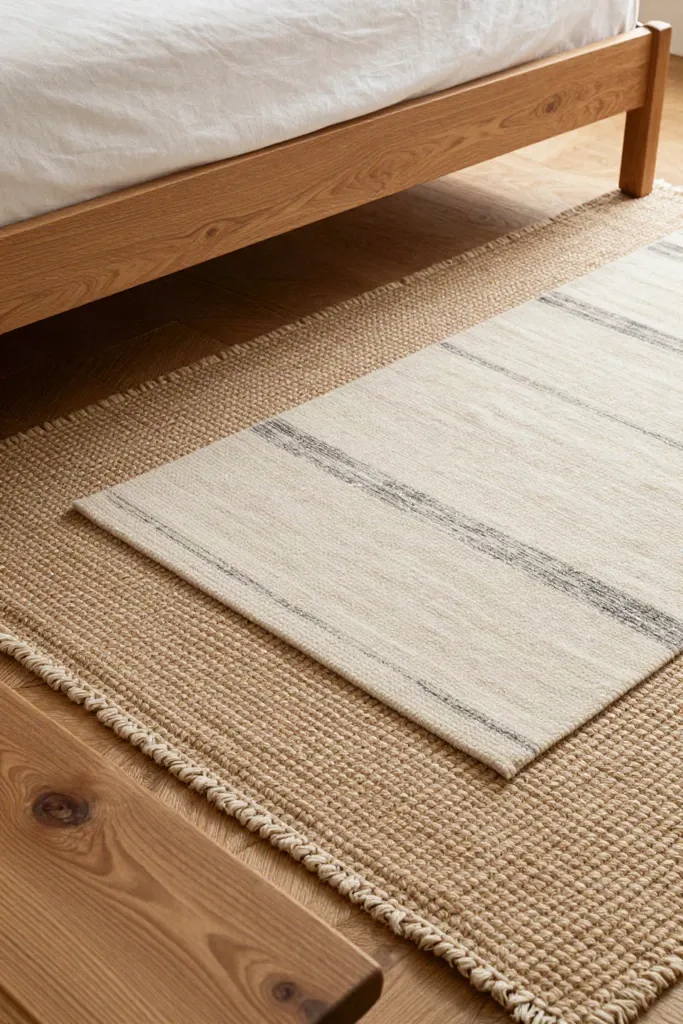
Double-Layered Jute and Wool Rug Base to Conceal Worn Rental Carpet
Tired apartment wall-to-wall carpeting often drains personality from a room, but laying down an organic foundation completely resets the space. A generous natural jute rug establishes an earthy, clean base that conceals worn builder-grade pile. To make the arrangement feel curated rather than utilitarian, place a softer low-pile wool runner slightly offset along the outer edge of the bed.
Dual-surface rubberized underlays placed directly below the primary weave prevent shifting and eliminate annoying ripples as you walk. This critical barrier also shields the underlying carpet fibers from friction. The finished layout brings rich texture underfoot, delivering an inviting, grounded look without altering lease-bound surfaces.
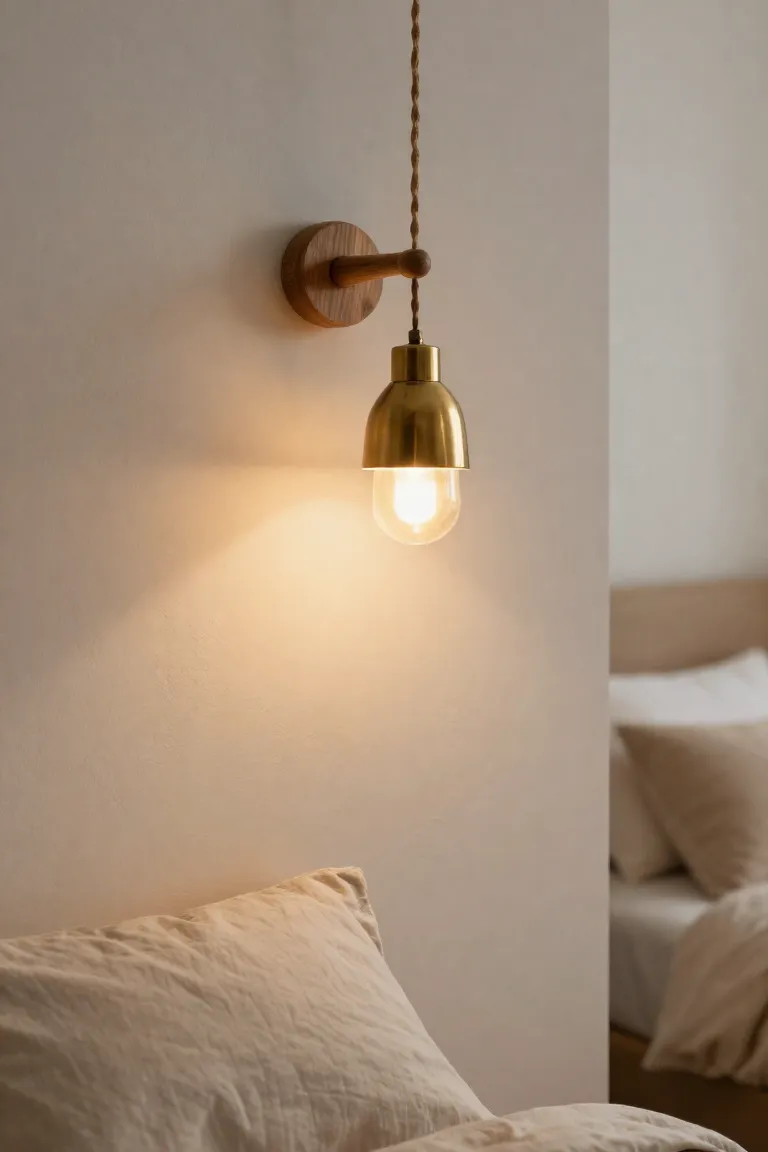
Plug-In Corded Wall Sconces Suspended from Minimalist Wooden Pegs
Mounting lighting without hardwiring frees up valuable nightstand real estate while directing warm light exactly where you unwind. You can drape a corded sconce over a solid beechwood dowel secured with adhesive cleats rated for an eight-pound threshold. Positioning the fixture roughly thirty inches above the mattress line creates a comfortable reading radius that keeps direct glare out of your eyes.
In practice, I notice that standard incandescent bulbs generate enough trapped heat to dry out or warp nearby timber mounts over time. Stick with a 4-watt 2700K warm LED filament bulb instead. This setup delivers the organic warmth of a wooden peg sconce paired with the clean accent of an exposed cord, peeling away cleanly on move-out day.
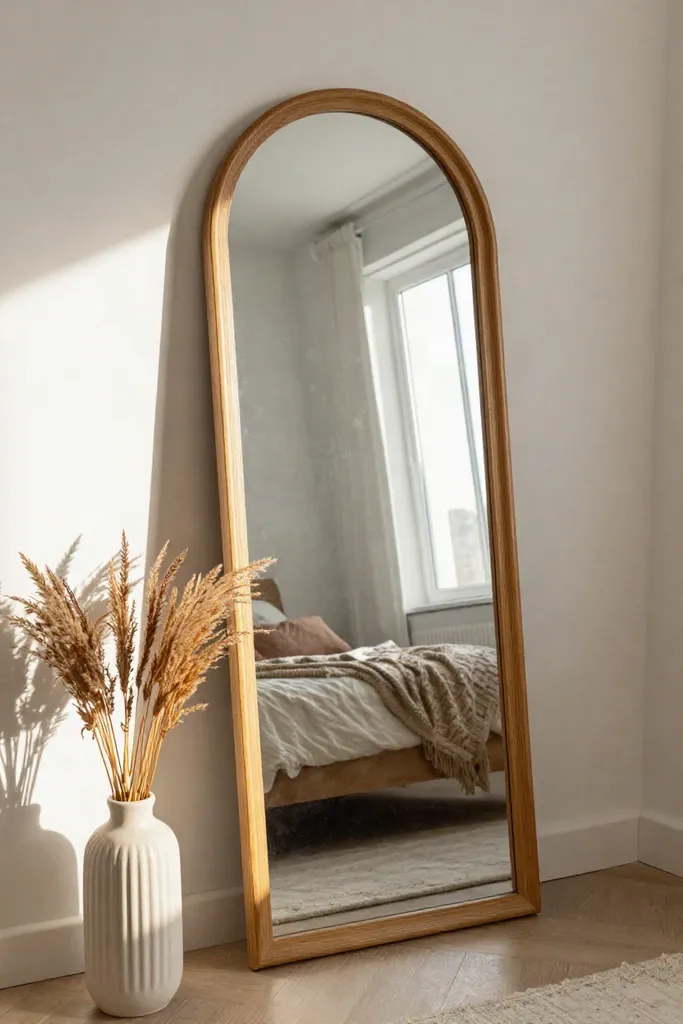
Leaning Full-Length Fluted Timber Mirror to Multiply Natural Window Luminance
Positioning a tall glass frame opposite your main window bounces natural daylight deep into shadowed bedroom corners, visually expanding tight quarters without drilling into structural walls. A full-length mirror works best when the pane rests at a steady twelve-degree backward tilt against the wall surface.
To safeguard floorboards and maintain reliable stability, set up the base with two simple measures:
- Dense silicone or rubber base isolators under the bottom rim to stop smooth timber from creeping across hardwood or low-pile rugs.
- A concealed, zero-tension nylon wall tether secured behind the crown to eliminate tipping hazards without bearing active downward weight.
A textured fluted frame adds tactile character against flat drywall. This placement draws outdoor light through dim alcoves, proving that a substantial leaning floor mirror provides maximum scale without permanent wall fasteners.
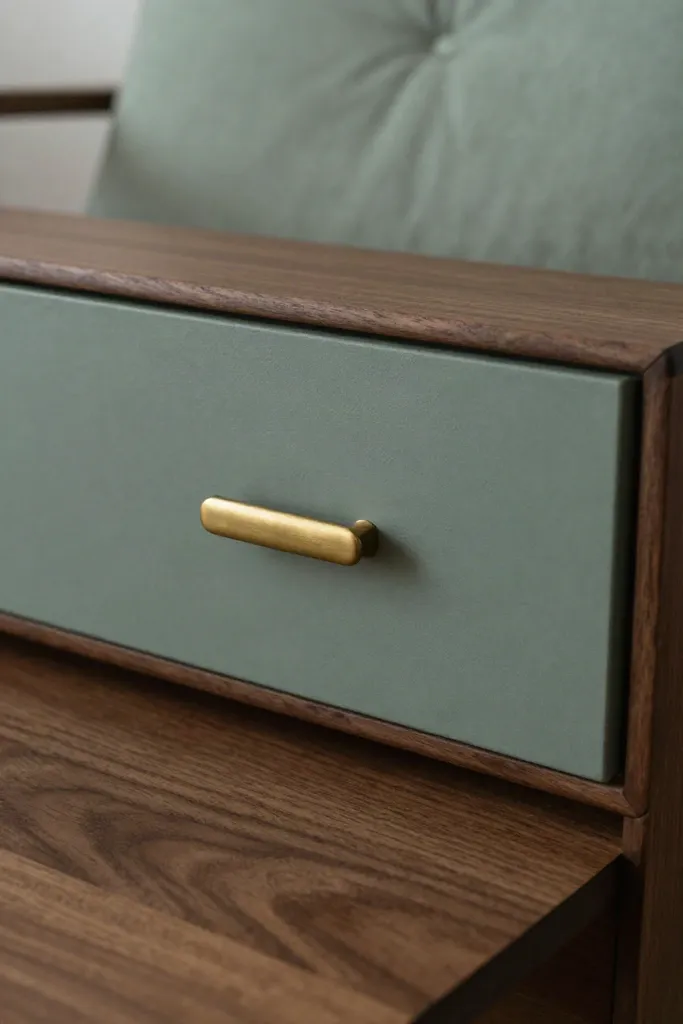
Swapped Vintage Brass Hardware and Reversible Contact Paper on Rental Dressers
Basic rental dressers often suffer from generic synthetic finishes and hollow factory hardware, but simple reversible modifications quickly reset their visual weight. You can transform flat drawer fronts using a matte parchment or woodgrain peel-and-stick wrap, smoothing the self-adhesive film from center to edge with a felt squeegee to banish trapped air pockets. Pair that fresh surface with unlacquered brass pulls, verifying your replacements match the existing center-to-center screw spacing so you never have to drill secondary holes into lease-bound cabinetry.
The critical secret to any successful furniture makeover lies in a patient removal process when your lease ends. Never yank cured vinyl straight off particleboard drawers, as cold adhesive can easily strip cheap laminate veneers. Warm the film surface with a household hair dryer on medium heat to soften the sticky backing before slowly lifting the edge, ensuring the project leaves zero residual gum behind.
Load Capacity, Clearance, and Fastener Specification Matrix for Rental Bedrooms
Understanding exact mechanical thresholds prevents unexpected drywall damage and ensures your bedroom installations stay securely mounted through changing seasons. Before hanging mirrors, shelving, or woven tapestries, consult this straightforward fastener guide to match your decor weight with non-destructive hardware.
| Fastener Type | Safe Working Load | Maximum Span | Removal Method |
|---|---|---|---|
| Heavy Adhesive Cleats | 4 to 16 lbs per set | Single contact point | Slow 180-degree tab stretch |
| Spring-Loaded Tension Rods | 10 to 25 lbs distributed | Up to 96 inches | End-cap twist release |
| Fine-Gauge Hardwall Pins | 15 to 30 lbs shear | Dual bracket mounts | Pry tool with pinhole spackle |
In our studio tests, humid summer weather softens pressure-sensitive adhesive bonds if the drywall was not prepped with isopropyl alcohol. Wiping down the wall surface removes ambient dust and skin oils, allowing temporary mounts to perform reliably. Following this fastener guide ensures that every installation holds firm while protecting your security deposit.
Critical Pitfalls: Preventing Adhesive Failure, Drywall Tearing, and Surface Warping
Surface damage in rental spaces usually happens during removal rather than daily use. When adhesive strips or vinyl films are pulled outward at a perpendicular angle, the localized shear force easily strips builder-grade latex paint and tears the paper backing beneath. Moisture trapped behind solid vinyl sheets in humid rooms can also soften drywall over time, leading to unexpected bubbling.
- Warm stubborn adhesives with a hair dryer on low heat around 120°F to soften the tacky bond before attempting removal.
- Stretch the release tab flush and parallel against the wall surface rather than peeling outward to prevent drywall tearing.
- Dissolve leftover sticky gum with a dab of odorless mineral spirits on a clean microfiber cloth, which clears residue without stripping paint sheen.
- Back off tension rods slightly if you notice hollow metal studs flexing under concentrated horizontal pressure.
Strategic Implementation Verdict: Balancing Budget, Spatial Constraints, and Lease Terms
Transforming a leased room successfully comes down to matching your budget and energy to the length of your lease agreement. For a standard twelve-month lease, your initial priority should focus on portable, high-impact textiles like floor-to-ceiling tension drapery and layered wool rugs. These additions soften harsh acoustics and block awkward sightlines immediately without risking a dime of your initial deposit.
Multi-year stays justify deeper custom touches, such as swapping dresser hardware or mounting modular shelving on secure tension poles. Curating pieces that move with you turns every temporary space upgrade into a lasting decor investment for your next home.