27 Small Apartment Decorating Ideas for Your Bedroom: The Hidden Storage Masterclass
Summary
- The Magic of Hidden Storage in Small Bedrooms
- Under-the-Bed Secrets: The Ultimate Real Estate
- Vertical Illusions: Walls that Work Harder
- Multi-Functional Furniture: The Transformer Bedroom
- Closet Hacks: Maximizing the Unseen
- Camouflage & Disguise: Aesthetic Hiding Spots
- Lighting & Layout: Spatial Tricks to Hide Clutter
- Final Thoughts on Minimalist Maximization
The Magic of Hidden Storage in Small Bedrooms
Tight floor plans often force unwanted compromises between visual calm and everyday utility. When gathering small apartment decorating ideas bedroom clutter remains the quickest way to ruin an otherwise intentional design. Smart, out-of-sight cabinetry and stealth compartments offer an immediate solution to maximize bedroom space, letting you keep bulky seasonal essentials neatly tucked away while preserving an airy, peaceful atmosphere.
Under-the-Bed Secrets: The Ultimate Real Estate
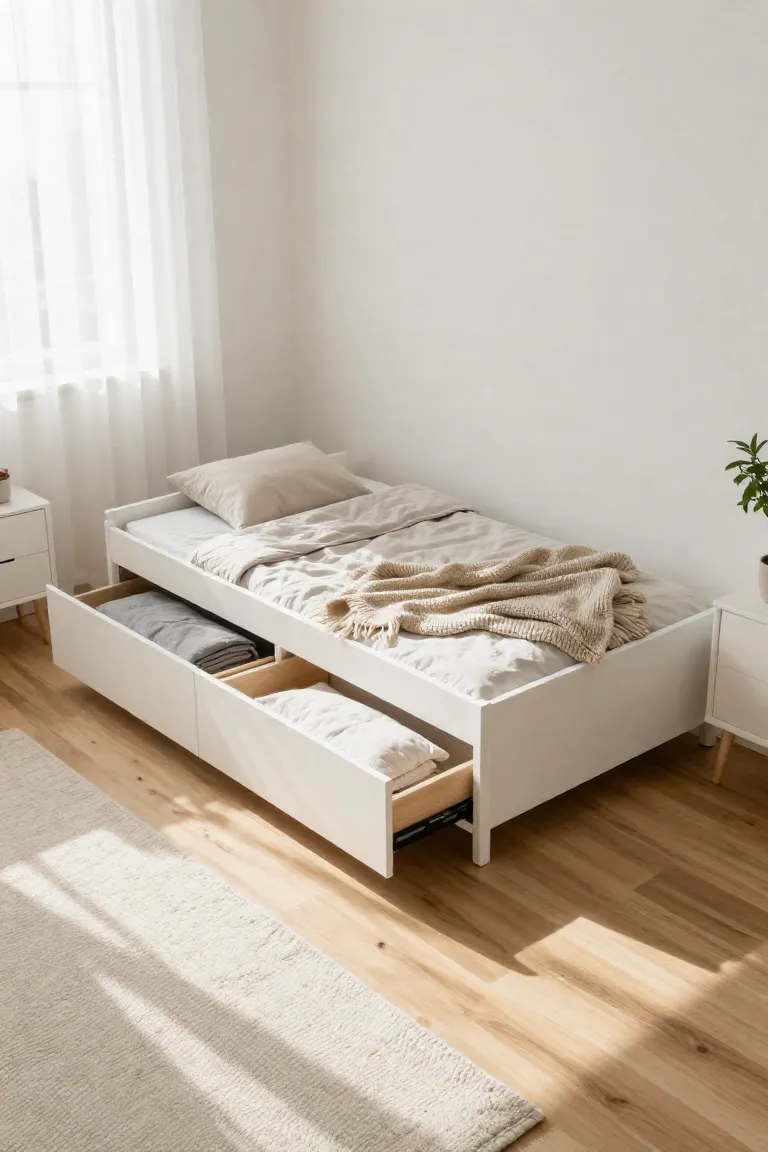
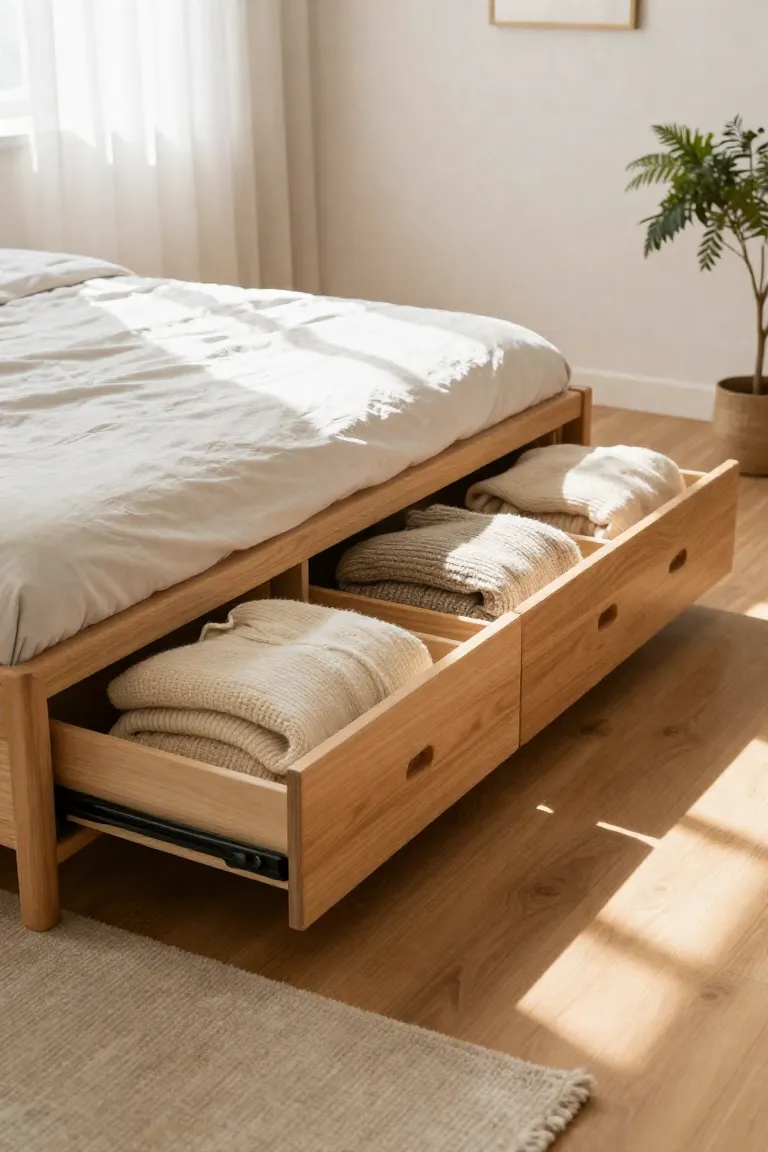
The broad horizontal footprint of your mattress holds the largest untapped square footage in your entire sleeping quarters. Before investing in bulky dressers that cramp narrow walkways, turning to hidden bedroom storage beneath the frame creates instant breathing room. This low-profile zone easily accommodates bulky winter duvets, off-season wardrobe pieces, and spare linens without disrupting your eye-level sightlines. Setting up tailored under bed storage keeps dust bunnies at bay while freeing valuable wall space for art, mirrors, or simple floating nightstands. Because this footprint is already spoken for, claiming it prevents heavy floor clutter from encroaching on your living zone, delivering a streamlined foundation for the rest of your organizational strategy.
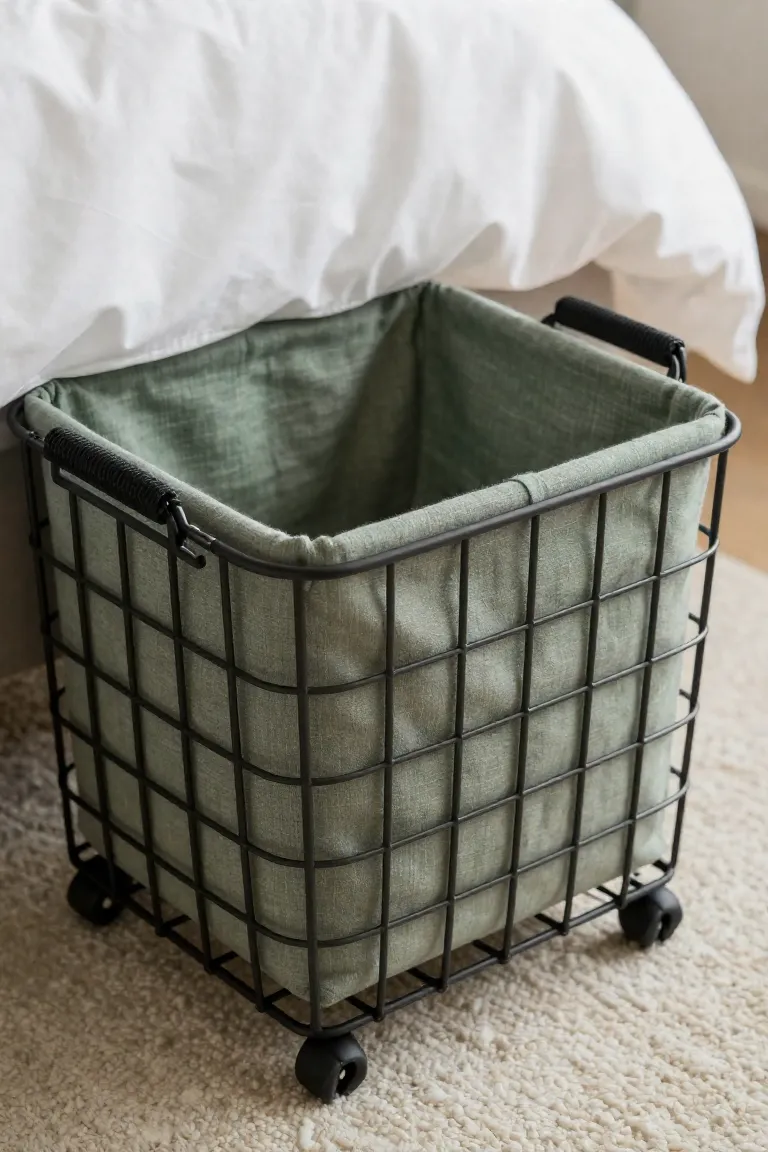
1. Rolling Wire Baskets with Custom Fabric Liners
Industrial metal mesh bins fitted with smooth-glide casters offer an accessible, budget-conscious foundation for organized bedroom floors. Standard open wire frames tend to look messy when filled with mismatched clothing or spare blankets, but pairing them with tailored textile covers instantly solves the visual noise. Choosing durable rolling storage baskets lets you slide bulky items in and out effortlessly across hardwood or low-pile rugs, preventing scratches while keeping daily items within quick reach.
For a cohesive, boutique look, sew or pin washed linen inserts cut from fabric remnants that coordinate directly with your existing duvet or flat sheets. Neutral cotton canvas in warm oatmeal or soft charcoal masks stored contents while echoing your bedding palette. This customized DIY under bed storage setup keeps dust away from folded textiles and creates a polished, bespoke appearance whenever the bed skirt shifts.
2. The Lift-Up Hydraulic Storage Bed
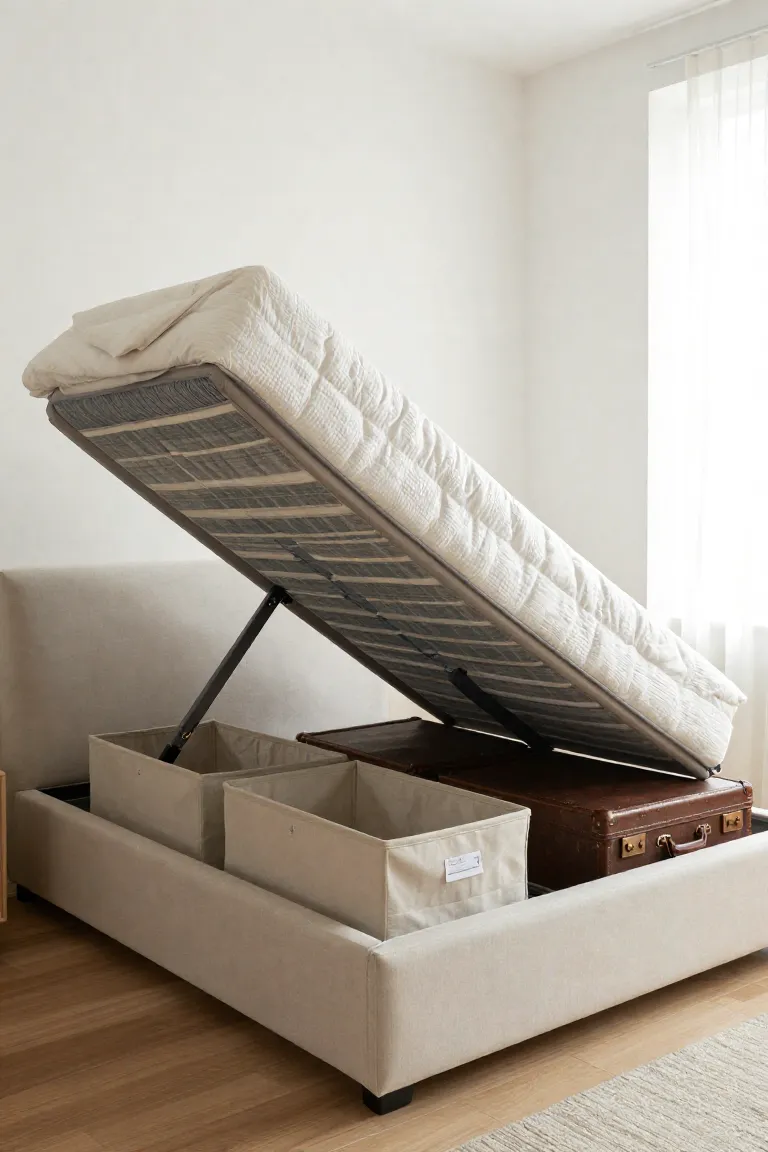
When loose floor bins still leave your floor plan cramped, stepping up to an integrated gas-strut mechanism unlocks the entire footprint beneath your mattress without requiring clearance for sliding drawers. Investing in a solid lift up bed frame lets you smoothly hoist the platform with one hand, revealing a cavernous, dust-sealed vault directly over the floorboards. This hidden volume works wonders for bulky hardshell suitcases, extra duvets, and vacuum-compressed bags of winter parkas that typically choke closet shelves. Because the entire mattress raises vertically rather than rolling outward, you can place nightstands flush against the side rails without blocking access to your belongings. Choosing a modern hydraulic storage bed upholstered in textured linen or warm bouclé keeps the room looking tailored while quietly swallowing half a closet’s worth of seasonal gear.
3. Upcycled Vintage Suitcases on Wheels
If bespoke furniture falls outside your current decorating budget, thrifted travel trunks bring character and utility right down to floor level. Mounting low-profile swivel casters onto the rigid base of hard-shell luggage transforms flea market finds into rollable under-bed compartments with authentic retro charm. This clever upcycled bedroom decor project hides spare bedsheets or off-season knitwear out of view while showing off aged leather handles and brass latches whenever your duvet lifts.
- Fasten two-inch rubber caster wheels with short wood screws and interior plywood backing plates to distribute weight evenly across brittle vintage shells.
- Line the interior with peel-and-stick linen wallpaper or aromatic cedar blocks to safeguard woolens against stale odors and dust.
- Reserve this vintage suitcase storage setup for extra wool throws, archived photo albums, or delicate heirlooms that you pull out only a few times a year.

4. Repurposed Dresser Drawers on Casters
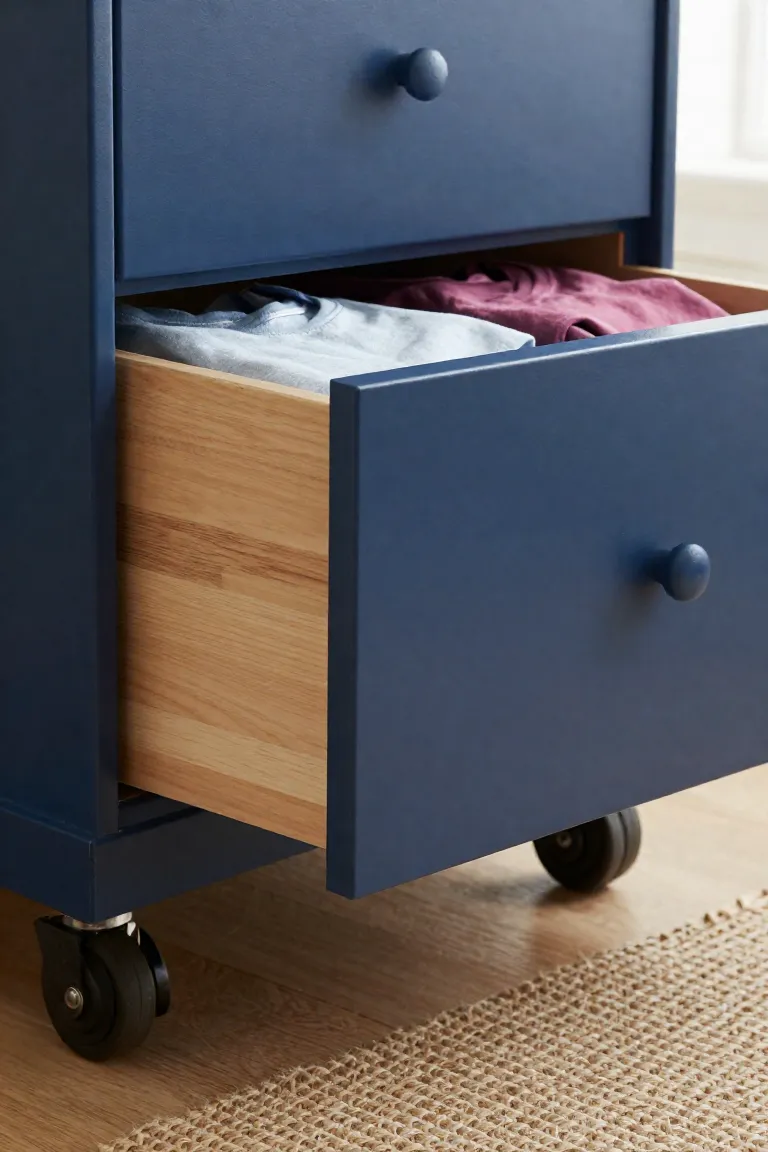
Salvaging solid wood drawers from discarded curbside dressers gives you custom under-bed trays tailored to your room's exact trim color. Sanding down chipped veneers, applying a coat of chalk paint in soft sage or warm linen, and installing smooth-gliding wheels turns secondhand timber into purposeful rolling boxes. Embracing these creative DIY bedroom ideas gives you deep, open-topped organizers that keep thick knits and denim stacks orderly without spending money on disposable plastic tubs.
- Attach four directional casters directly to the reinforced corners of the baseboard so the box pulls straight out along your rug line.
- Swap outdated drawer hardware for flush brass campaign pulls or woven leather tabs that will not snag your floor-length quilt.
- Use these repurposed drawers to organize folded hoodies, spare pillowcases, or reading materials that need quick access from bedside.
5. Vacuum-Sealed Bags in Low-Profile Totes
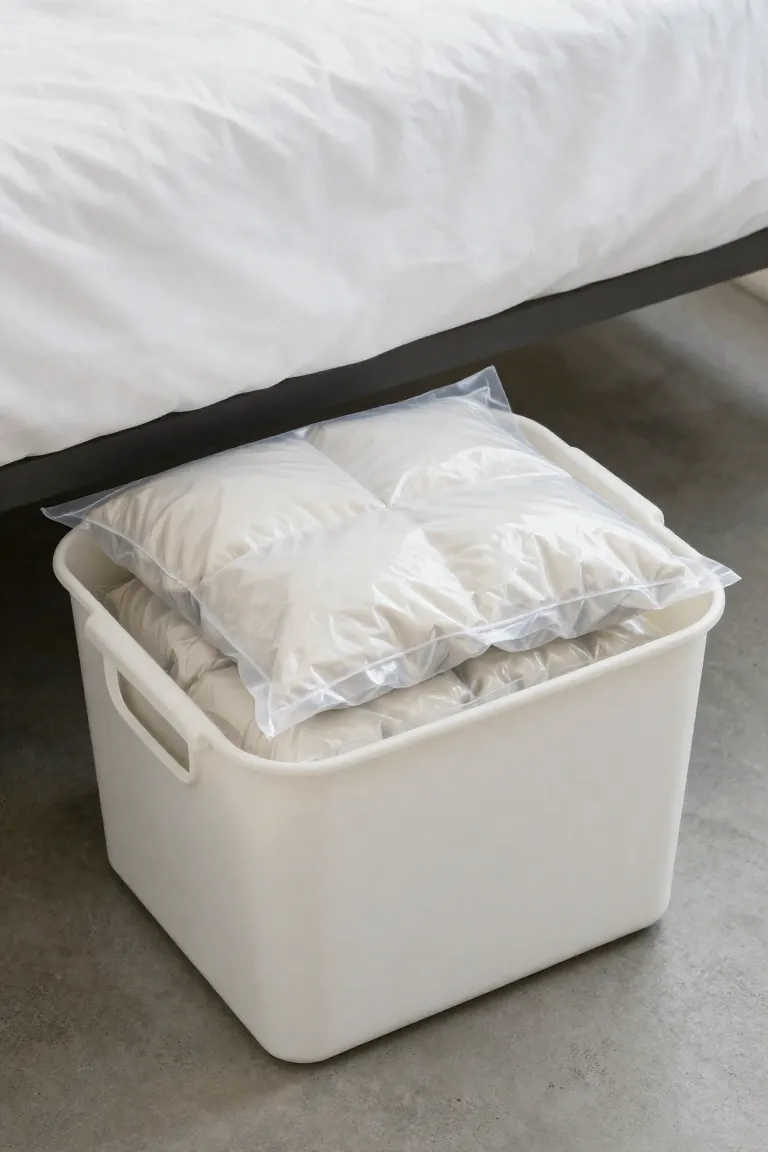
When your bed frame sits barely five inches off the floor, sliding rigid wooden drawers underneath simply isn't an option. Compressing bulky down duvets, wool blankets, and off-season knits into airtight vacuum sealed bags flattens seasonal textiles to a fraction of their original thickness. Rather than sliding clear, crinkled plastic across the floorboards where it collects lint and catches the eye, slip those airtight packages inside matte, opaque containers designed specifically for low profile storage. Rigid polypropylene tubs with smooth gliding bases protect the compression seals from accidental punctures while concealing the visual chaos of squished fabrics. Look for discreet latching lids that keep bedroom dust and pet dander at bay, then tuck cedar blocks inside each layer to preserve linen freshness until colder months roll back around. The result is a clean, dust-free footprint that leaves your floor space feeling serene and completely uncluttered.
Vertical Illusions: Walls that Work Harder
Once you've maximized every square inch beneath the mattress, the most transformative organizing territory sits directly above eye level. Small sleeping quarters often feel cramped not because of actual square footage, but because horizontal surfaces get overwhelmed with daily necessities. Shifting your layout strategy toward smart vertical bedroom storage instantly redirects visual focus toward the ceiling molding, creating an immediate sense of height and breathing room. When storage fixtures blend seamlessly into drywall tones rather than projecting heavy shadows into the room, your perimeter walls appear to recede, opening up the entire floor plan.
In compact layouts, thoughtful small space wall solutions pull double duty by providing discreet containment while keeping floor pathways entirely clear. Tall architectural millwork, shallow built-in ledges, and flush recessed compartments invite natural light to bounce unimpeded across the bedroom. Instead of cluttering surfaces with freestanding chests that choke walking clearance, utilizing the full height of your walls gives every stray object a tucked-away home without sacrificing an ounce of physical comfort. You end up with a quiet, restful room that feels twice its footprint simply by letting the vertical plane do the heavy lifting.
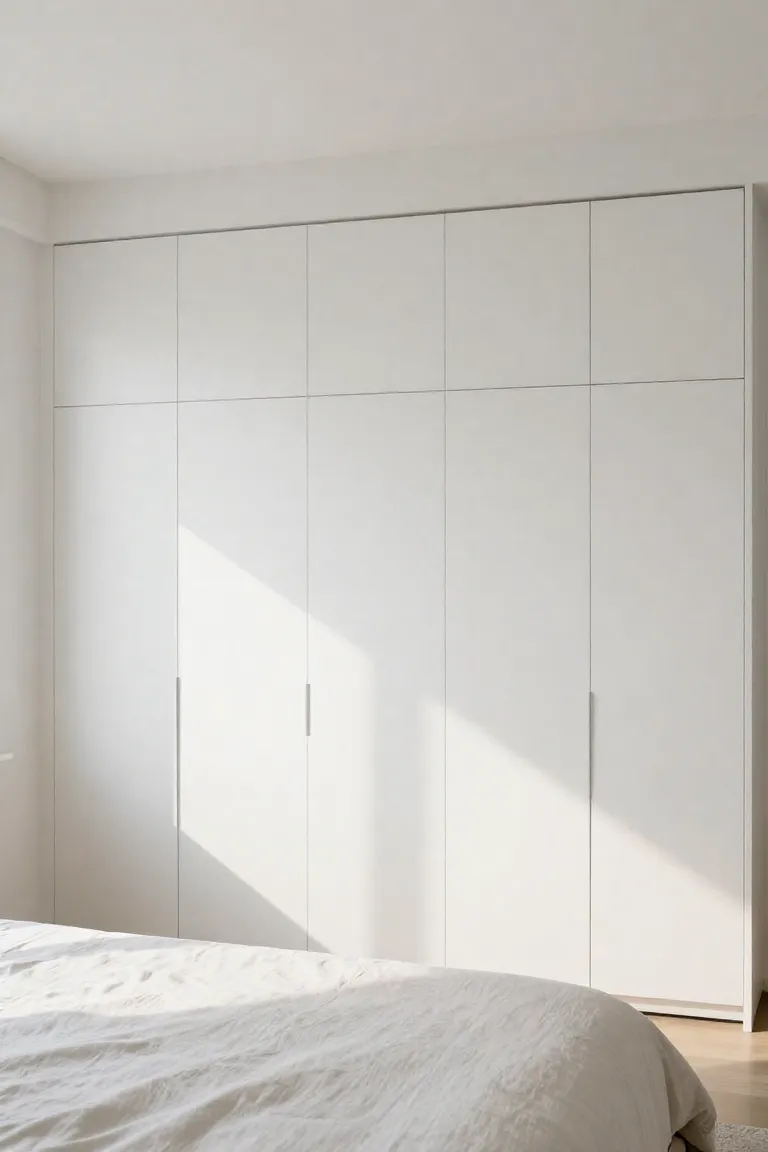
6. Floor-to-Ceiling Wardrobes with Mirrored Doors
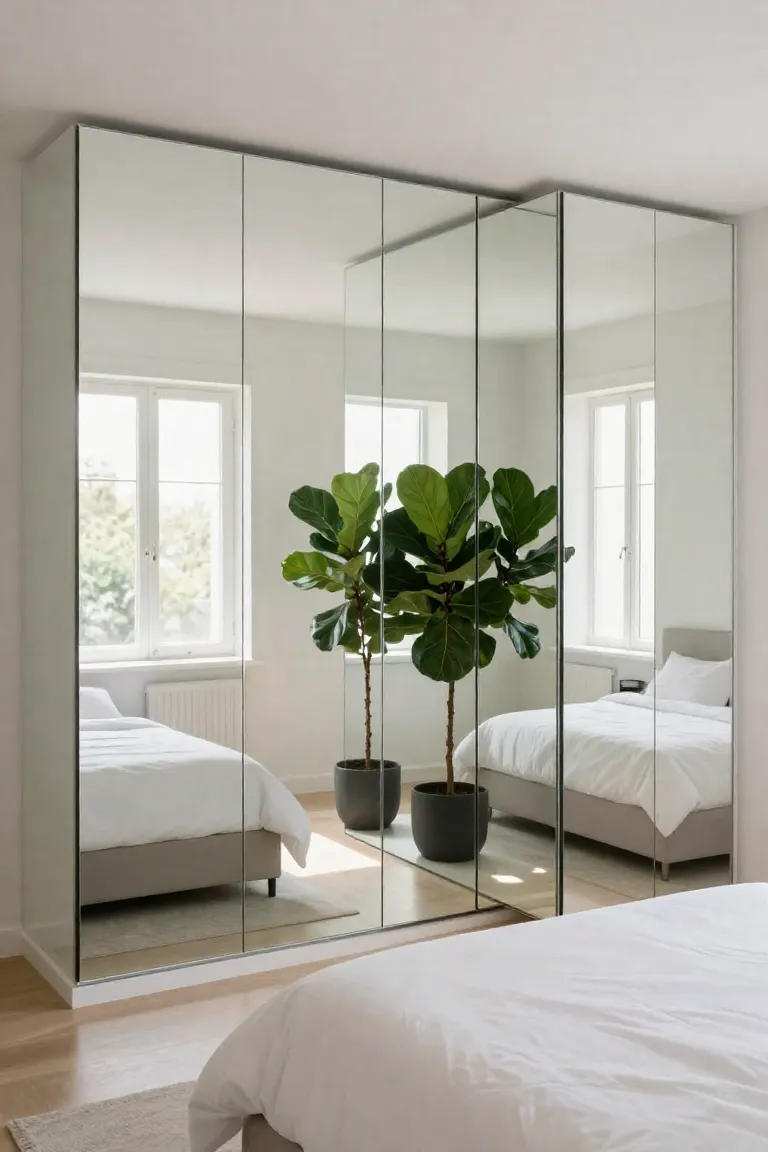
Running customized cabinetry from the baseboards straight up to the ceiling crown eliminates that awkward, dust-collecting gap atop standard store-bought armoires. Investing in dedicated floor to ceiling storage allows you to allocate upper compartments for rarely used suitcases or spare bedding, keeping daily wardrobe essentials at accessible heights. Because tall monolithic woodwork can sometimes feel visually dense in a snug layout, integrating full-length glass fronts changes everything. A sleek mirrored wardrobe bounces ambient window light into dim corners and reflects the surrounding room, making your sleeping quarters feel twice as expansive the moment you walk through the doorway.
Flush frameless panels maintain a sleek architectural line that blurs the boundary between functional closet and exterior wall. To keep the look tailored and serene, choose handle-free push-to-open latches or recessed edge pulls in brushed nickel that stay out of your walking path. Soft drapery hung near the mirrored reflections softens hard edges while doubling the perceived depth of your window treatments. You gain dozens of cubic feet of concealed organization without surrendering the light, airy atmosphere essential for everyday relaxation.
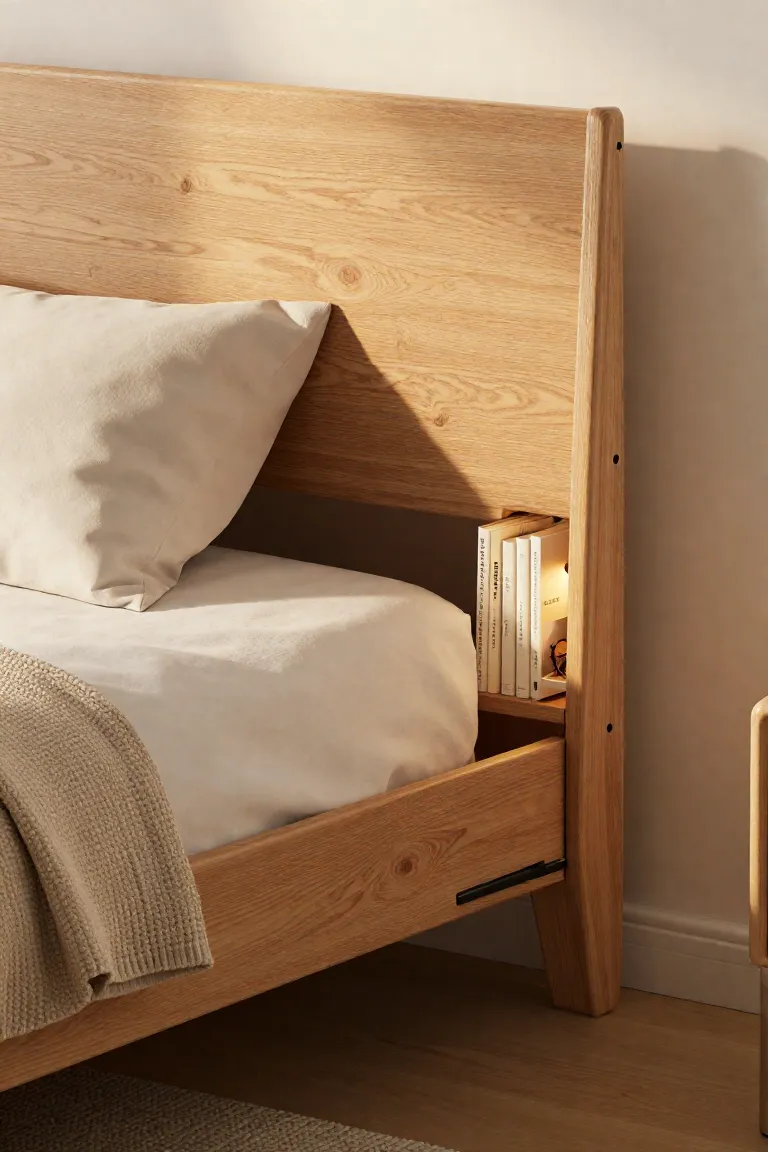
7. The False Wall Headboard
Stepping away from traditional flat backboards, constructing or installing an extended partition right behind your mattress creates an architectural anchor with serious utility. A deep storage headboard pushes your bed just ten to twelve inches forward, establishing a smart partition that conceals full-height vertical storage. Instead of crowding floor space with bulky side tables, smooth slide-out towers roll out from either flank on heavy-duty drawer slides, tucking away reading stacks, charging cords, and nighttime water carafes out of sight.
Custom carpentry or modular shelving units let you tailor this hidden shelving headboard with flush touch-latches so the sides stay completely seamless when closed. The flat top ledge simultaneously acts as a minimalist display mantle for framed line art and trailing pothos, giving your sleeping nook a grounded, boutique-hotel calm without a single cord or clutter trap exposed to the room.
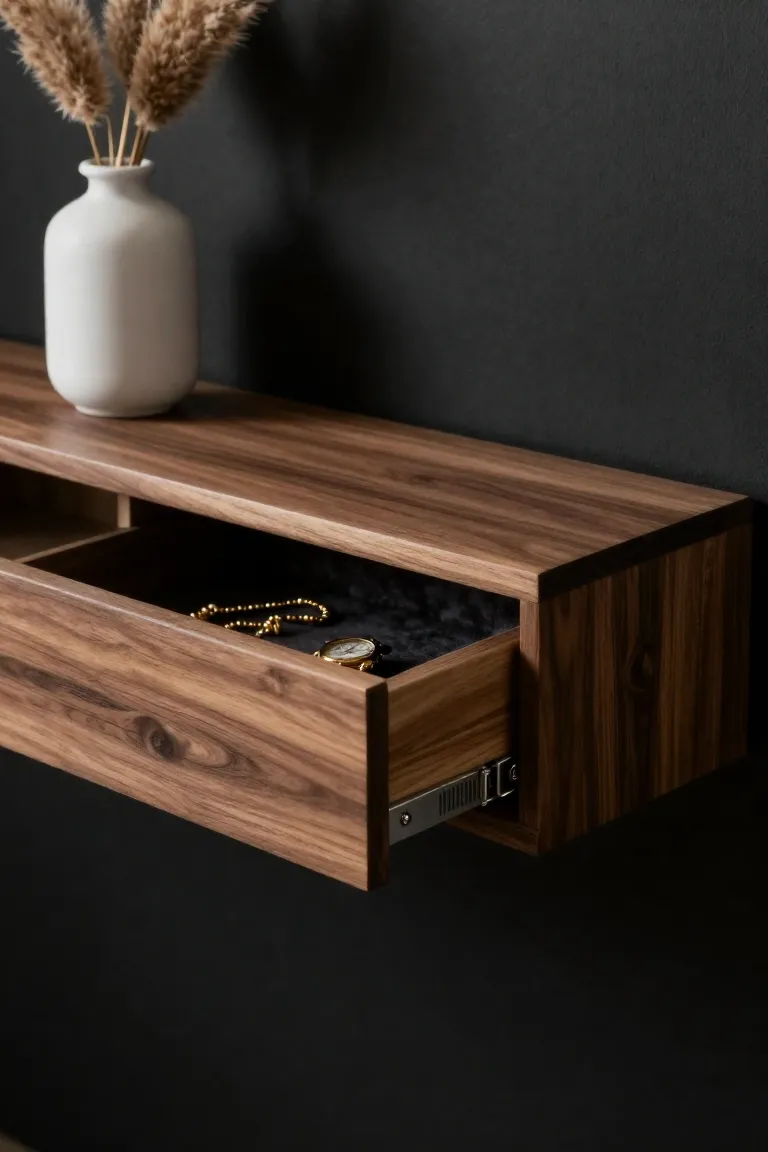
8. Floating Shelves with Secret Drawers
When your floor space is already fully committed, thick-profile timber shelves mounted at eye level offer an ingenious diversion for small everyday essentials. A chunky floating shelf with drawer looks like a solid slab of white oak or walnut from across the room, yet a magnetic key or discreet undercut reveals a smooth, shallow slide-out tray tucked inside its hollow core. This low-profile secret compartment shelf is ideal for stashing delicate jewelry, spare house keys, passports, or personal journals without breaking the clean horizontal lines of your gallery display. Style the upper surface naturally with ceramic pottery, stacked art books, and small linen-wrapped boxes so the piece blends seamlessly into your existing wall composition, keeping high-value items entirely invisible to casual visitors.
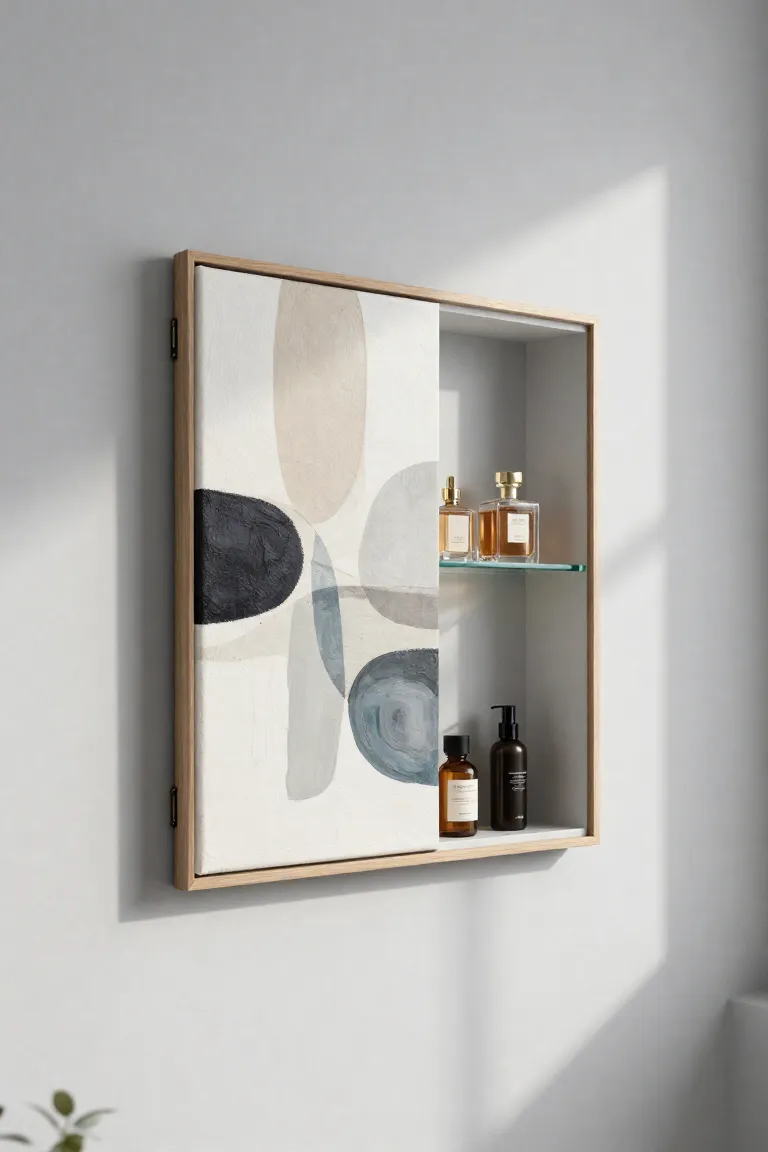
9. Picture Frames that Double as Medicine Cabinets
Standard wall art offers prime real estate for concealment when you trade flat canvases for hinged, shadowbox profiles. Recessing a shallow medicine chest between two standard drywall studs lets you mount a framed art print directly onto the front door, disguising everyday clutter behind gallery-worthy visuals. Choosing picture frame storage allows you to corral fragrance bottles, daily skincare serums, and vitamin organizers in your bedroom without turning your private retreat into an obvious dressing room annex.
In small primary suites where vanity surface space is scarce, this setup works as a stylish alternative to conventional hidden wall safe art. Piano hinges and concealed magnetic catches ensure the frame swings smoothly open while staying completely flush against the trim when shut. You enjoy instant access to your morning routine essentials during busy weekdays, while guests only ever notice your favorite museum print hanging serenely on the wall.
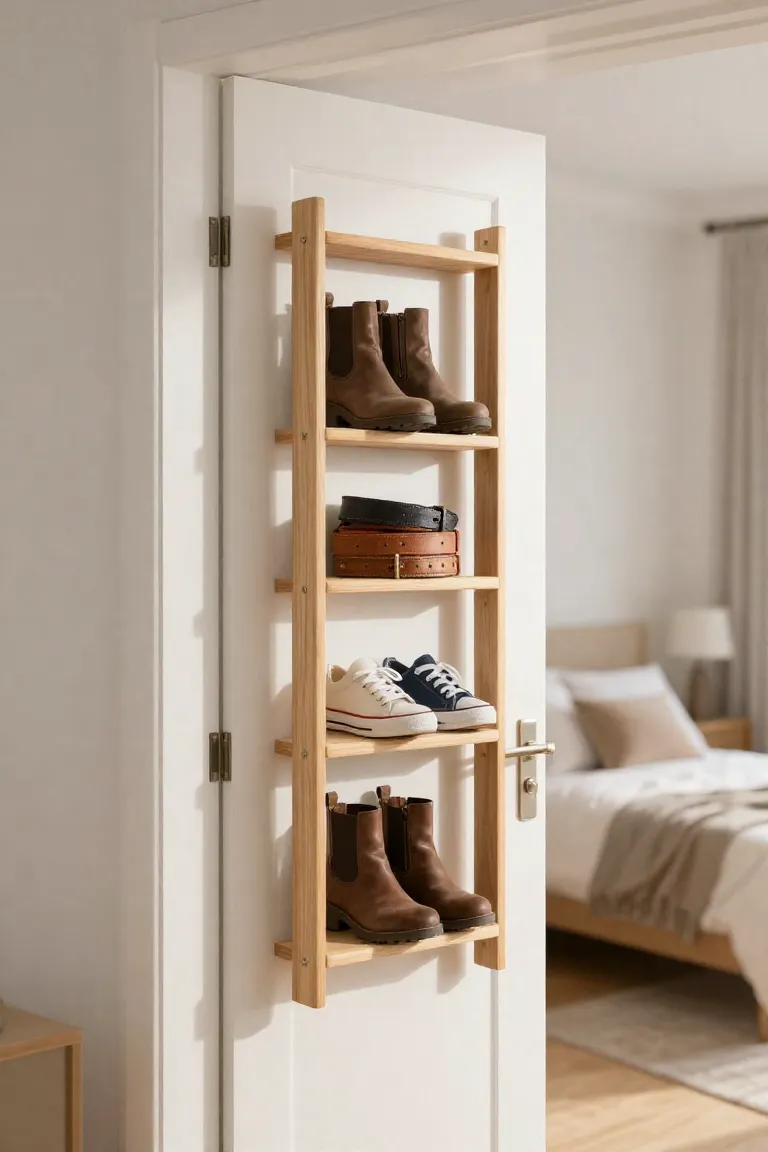
10. Over-the-Door Hidden Pantries for Shoes
Another vertical expanse waiting for purposeful activation sits directly behind your closet or bedroom entry. Instead of flimsy fabric shoe pouches that sag and collect dust, installing a metal tier rack traditionally designed for kitchen pantries creates rigid, dependable over door shoe storage. These narrow steel racks mount securely without drilling into the core, offering structured wire baskets that hold heavy sneakers, loafers, and rolled leather belts upright. When the door remains ajar during the day, the collection stays entirely concealed between the door panel and the adjacent wall, preserving clean architectural sightlines.
For smooth daily routines, this hidden door organizer keeps your footwear pairs grouped by seasonal rotation while keeping delicate accessories like silk scarves within easy reach. The shallow basket depth prevents doors from bumping into inner closet shelves, making it a reliable solution for compact layouts where every square inch of clearance counts.
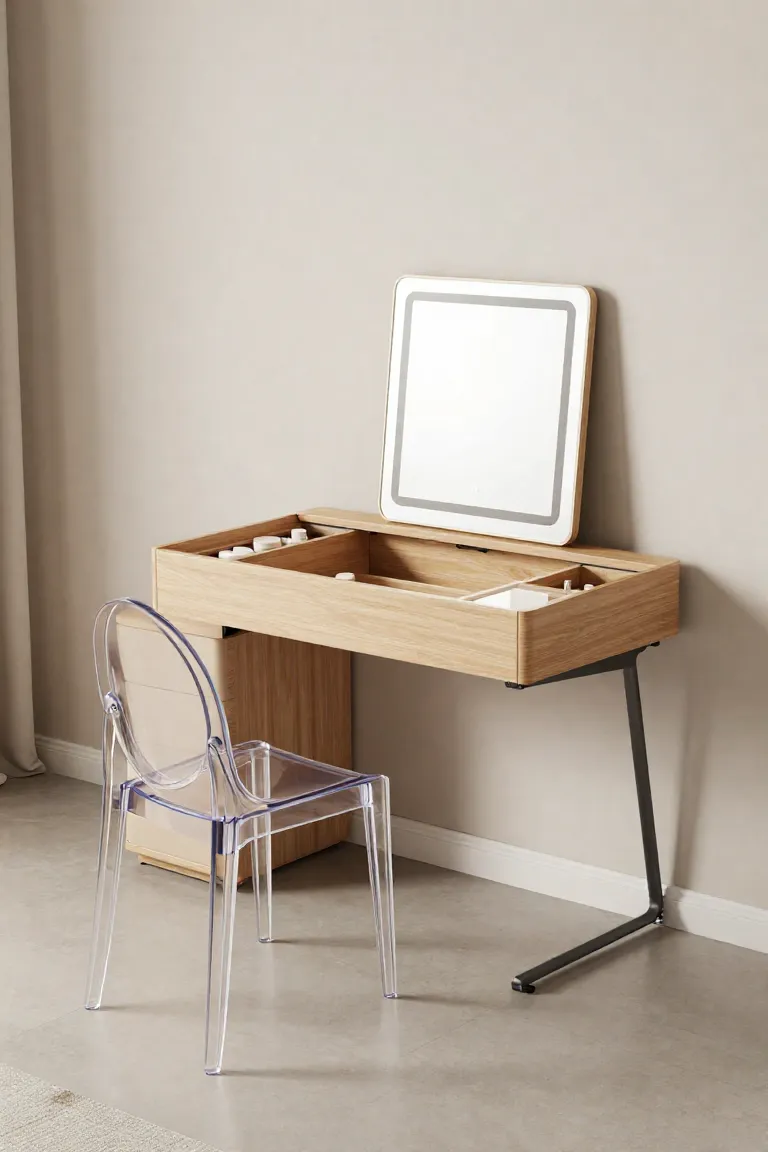
Multi-Functional Furniture: The Transformer Bedroom
When floor space is strictly limited, dedicating room to single-purpose pieces quickly leads to physical and visual clutter. Adopting thoughtful multi functional furniture changes how a compact bedroom operates, shifting the layout from cramped quarters into an agile, highly adaptable environment. Every piece you bring across the threshold needs to earn its footprint by delivering double duty, whether that means a daytime desk transforming into a nighttime vanity or a seating perch concealing deep utility bins. Investing in durable space saving bedroom furniture eliminates the constant urge to add standalone storage units, keeping walkways wide, natural light uninterrupted, and your daily retreat quietly organized from morning to night.
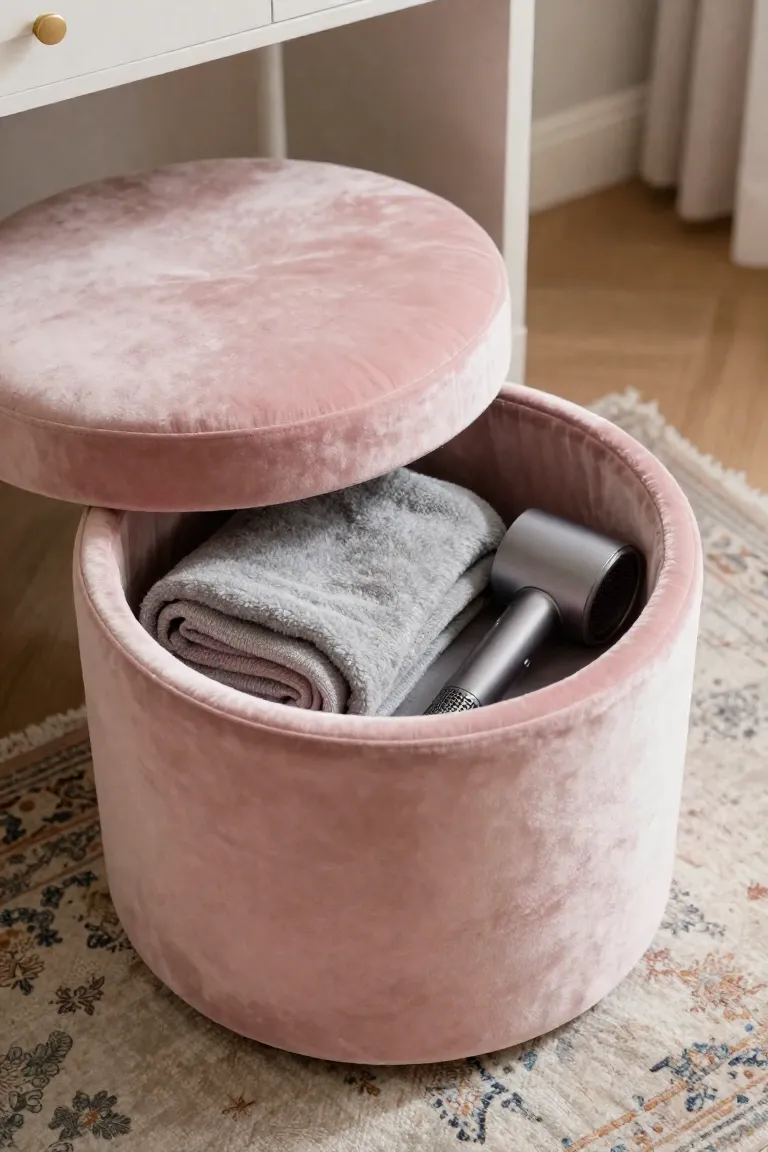
11. The Storage Ottoman as a Vanity Stool
A dedicated dressing corner often loses its appeal when cords, styling wands, and hair dryers scatter across the tabletop. Swapping out a conventional wooden chair for a tailored storage ottoman bedroom piece introduces plush comfort while swallowing that awkward visual noise whole. The lift-off lid reveals a deep, lined cavity right beneath your seat, creating a discreet home for heavy appliances, heat-resistant mats, or folded winter throws. Because the exterior features textured boucle or tailored linen upholstery, it softens the room's geometry and slides neatly under a console when not in use.
In tight floor plans, a purposeful vanity stool storage solution keeps cords organized and entirely out of view until your next morning routine. The compact footprint gives you comfortable, cushioned seating for work or makeup application without demanding extra square footage for bulky dresser drawers.
12. Storage Benches at the Foot of the Bed
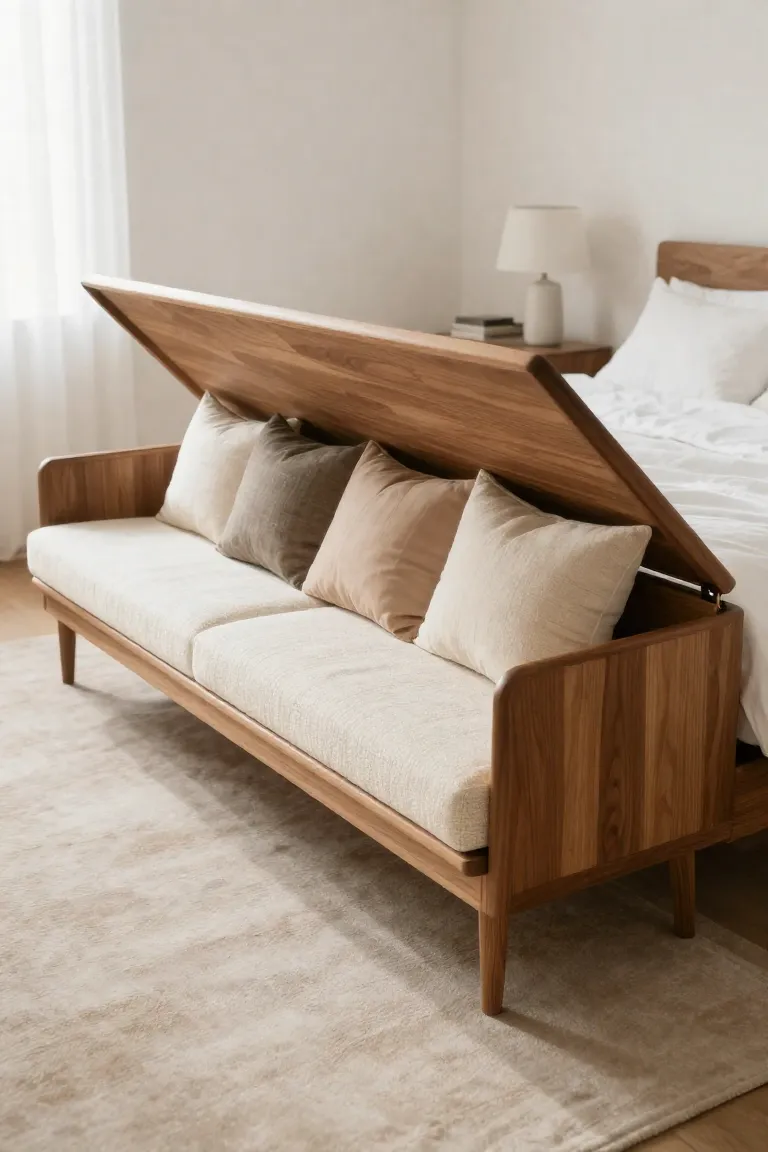
Anchoring the perimeter of your sleeping zone with a tailored piece creates an intentional boundary while unlocking substantial hidden volume. A well-proportioned bedroom storage bench instantly defines the room layout, offering a sturdy surface to sit while slipping on shoes in the morning. When twilight arrives and you prep for sleep, the hinged upholstered lid lifts smoothly to stash heavy waffle throws, lumbar cushions, and decorative shams that usually end up scattered across the floor.
Solid timber designs or an upholstered end of bed trunk also conceal off-season duvet inserts and spare linens inside deep interior cavities. In narrow floor plans, selecting a piece with safety-stop hinges ensures smooth access without pinched fingers or abrupt lid drops. This low-profile anchor keeps floor lines crisp, establishing practical organization right where your daily routine begins and ends.
13. Hollow Nightstands with Concealed Cables
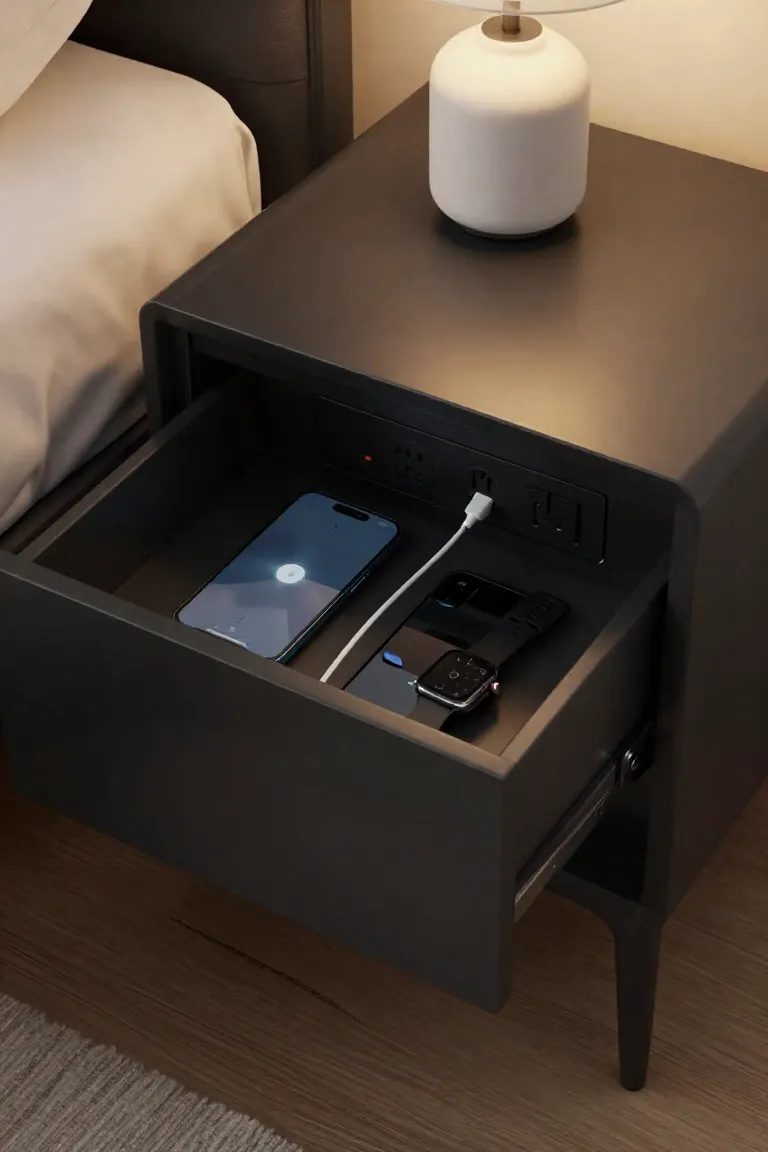
Open-frame bedside tables often invite visual chaos, exposing tangled phone cords, power strips, and glowing adapter lights directly at eye level. Upgrading to a dedicated hidden wire nightstand completely solves this friction by pairing deep, closed cabinetry with integrated hollow channels. Modern designs feature false rear panels and routed grommets along the back, giving you streamlined nightstand cable management where bulky power bricks remain entirely tucked away. You can mount a surge protector inside the top drawer or behind the false cavity, letting you dock smartwatches, phones, and bedside lamps through subtle cutouts without trailing cords across the baseboards. The result is a calm, streamlined perimeter right next to your pillows, keeping essential nighttime devices fully powered while maintaining an uncluttered, peaceful aesthetic.
14. The Drop-Leaf Desk
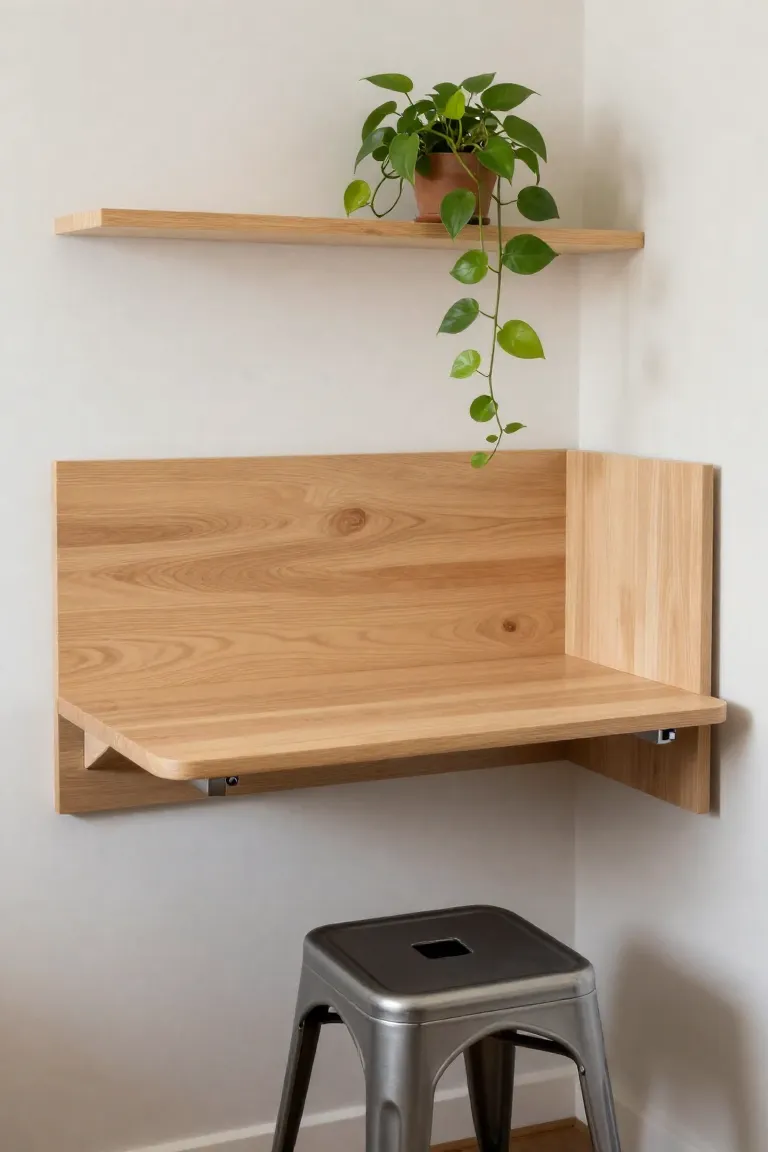
Balancing remote work inside compact sleeping quarters often compromises valuable floor space and clutters the room's restful ambiance. Mounting a sturdy drop leaf wall desk introduces a responsive workstation that operates strictly on your schedule. During productive daylight hours, heavy-duty bracket hinges support your laptop, notebook, and ceramic coffee mug with solid stability, providing an ergonomic surface at standard desk height.
At the end of your workday, this fold down bedroom desk collapses flush against the drywall, creating an ultra-slim footprint less than six inches deep. Internal magnetic latches hold charging cables, stationery trays, and paperwork securely behind the upright panel so your resting zone instantly regains its open, tidy layout. This spatial flexibility establishes clear psychological boundaries between focused daytime tasks and evening decompression.
15. The Murphy Bed with Integrated Sofas
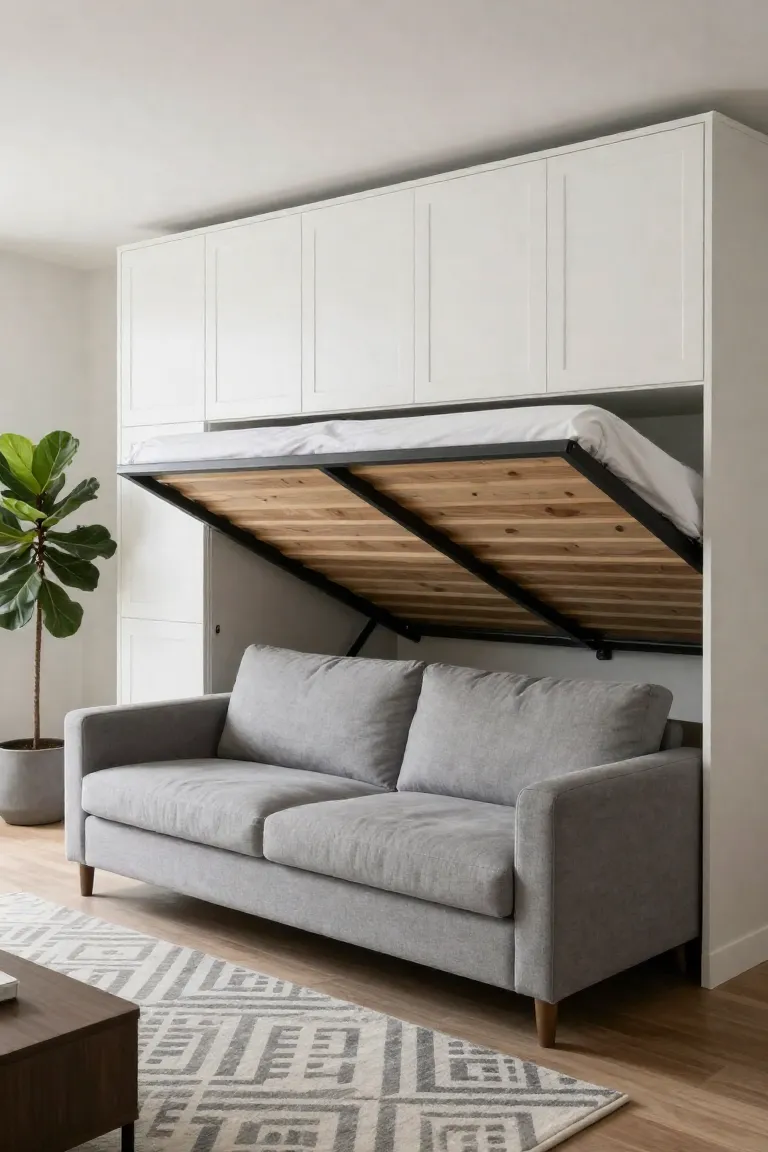
When square footage is severely constrained, reclaiming floor area requires tackling the largest piece of furniture in the room. Pairing a sleek wall-mounted cabinet with daytime seating, a modern murphy bed with sofa configuration lets you pivot from an airy lounge to a restful sleep setup in seconds. The gas-piston mechanism glides the mattress frame down directly over the low-slung couch cushions without requiring you to strip pillows or rearrange heavy frames. For anyone outfitting a tight hideaway bed apartment layout, this dual-purpose engineering eliminates the visual weight of an unmade mattress during hosting hours while preserving dedicated perimeter walking paths. Opt for clean oak veneers or matte-lacquered panels with recessed shelving so the upright face mimics custom architectural millwork rather than standard fold-out hardware. It's an intelligent investment that delivers a clutter-free daytime living zone alongside comfortable, deep nighttime rest.
Closet Hacks: Maximizing the Unseen
Even the tidiest bedroom quickly unravels when your primary wardrobe reaches capacity, as overflow coats, folded knits, and stray shoes migrate onto accent chairs and bedside surfaces. Mastering small closet organization prevents this outward chaos by treating every square inch behind closed doors as prime structural storage rather than an afterthought.
- Audit seasonal items: Store off-season garments inside breathable canvas totes on high shelving to free up immediate eye-level access for your daily rotation.
- Establish vertical zones: Divide standard interior height into distinct tiers for short-hang tops, modular cubbies, and low shoe racks to prevent pileups.
- Capture perimeter margins: Introduce purposeful bedroom closet hacks such as adhesive utility hooks and door-mounted organizers to keep accessories off main floor areas.
16. Dual-Hanging Rods
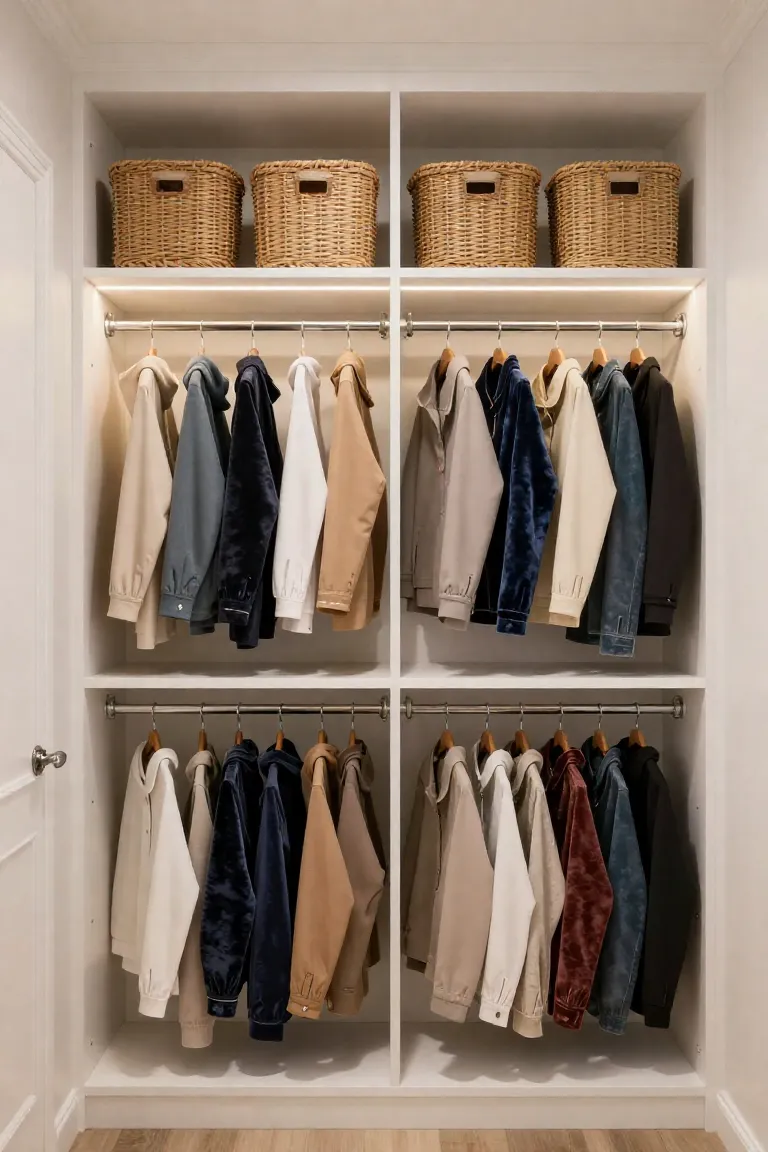
Most standard wardrobes waste substantial vertical clearance by suspending a single pole high above the floor, leaving a cavernous gap underneath short shirts and blouses. Suspending a sturdy double hang closet rod directly beneath your existing upper bar swiftly converts this void into an efficient two-tiered layout. Because typical button-downs, folded trousers, and skirts only require thirty to thirty-five inches of drop length, tiering your storage effectively doubles capacity without demanding structural wall renovation.
In wardrobes with at least eighty inches of vertical clearance, adjustable tension hardware lets you tailor lower pole heights to match your specific hem lengths. Heavy-duty metal chains or telescoping steel bars link securely to your top rail, keeping hangers neatly aligned while preventing hems from brushing against floor bins. This clean division allows you to arrange tops above and bottoms below, streamlining morning routines while you maximize hanging space across compact closets.
17. Slimline Velvet Hangers to Gain 30% Space
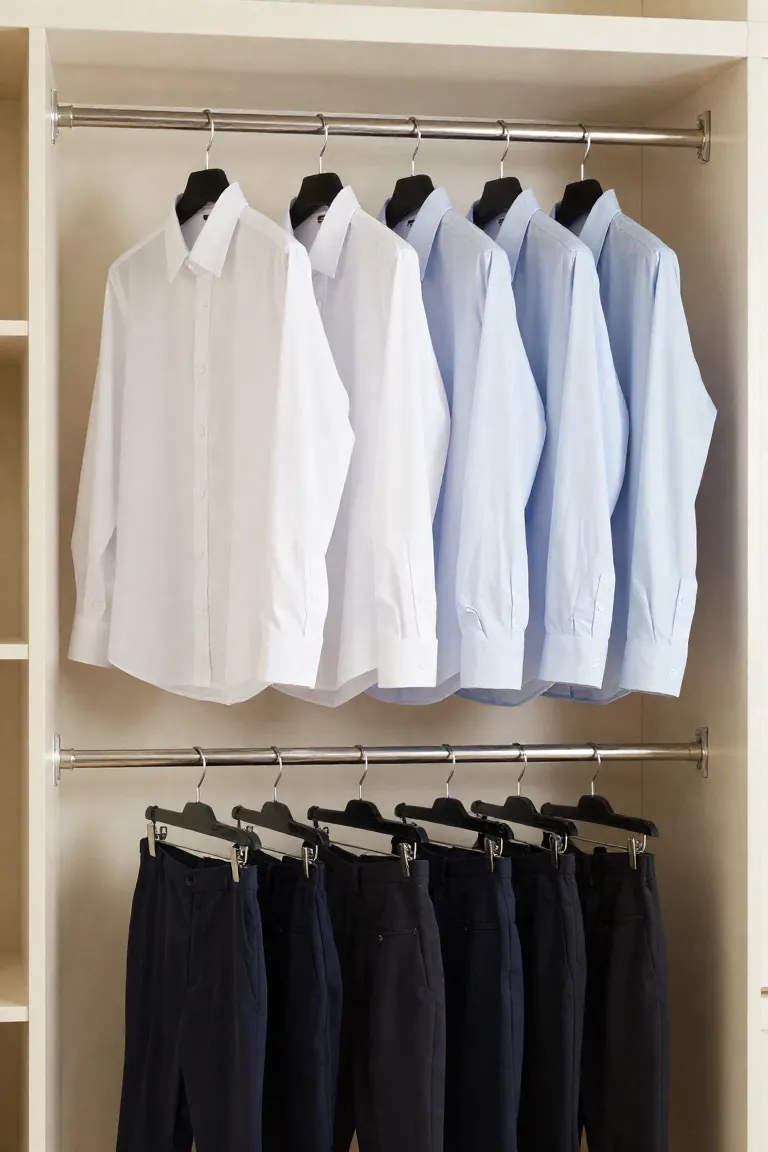
Once your closet rails are properly tiered, the actual profile of what you hang on them dictates how freely garments breathe. Bulky tubular plastic rings and thick wooden shoulders swallow inches of rod width before you even hang a single garment. Swapping out those chunky frames for uniform space saving hangers instantly condenses your wardrobe footprint, giving you back nearly a third of your usable rail capacity without touching a single wall. The tactile grip on velvet non slip hangers ensures that wide-neck blouses, slippery silk camisoles, and unstructured linen shirts stay anchored instead of sliding into a rumpled pile on the floor.
Beyond the physical clearance gained along the closet rod, the uniform black or ivory profiles introduce an orderly visual rhythm that feels remarkably intentional. Everyday morning prep moves much faster when every collar sits at identical eye levels, free from snagging wooden notches or warped plastic hooks.

18. Hidden Pull-Out Valet Rods
Even the tightest wardrobe has narrow bands of dead space along the interior gable walls waiting to be unlocked. Installing a discreet pull out clothing rod along the inside vertical panel gives you an on-demand staging point that slides out smoothly when planning an outfit and glides completely flush against the partition when idle.
- Curated outfit staging: Hang your complete ensemble for tomorrow morning, from tailored blazers to pressed trousers, eliminating rushed decision-making during early mornings.
- Garment care station: Suspend freshly steamed silk or delicate dry-cleaned pieces away from packed wardrobe rows while fabrics cool and air out.
- Pack and prep zone: Stage travel essentials and mix-and-match layers directly alongside your closet before transferring items into weekender bags.
- Concealed hardware design: A slender closet valet rod retracts entirely inside your shelving panel, staying out of sight without encroaching on permanent hanging capacity.
19. Shelf Dividers for Structural Sweaters
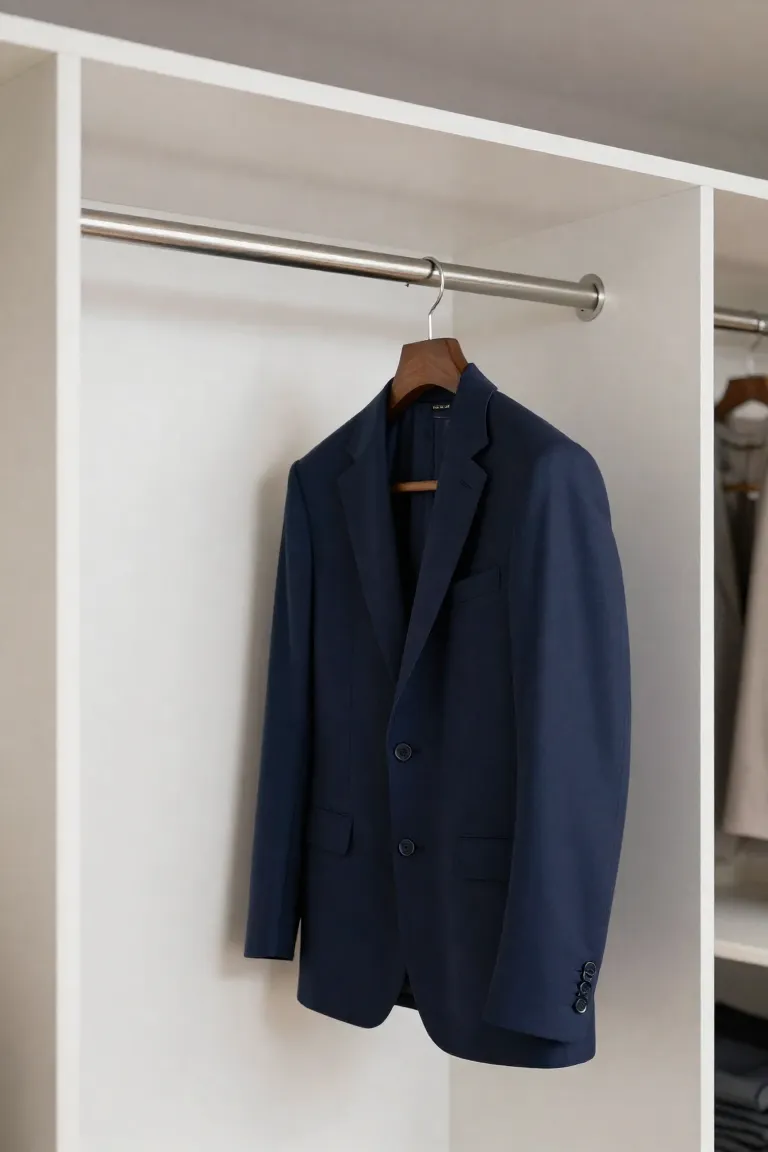
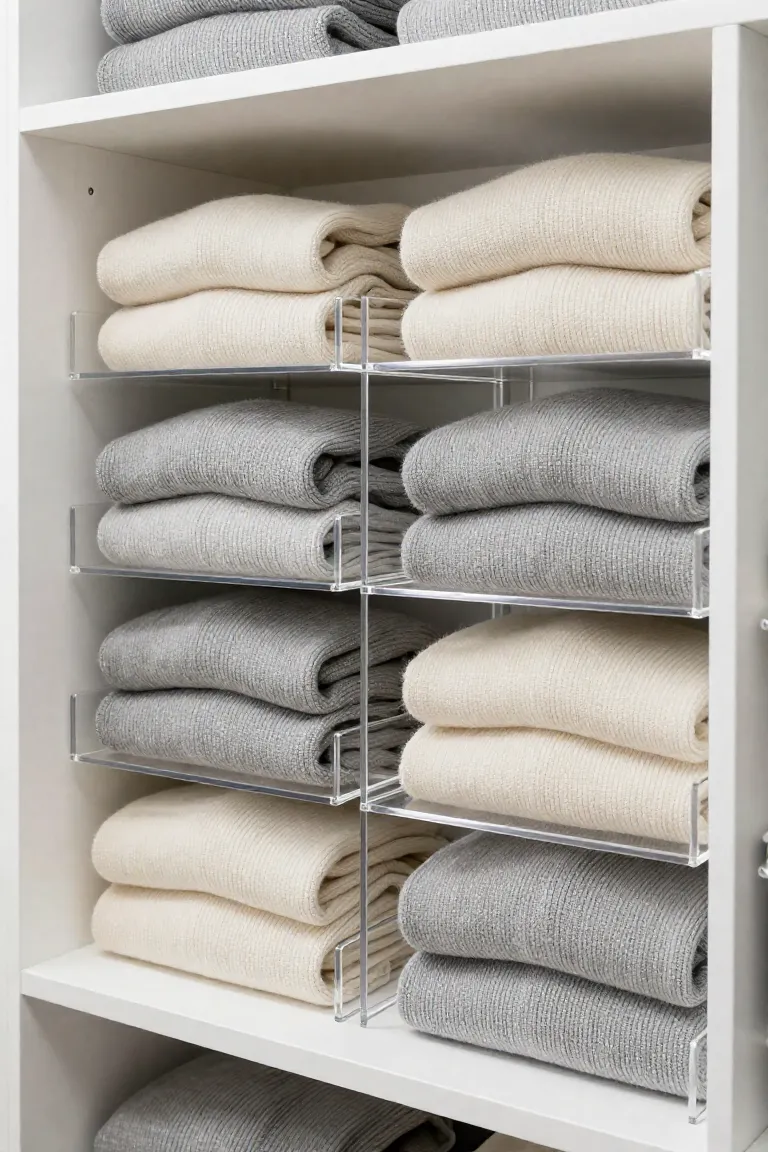
Upper wardrobe shelves frequently devolve into unruly territory once folded knitwear begins leaning sideways and toppling into neighboring stacks. Sliding clear acrylic shelf dividers directly onto your existing wood or laminate boards establishes rigid vertical boundaries that keep bulky textiles standing tall.
- Zero-avalanche stacking: Heavy wool cardigans and thick denim pairs stay neatly aligned in upright columns instead of tumbling into messy heaps.
- Vertical capacity: Rigid partitions allow you to stack garments higher toward the ceiling line, reclaiming empty air above standard shelving.
- Invisible visual clarity: Transparent panels keep your closet sweater organization crisp and easily readable without introducing solid visual barriers to tight spaces.
- Quick pull access: Slip bottom garments out of a fold column with one hand while the divider holds the upper pieces securely in place.
20. The Back-of-the-Door Accessory Rack
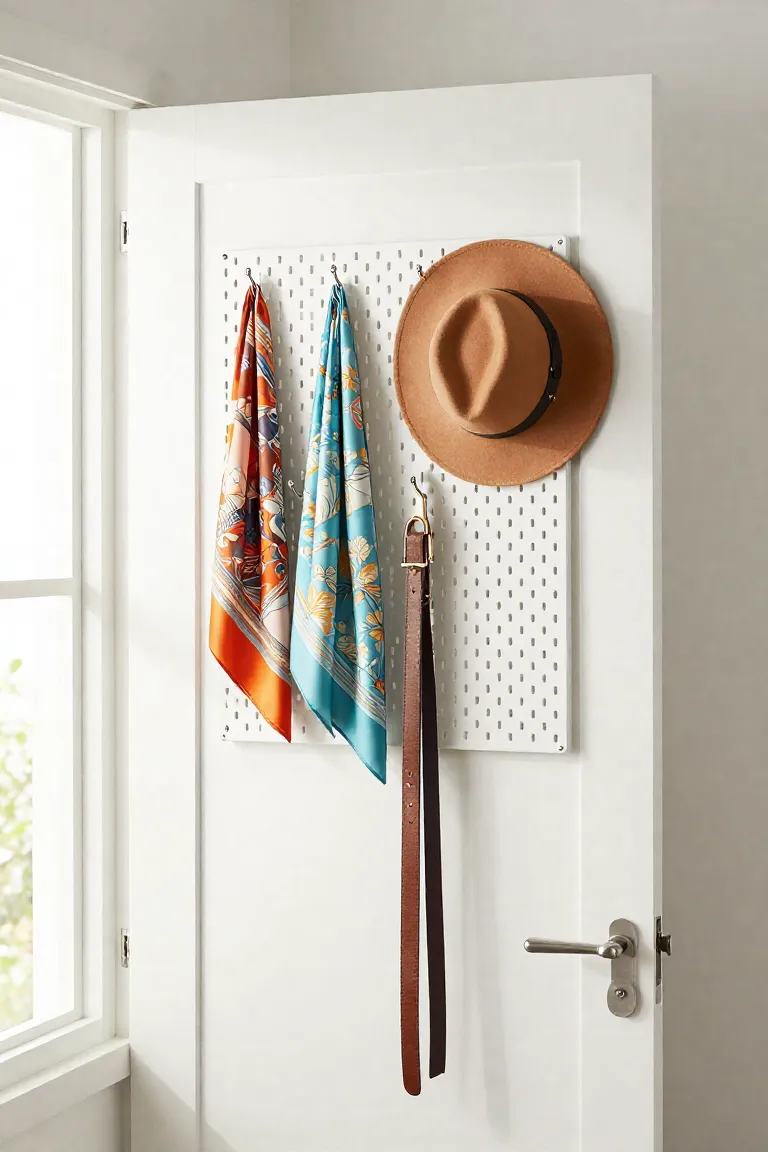
Beyond shelf stacks, the interior panel of your wardrobe door holds prime, untouched vertical territory. Mounting a slim closet door pegboard claims that forgotten zone, turning flat painted wood into a neat hanging grid for leather belts, silk scarves, and brimmed hats. Because the profile stays nearly flush against the door leaf, your accessories hang flat without catching against hanging coats or crowded hangers when the door swings shut.
With brass S-hooks or painted dowel pegs, you can adjust the spacing on the fly whenever your seasonal accessories rotate. This setup delivers reliable hidden accessory storage that keeps delicate pieces untangled, dust-free, and visible at eye level the moment you plan an outfit.
Camouflage & Disguise: Aesthetic Hiding Spots
Smart small-room styling avoids obvious plastic bins and leans into objects that mimic curated art pieces. When you place linen-bound decorative storage boxes across a console table or styled floating ledge, they function as elegant design focal points while quietly tucking away charging cords, spare linens, and stationery. Choosing tactile materials like faux shagreen, fluted wood, or woven raffia gives the room an intentional, layered feel rather than a cramped utility look.
Everyday bedroom surfaces suddenly double their utility when every vessel on display conceals private clutter. This understated form of disguised bedroom storage allows you to maintain clean, open surfaces without stripping your personal retreat of warmth and character.
21. Hollow Book Safes for Valuables
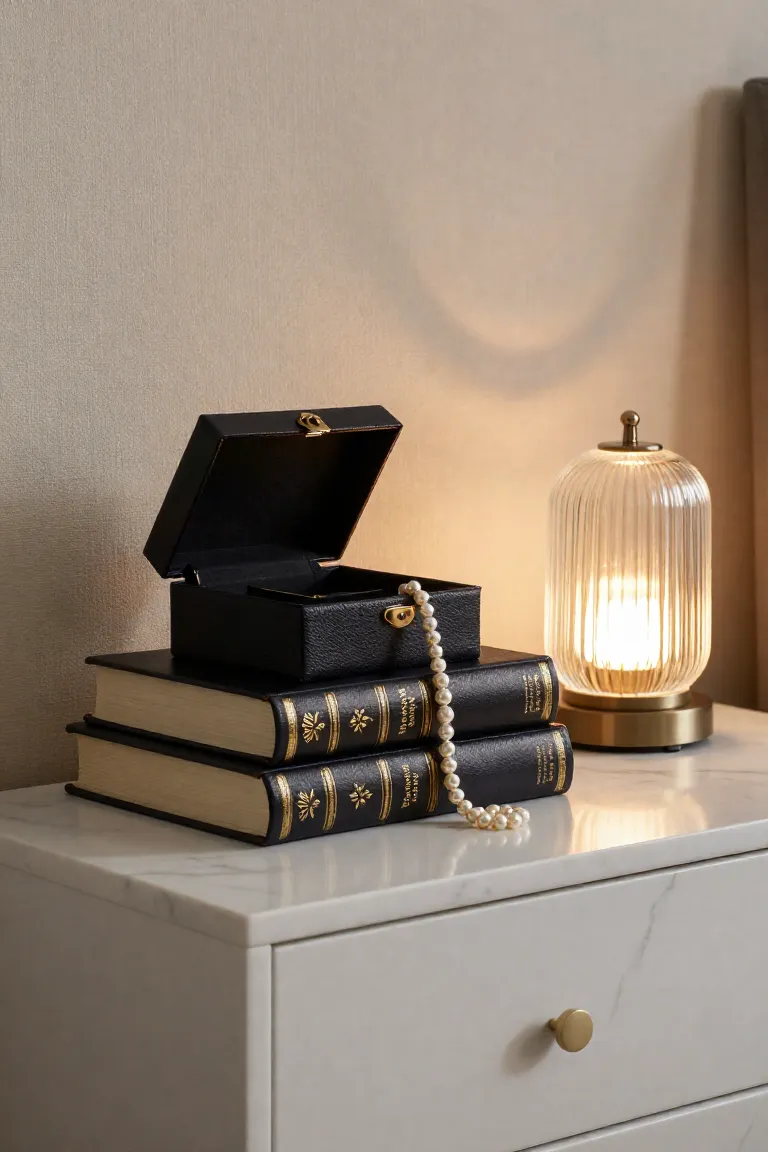
Blending discreet security directly into your styling routine begins with your reading collection. Slipping a hollow book safe between authentic cloth hardcovers on a nightstand creates an undetectable hideaway for emergency cash, spare keys, and travel passports. Rather than relying on an obtrusive metal lockbox that draws immediate suspicion, this form of secret book storage mirrors real paper edges and tactile binding. Selecting a vintage volume with convincing physical weight allows the piece to rest naturally among your paperbacks, keeping sensitive essentials secure yet readily accessible.

22. Woven Belly Baskets for Throw Blankets
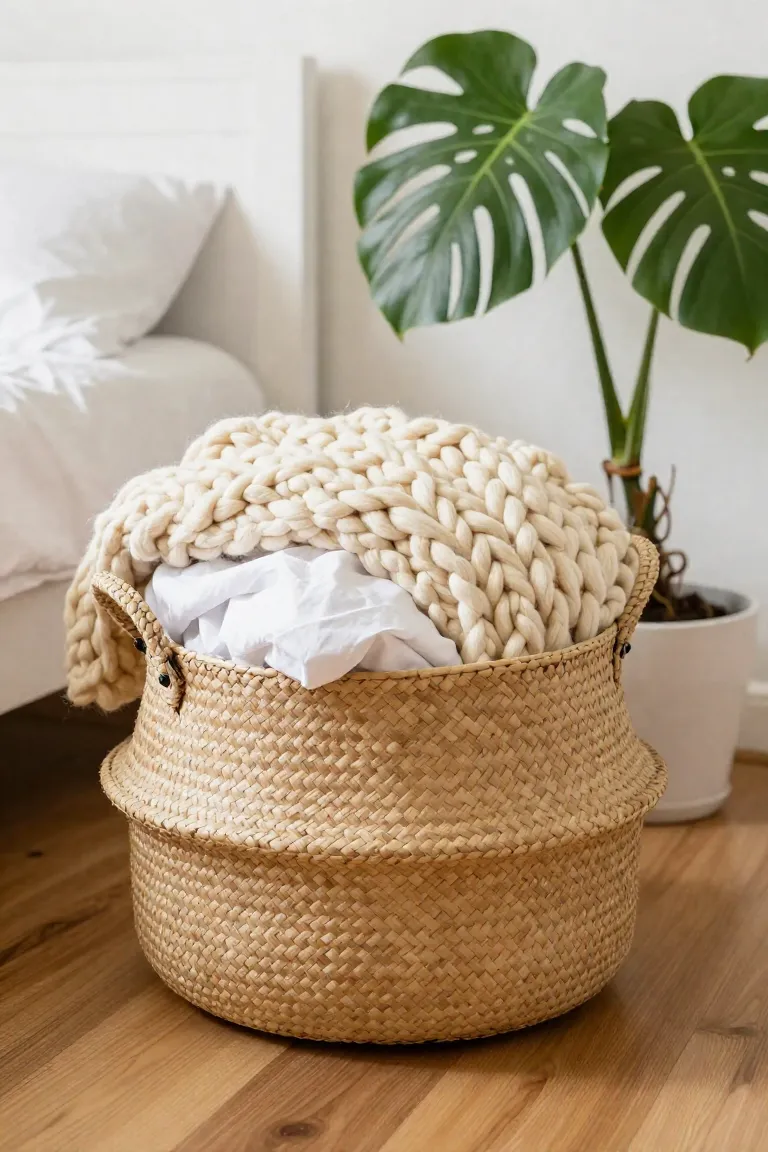
Tucking bulkier bedding out of sight requires a vessel that blends right into your styling scheme rather than looking like utility storage. Placing an oversized seagrass belly basket in an underutilized corner gives you a generous drop zone for seasonal quilts, heavy knits, and surplus pillows. The flexible fiber handles let you tote laundry easily, while the rounded profile turns practical woven blanket storage into an earthy styling moment.
- Tuck the top half inward to convert the container into a wide, low bowl for easy access on busy mornings.
- Line the interior with a raw muslin sack to prevent rough fiber strands from catching delicate loose-knit throws.
- Anchor the piece beside a low wooden bench to balance vertical lines with soft, grounded curves.
23. Skirted Tables and Desks
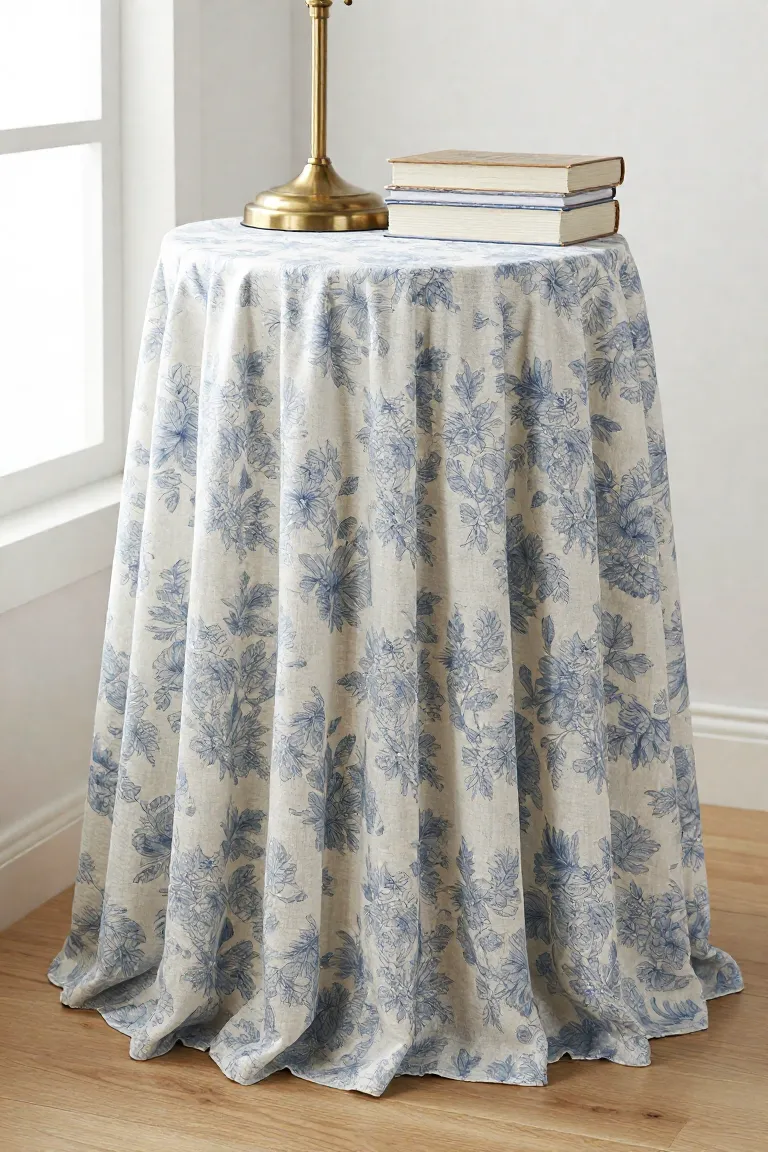
Traditional drapery techniques offer one of the most charming ways to mask utilitarian bedroom mess without buying heavy cabinetry. Introducing a skirted side table instantly creates floor-length concealment for stacking plastic file totes, stashing a recycling bin, or tucking away messy router cables beneath crisp linen pleats. This approach brings tailored softness to compact floor plans while maximizing under-surface real estate.
- Choose mid-weight ticking stripe or block-printed cotton so the fabric holds its shape without collapsing into the void.
- Install adhesive hook-and-loop strips along the tabletop edge to make fabric table skirt storage easily removable for seasonal washing.
- Slide two low-profile wire organizers underneath to keep small electronics, spare notebooks, and charging cords sorted behind the hem.
24. Faux Radiator Covers
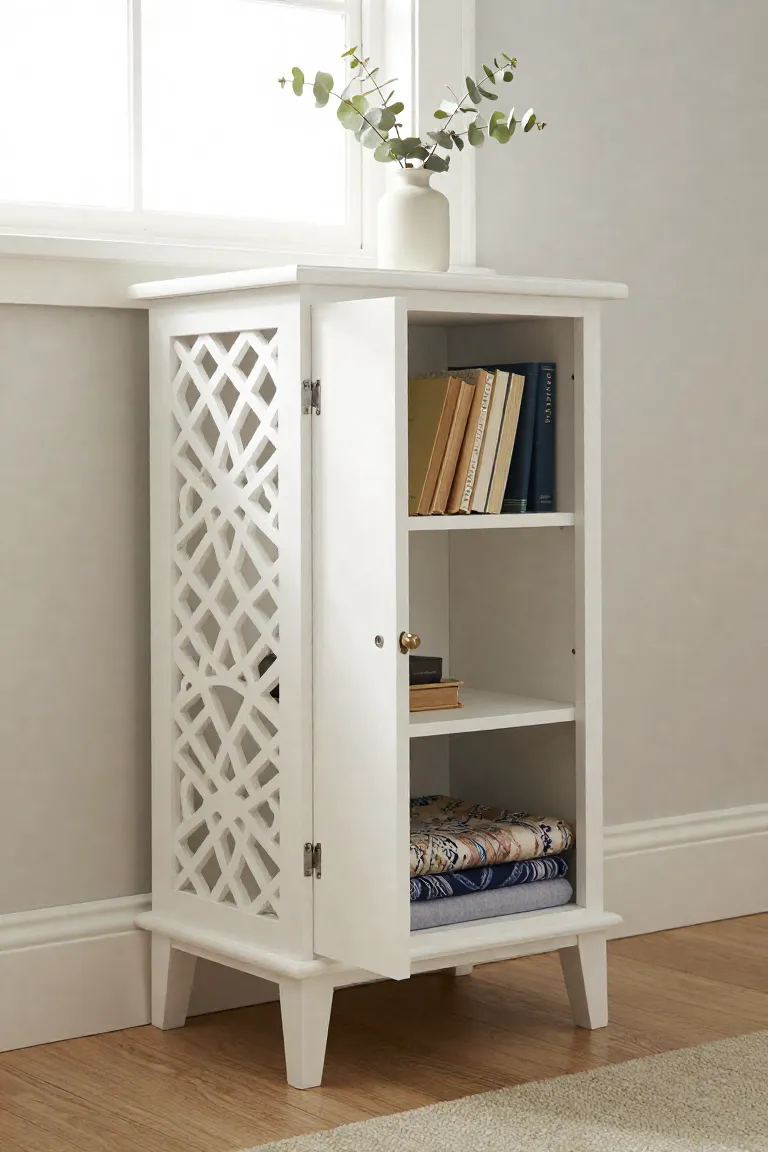
Narrow bedroom hallways and tight window clearings rarely accommodate standard dressers, yet wall-mounted architectural millwork solves that dead zone with surprising depth. Installing a custom faux radiator cover gives you an ultra-shallow ledge for displaying framed prints, reading lamps, and ceramic catchalls while keeping functional compartments hidden behind vented cane or wooden slats. The slatted face masks wall outlets, bulky power strips, router hardware, or shallow wire racks without trapping heat or looking bulky. By extending the box just six to eight inches out from baseboards, you gain clever slim console storage that provides essential surface landing space along tight walkways where conventional accent tables would block door swings or foot traffic.
Lighting & Layout: Spatial Tricks to Hide Clutter
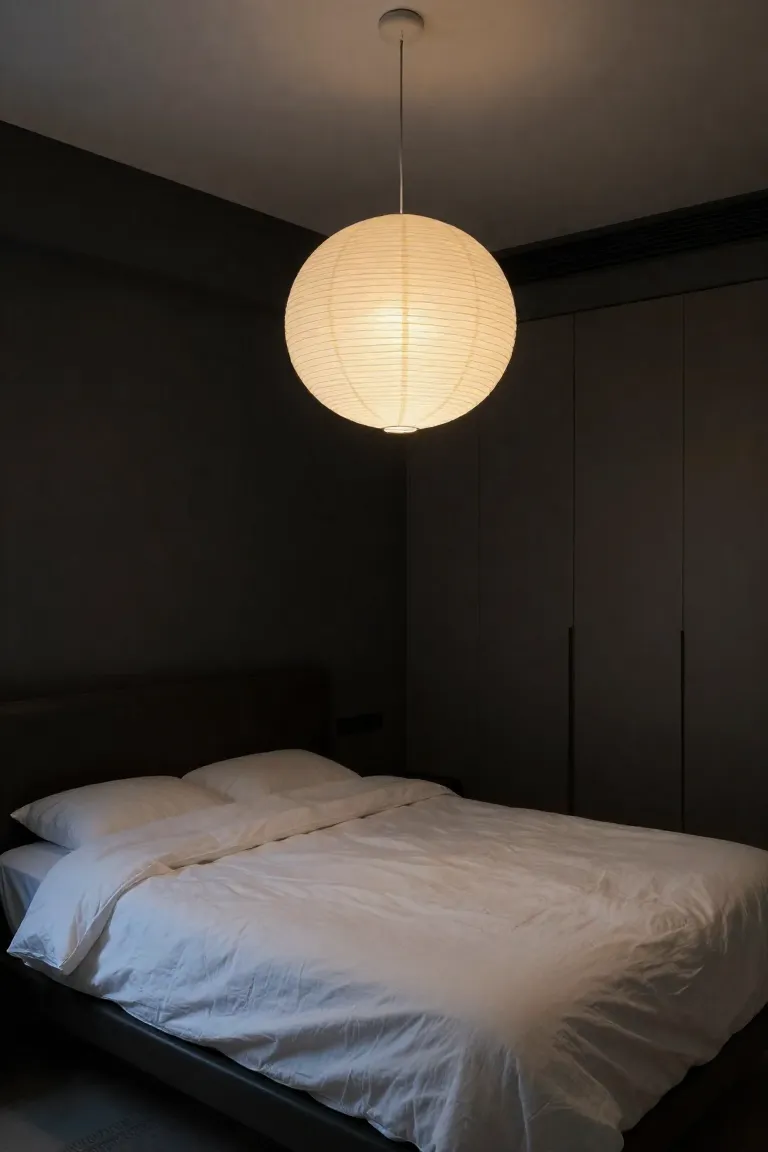
Strategic sightlines make built-in cabinetry and concealed bins completely fade into the background when you deliberately steer where shadows fall. Angling warm downward illumination toward framed textile art or crisp linen bedding naturally diverts the eye from low-profile bins and flush wardrobe fronts, achieving practical visual clutter reduction across tight corners. When mapping out an effective bedroom layout space saving strategy, position high-density storage zones along peripheral blind spots—like the recessed alcove behind an open bedroom door or directly beneath sill lines—while bathing central relaxation zones in soft, directional light. Layering dimmable fixtures at varying heights creates intentional depth, guiding attention upward toward ceiling lines and keeping functional storage zones discreetly shrouded in soft ambient tones. This deliberate choreography between brightness and shadow ensures everyday necessities remain right at your fingertips while staying visually quiet throughout the day.
25. Wall Sconces Instead of Table Lamps
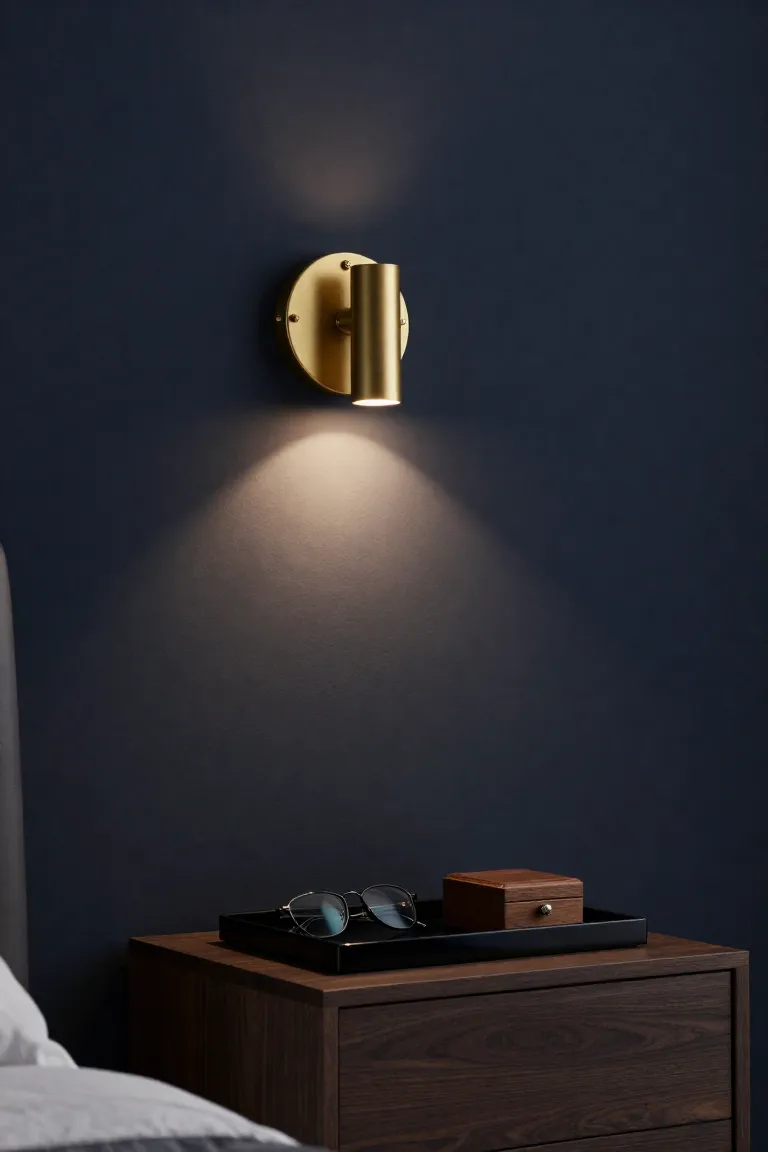
Standard bedside table lamps consume roughly half of a compact side table's flat surface, leaving zero room for organizational catchalls. Swapping heavy ceramic or metal lamp bases for streamlined bedroom wall sconces immediately reclaims that valuable territory, anchoring focused reading light directly onto the drywall at shoulder height. Whether you choose hardwired brass swing arms or rental-friendly plug-in fixtures with cord covers painted to match your wall trim, lifting illumination off furniture surfaces changes your room's functional baseline.
With clear tabletops finally unlocked, you can free up nightstand space for a covered linen valet tray, an essential oil diffuser, or a sleek lidded box that keeps cords out of view. This vertical arrangement draws attention upward along your headboard wall, establishing a clean, hotel-inspired look while keeping your everyday bedtime essentials within arm's reach.
26. Pull-Out Nightstand Trays
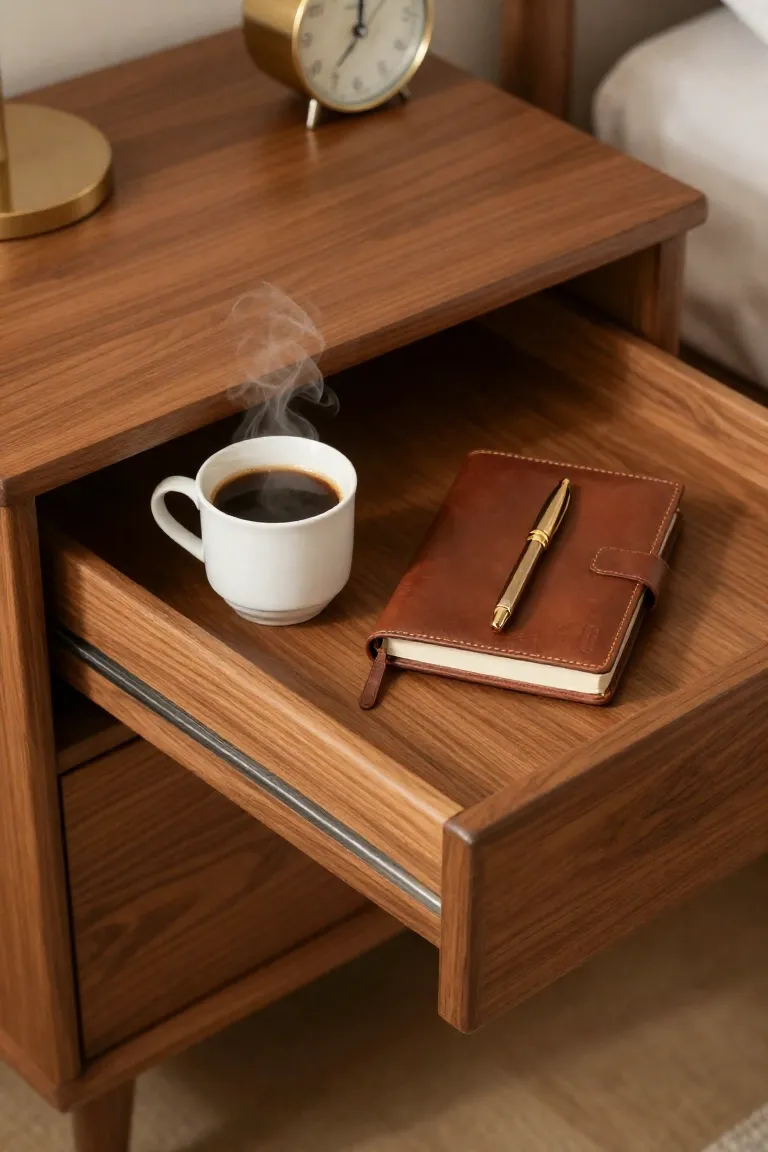
A cleverly concealed slide-out ledge nestled directly beneath your bedside tabletop adds on-demand horizontal space without expanding your room's physical footprint. Investing in a nightstand pull out shelf gives you an instant perch for a steaming coffee mug, an e-reader, or a bedtime notebook, sliding flush against the apron the moment you finish. This practical hidden tray table design prevents your primary tabletop from gathering water rings, charging cords, or evening clutter, preserving clean lines beside your pillows. Look for solid wood bedside chests fitted with soft-close undermount glides so the extension glides out smoothly without disturbing light sleepers. Tucking this secondary utility tier inside the cabinet frame gives you temporary surface convenience whenever you need it, keeping your bedroom feeling calm, organized, and spacious.
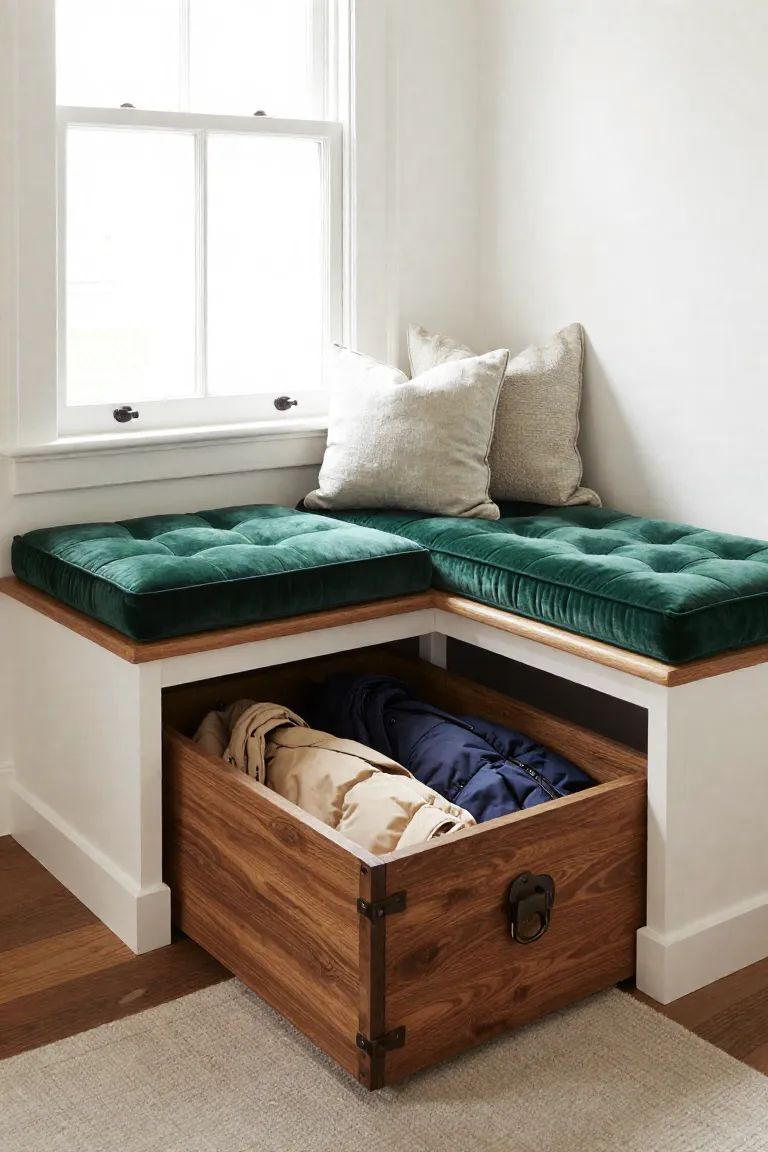
27. The Corner Banquette with Hidden Trunk
Awkward wall intersections often collect dust, yet they hold prime potential for smart carpentry. Installing tailored corner banquette seating transforms an unused angle into a cozy reading perch while anchoring your room's layout. Beneath the hinged wooden seat, generous corner built in storage holds bulky seasonal duvets, extra pillows, and heavy wool blankets completely out of sight.
- Upholster the top cushion in durable linen or performance velvet with removable zippered covers for easy washing.
- Install soft-close gas struts inside the chest lid so it stays safely open while you retrieve stored linens.
- Pair the bench with a floating wall light overhead to turn the corner into a functional private retreat.
Final Thoughts on Minimalist Maximization
Arriving at a solid bedroom organization conclusion starts with treating tight square footage as an opportunity for thoughtful styling rather than a daily frustration. Proven small apartment decorating tips remind us that reclaiming calm rarely demands a whole-home overhaul. Focusing on one subtle compartment allows you to declutter without overwhelm.
- Pick one simple DIY project this coming weekend, like sliding low-profile baskets into that underutilized closet corner.
- Group stored items by seasonal frequency so everyday items stay within arm's reach while bulky winter layers remain tucked out of sight.
- Save your favorite bedroom concepts to a dedicated Pinterest board to keep track of furniture dimensions and fabric textures before buying.