Thrifted Eclectic Decorating Guide: Sourcing Vintage Character for Small Apartments
Summary
- The Small-Space Vintage Dilemma: Curating Personality Without Chaos
- Anchor Seating and Low-Profile Timber Silhouettes
- Vertical Depth: Salon Art and Aged Brass Illuminations
- Curator Clearance Matrix: Gallery Spacing Templates and Spatial Rules
- Antique Silhouette Rules and the 70/30 Patina Ratio
- The Edit-First Philosophy for Small Apartment Thrift Styling
The Small-Space Vintage Dilemma: Curating Personality Without Chaos
Furnishing a thrifted eclectic apartment within compact rental dimensions requires intentional proportion rather than random weekend accumulation. When you pursue a vintage small apartment aesthetic, genuine character comes from balancing warm vintage interior textures against unobstructed walkways. Sustainable collected home decor protects your living footprint by pairing time-worn surfaces with ample open space, keeping tight floor plans breathable and fully functional.
Anchor Seating and Low-Profile Timber Silhouettes
Setting up a functional small space living room layout begins by selecting vintage anchor furniture that exposes bare floorboards underneath. When primary seating sits directly on the ground like a heavy block, it immediately shrinks available square footage.
- Look for tapered wooden legs or turned spindle feet that raise sofa frames at least 6 inches above the floor.
- Choose narrow arm profiles and tight-back upholstery rather than overstuffed cushions to keep footprints compact.
- Incorporate slender antique accent chairs apartment dwellers can shift easily whenever guests arrive.
Clear visibility beneath each piece preserves open floor space and prevents compact rooms from feeling boxed in.
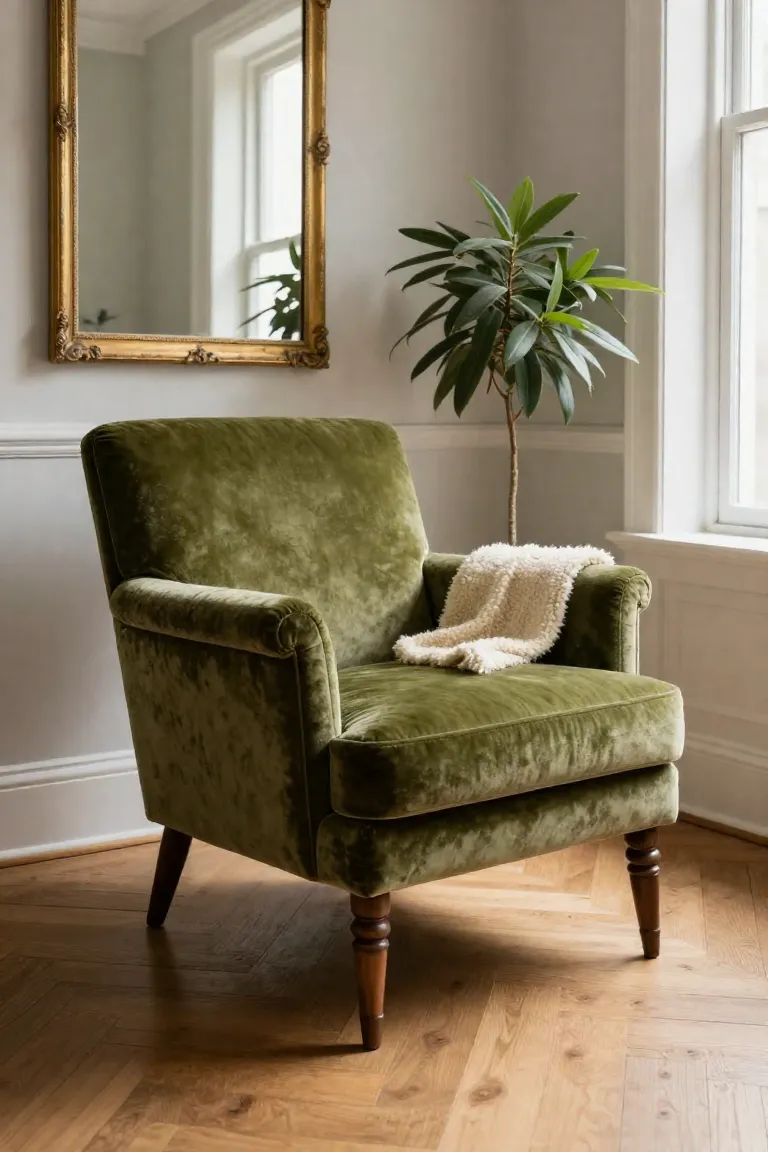
The Velvet Accent Armchair with Carved Spool Legs
A green velvet armchair living room addition provides rich texture without dominating your floor plan. By opting for a turned leg accent chair with carved spool woodwork, you allow natural room light to pass underneath the frame, preventing the piece from crowding your walkways. For proper circulation, always maintain an 18-inch clearance between the front edge of the seat cushion and your coffee table so you can walk past without bumping your knees.
Before you buy any velvet thrifted armchair at an estate sale or flea market, test the structural stability thoroughly. Tip the frame backward to confirm the dowel joints remain rigid, and press down firmly across the seat platform to evaluate internal spring tension. Sinking directly to the webbing or feeling loose frame rails means costly re-strapping repairs that quickly erase the thrill of vintage velvet chair styling.
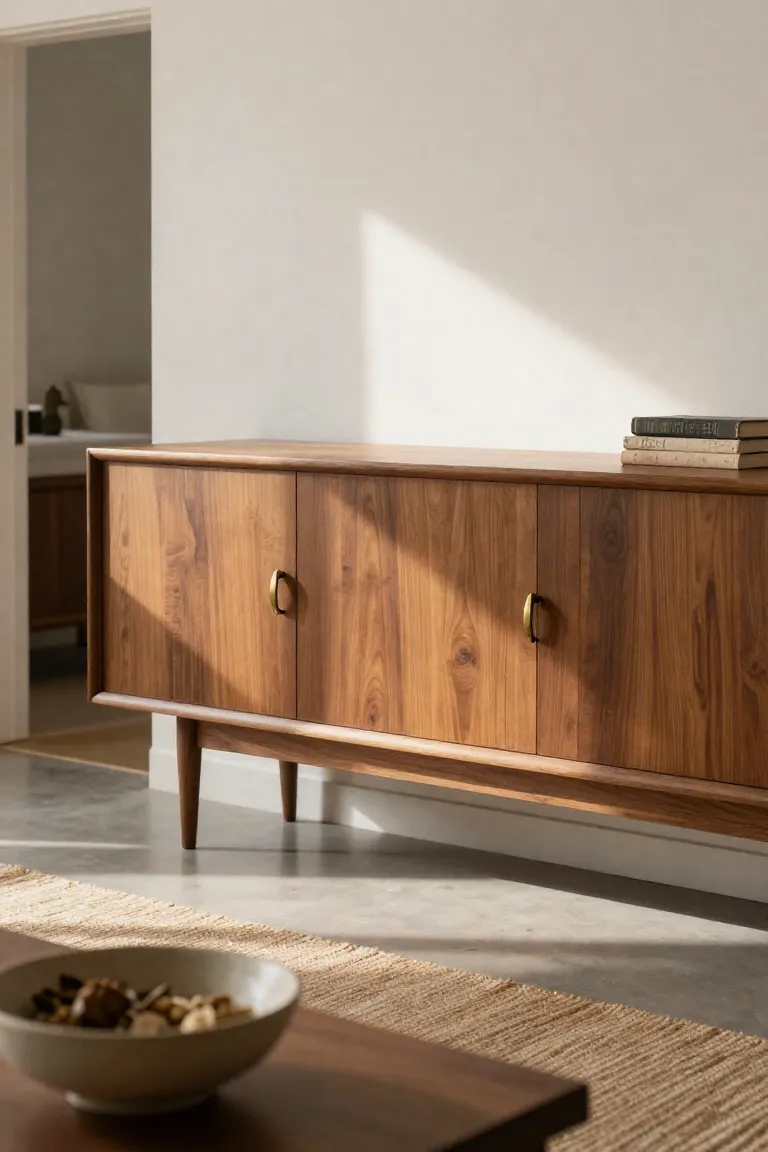
The Mid-Century Low Credenza for Compact Media Storage
Selecting a low-profile mid century modern credenza under 30 inches tall preserves vertical wall height and creates an airy backdrop in tight quarters. The warm honey tones of a vintage walnut sideboard create an appealing contrast against matte black screens and aluminum audio components, transforming utility into intentional design.
- Keep cabinet depth strictly under 18 inches so you avoid choking narrow walkway clearances between the sofa and television.
- Select sliding bypass doors or tambour fronts rather than swing-out cabinet doors that block foot traffic when opened.
- Utilize the interior shelving of your retro storage apartment piece to conceal routers, extension cords, and media consoles completely out of view.
A compact small apartment media console keeps everyday wiring organized while maintaining open circulation across the room.
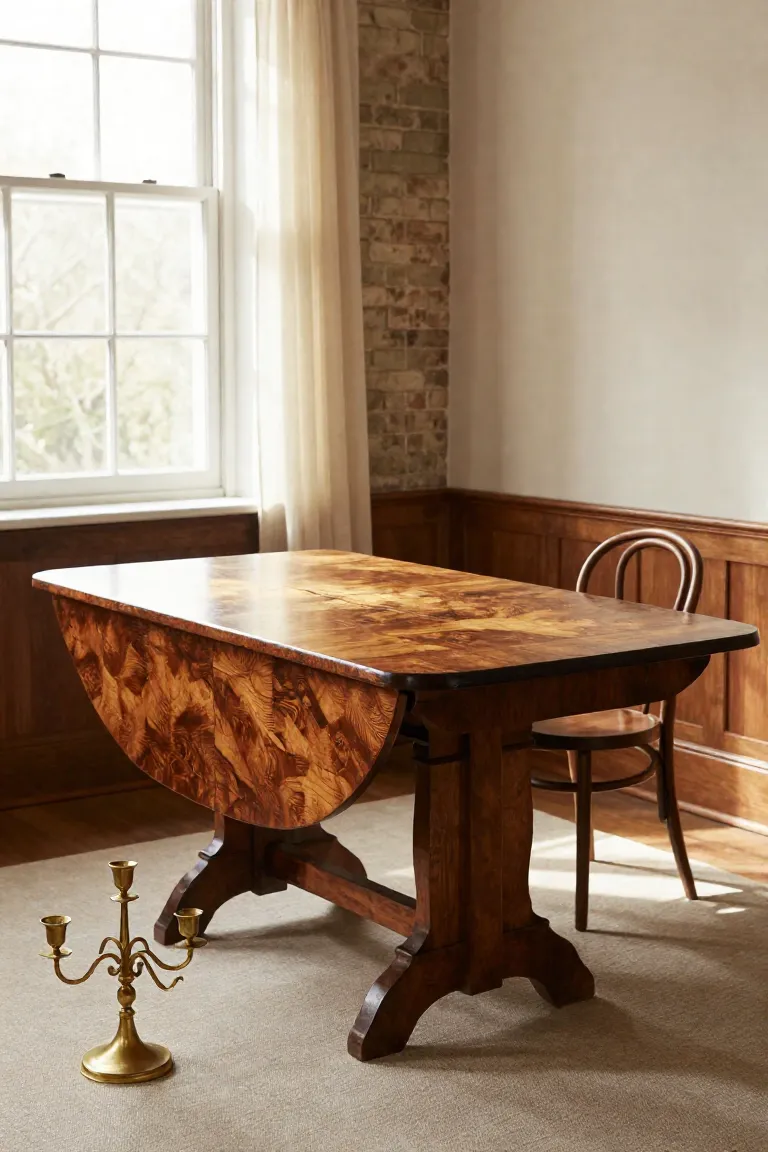
The Petite Drop-Leaf Burl Wood Dining Table
When tight square footage demands dual-purpose zones, an antique compact dining solution lets your main room breathe without sacrificing hospitality. Setting up a drop leaf table small apartment arrangement against an open wall allows you to preserve a full 36-inch primary walkway during daily routines, folding out only when company arrives. The swirling figure of a vintage burl wood dining table provides rich organic contrast against simple drywall, turning an ordinary corner into an inviting gateleg table dining nook.
- Inspect the underside brass drop hinges for stripped screw holes or metal fatigue before committing to a purchase.
- Check the leaf alignment by lifting both wings onto their gateleg supports to ensure the joint creates a level surface rather than a pitched slope.
- Sight down the edge of the tabletop at eye level to detect any wood warping caused by decades of uneven room humidity.
A quick tightening of loose pivot hardware and a thin coat of paste wax will restore solid tabletop stability, giving you a dependable eating surface that tucks away in seconds.
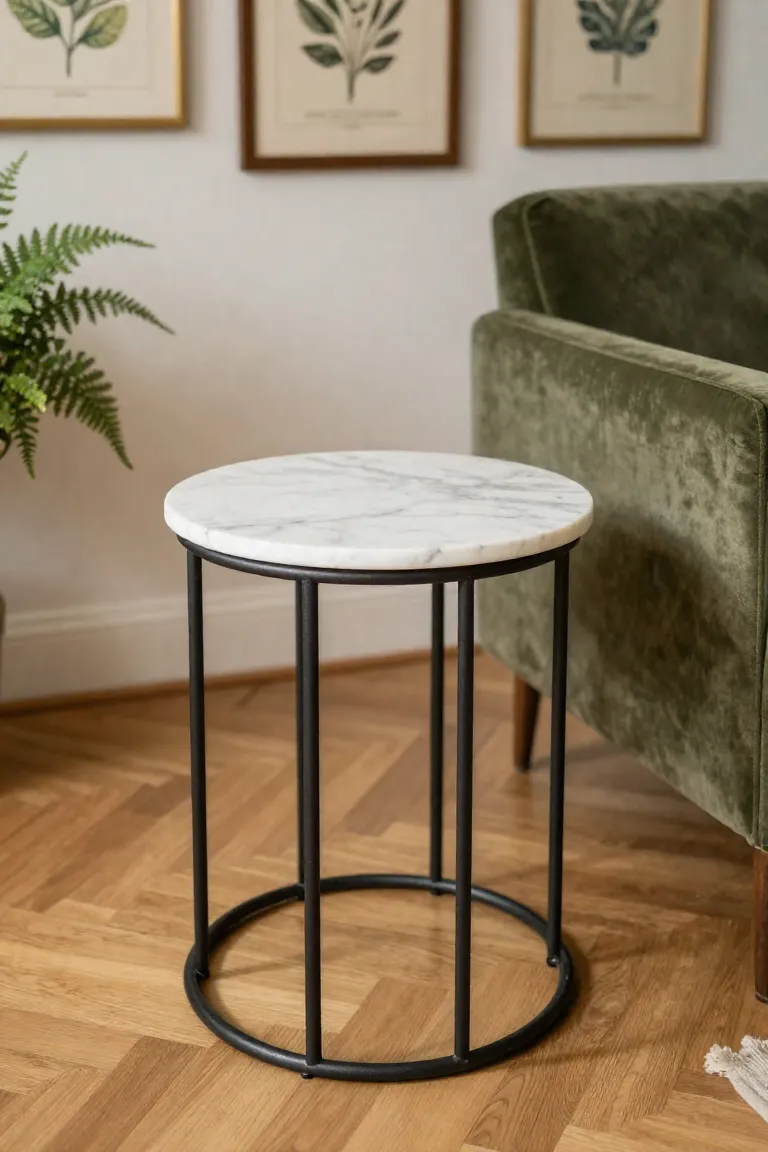
The Scalloped Wrought Iron Side Table with Honed Marble
Bulky wooden end tables can quickly choke a snug living room layout, whereas open metal framework allows floor space to remain visually continuous beneath your seating. Placing a slender wrought iron side table next to a low sofa brings instant structural balance, especially when the cool stone top reflects natural window light across the room. Sourcing a marble top accent table vintage design with a diameter kept strictly under 16 inches preserves precious clearance around chair arms and footpaths, offering the compact convenience of a classic french bistro table apartment piece without crowding your primary seating zone.
The curving profile of a scalloped iron end table introduces soft contours against sharp baseboards and angular upholstery seams. In my hands-on sourcing runs, antique metal tripods frequently rock on historic hardwood floors due to uneven casting wear or slightly warped foot pads. You can resolve this wobble immediately by sticking dense felt pads or adjustable screw-in leveling glides beneath the feet, ensuring the stone surface remains firmly seated and level for evening drinks or reading lamps.
Vertical Depth: Salon Art and Aged Brass Illuminations
Drawing the eye upward redirects focus away from tight floor boundaries, making compact rooms feel taller and substantially more open. Implementing intentional vintage vertical decor ideas allows you to celebrate architectural height while keeping walkways clear of clutter. By combining antique lighting and art, you establish dimensional shadow play across your perimeter walls that softens harsh corners and introduces welcoming warmth.
- Map out your primary vertical sightlines from your main seating position to determine where upward accents will have the strongest visual impact.
- Mount directional wall sconces or position an articulated brass fixture so the warm beam grazes downward across carved picture frame profiles.
- Layer varied picture mouldings along the illuminated vertical corridor to generate subtle surface depth without taking up a single square inch of floor area.
This methodical approach to small space wall styling transforms blank drywall into a curated focal point that captures natural daytime light and produces soothing ambient glow at dusk.
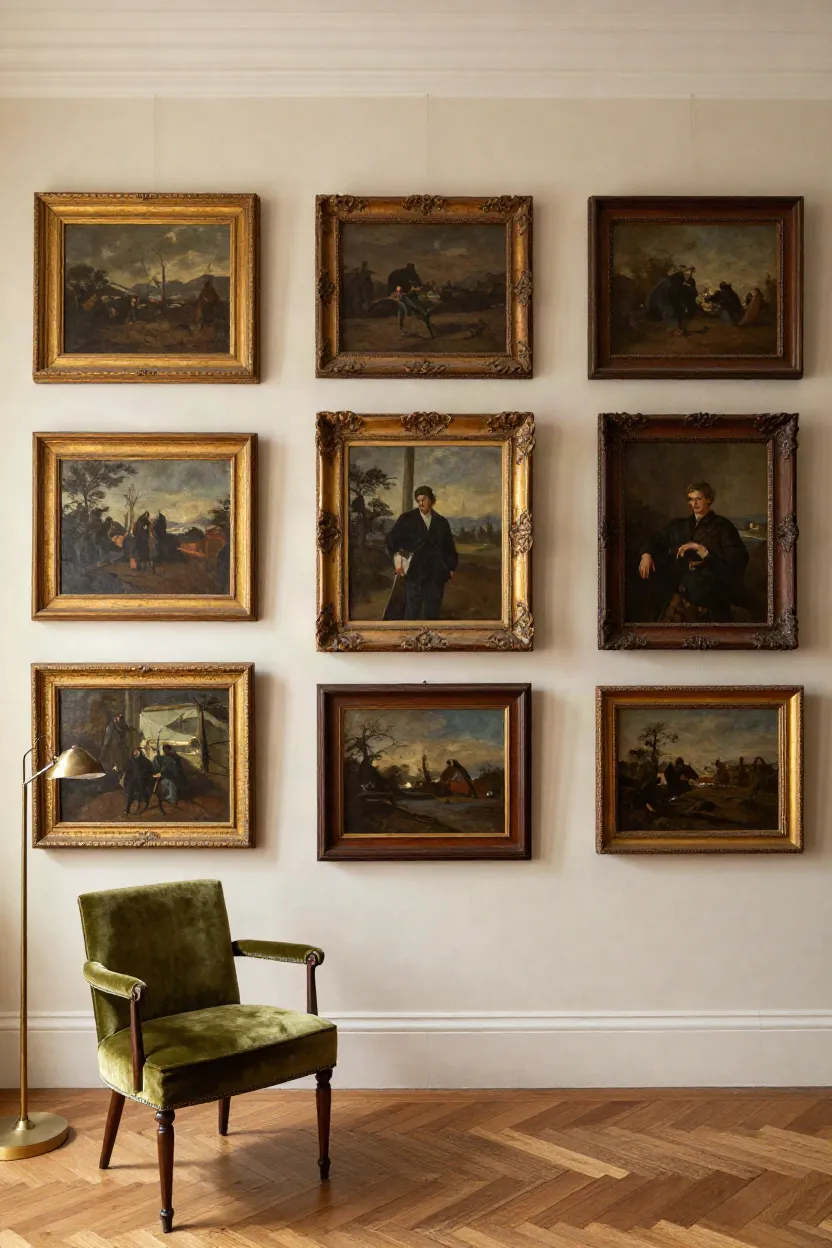
The Salon-Style Gallery Wall with Mixed Heritage Mouldings
Displaying a personal print collection across a single wall establishes rich historic texture without encroaching on room circulation. Building an eclectic gallery wall layout requires a clear structural anchor so that varied wood tones and aged finishes feel intentional rather than haphazard. Mixing ornate gilded plaster borders with understated dark walnut profiles gives your thrifted art collection curated weight, turning fragmented finds into a united visual statement.
- Maintain a standard 57-inch centerline from the finished floor to the midpoint of your core arrangement, mimicking museum hanging standards for comfortable viewing height.
- Keep uniform spacing of 2 to 3 inches between adjacent frame edges across the entire composition to preserve breathing room between intricate mouldings.
- Distribute heavier dark timber frames near the center and lower perimeter of the antique frame gallery wall to visually anchor lighter gold pieces above.
- Fasten every hanging bracket using self-drilling zinc drywall anchors rated for substantial weight rather than removable adhesive strips that can fail under antique glass and solid wood backs.
A simple dry run on the floor before driving hardware into drywall guarantees accurate spacing, protecting your vintage frames from unexpected falls and preventing unnecessary wall repair.
The Patinated Brass Pharmacy Floor Lamp
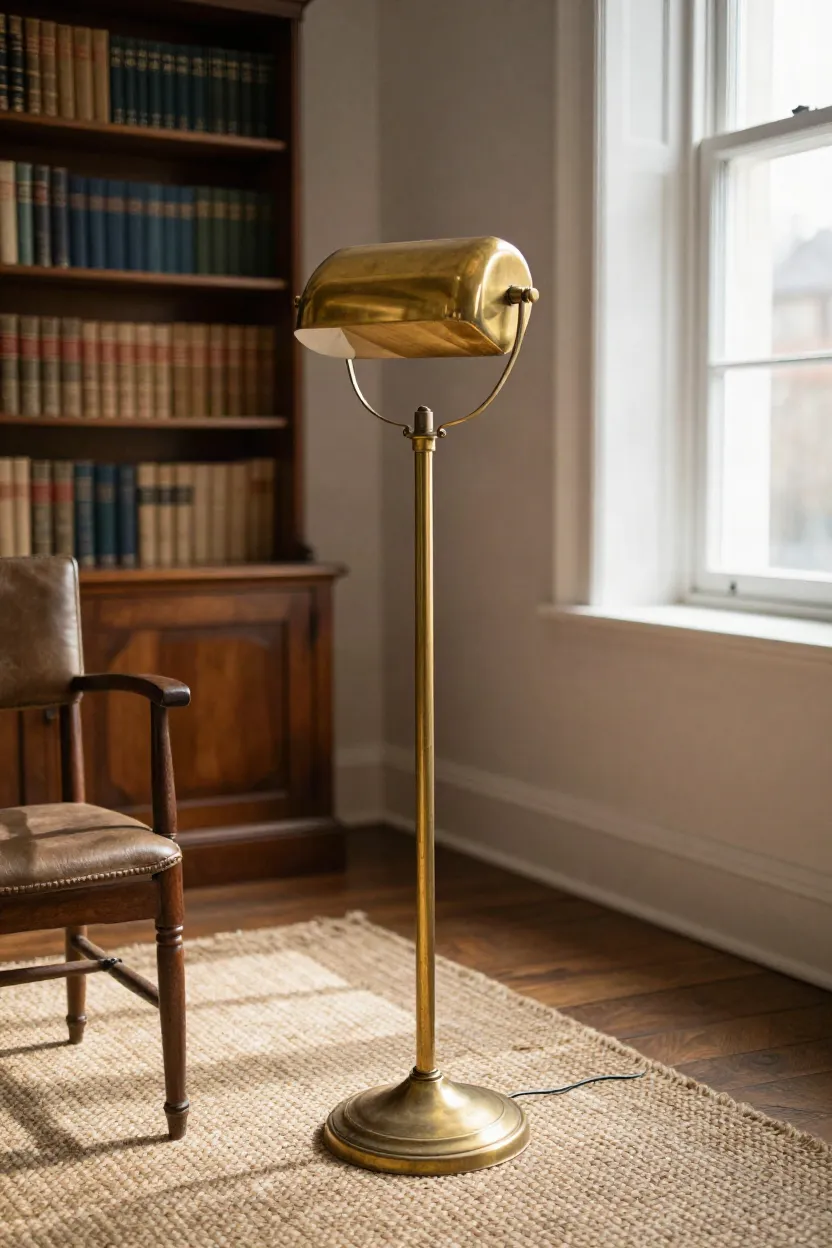
Directing focused light onto compact seating zones eliminates another small-space hurdle once your art sits securely on the wall. A slender vintage brass floor lamp bypasses the need for an extra side table, resting its weighted circular base neatly beside your armchair. The patinated brass pharmacy lamp casts a soft, downward pool of 2700K illumination, giving you dedicated traditional task lighting for evening reading without washing out the room. Its unlacquered surface introduces an authentic, living metal finish that contrasts crisply against quiet plaster walls, developing deeper character as handling continues over the years.
Vintage cord condition requires a practical safety check before you plug anything into modern wall outlets. Old lighting fixtures frequently conceal brittle cloth insulation or cracked rubber casings inside the adjustable pivot joints, creating a quiet fire hazard. Strip back the degraded wire or take the fixture to a neighborhood specialist to install fresh, modern insulated wiring with a grounded plug. Adding a modern cord assembly preserves the historical integrity of your antique reading corner lighting while ensuring dependable, worry-free operation on standard apartment circuits.
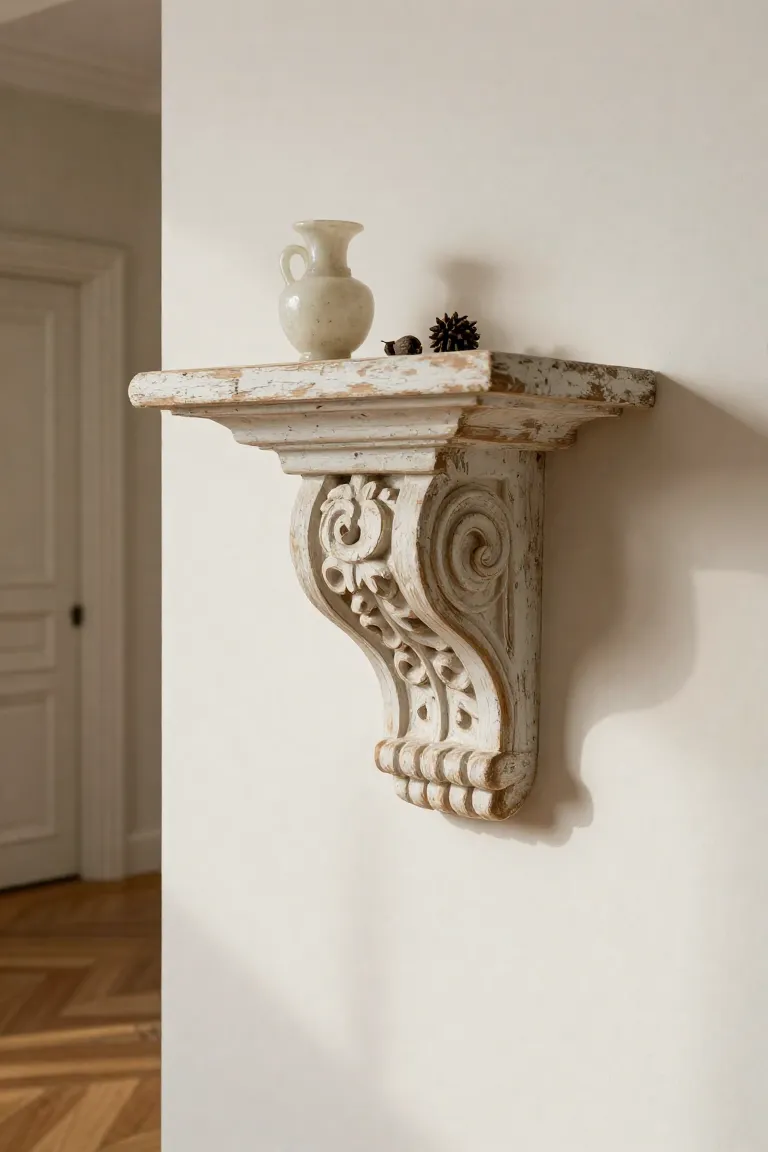
The Salvaged Carved Wood Corbel as Architectural Ledge
Salvaged timber elements bring immediate structural depth to contemporary drywall boxes that lack traditional moldings. Mounting a salvaged corbel wall shelf creates an unexpected display perch in tight entryways or directly above a compact nightstand where floor area remains non-existent. In workshop tests with antique pine brackets, locating solid framing behind the drywall proved essential, as aged plaster cracks quickly under cantilevered loads.
- Limit total shelf load strictly under 10 pounds to preserve structural balance and keep decorative displays stable.
- Fasten the vintage wood corbel ledge directly into wall studs with three-inch wood screws rather than relying on hollow-wall anchors.
- Rest miniature oil paintings or small ceramics on top to practice intentional architectural salvage decor without crowding the narrow perimeter.
Direct attachment to the structural framework prevents sagging over time, turning heavy architectural fragments into dependable, functional ledges for daily apartment living.
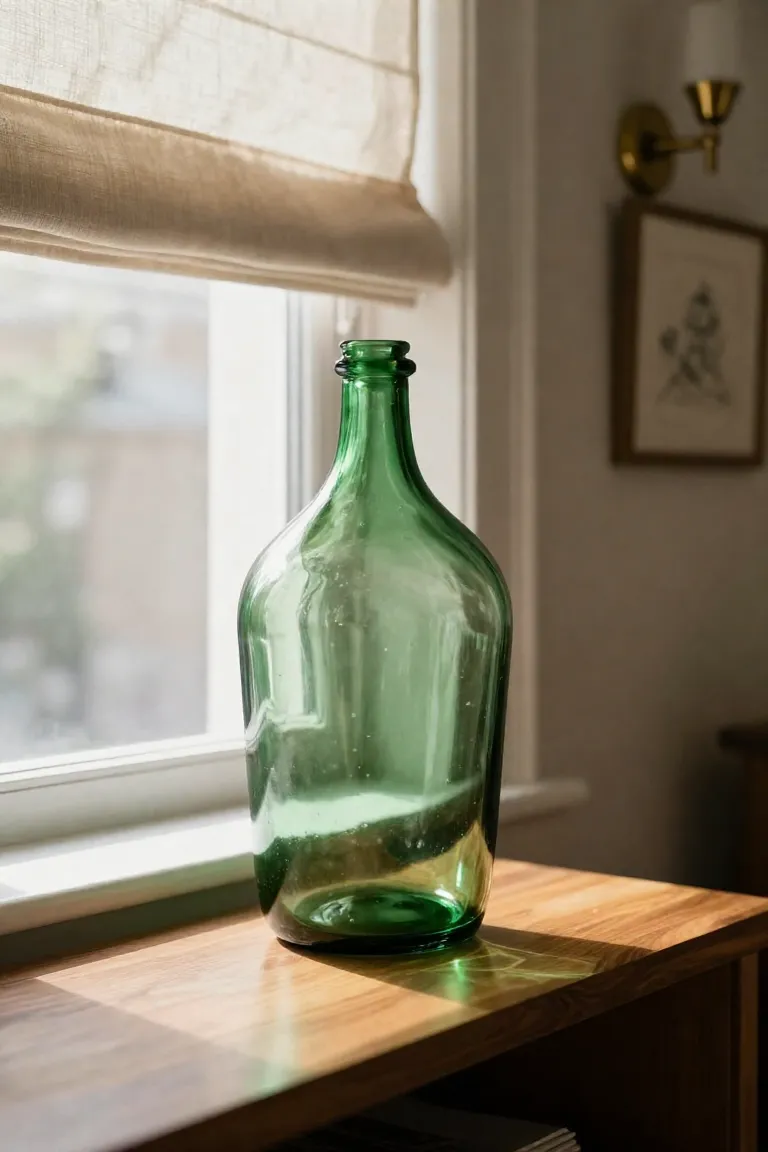
The Hand-Blown Green Demijohn for Window Light Reflection
Natural daylight becomes a dynamic styling asset when you place translucent vintage glass along narrow sill ledges. A vintage glass demijohn bottle catches incoming morning rays and throws rich olive reflections across the surrounding space. Pairing deep olive glass with relaxed linen drapery softens window corners, lending authenticity to french demijohn decor while preserving valuable tabletop room.
- Position the green glass bottle windowsill display at least six inches away from heating vents or metal radiators to prevent sudden thermal shock fractures.
- Wash the interior reservoir using a warm water mixture with coarse salt, swishing gently to lift mineral fogging without scratching the bottle floor.
- Style the vessel empty or insert a single dried branch to maintain clean lines and execute balanced antique glass styling.
Translucent hand-blown glass set near daylight creates natural ambient warmth across compact rooms, transforming flat surfaces into active focal points that shift subtly throughout the day.
Curator Clearance Matrix: Gallery Spacing Templates and Spatial Rules
Compact living quarters depend on strict physical margins to prevent diverse historical pieces from colliding into clutter. Applying a consistent gallery wall spacing guide establishes clear visual boundaries that keep salon arrangements feeling intentional rather than accidental. Set frame gaps between 2 to 3 inches for an organic cluster, maintaining art hanging height standards by keeping the visual midpoint roughly 57 inches from the floorboards. When mounting art directly behind seating, leave 8 to 10 inches of vertical breathing room between the sofa back and your lowest frame edges to prevent accidental bumps.
Practical circulation demands equal precision across your primary living paths. Abiding by established small apartment clearance rules means preserving 14 to 18 inches between low seating cushions and your coffee table, giving you comfortable legroom without stretching to set down a cup. Keep primary walkways at a minimum of 30 inches throughout the room so household movement stays natural. Grounding your space with accurate frame layout measurements and strict walkway buffers prevents visual clutter while keeping eclectic vintage arrangements practical to live with.
Antique Silhouette Rules and the 70/30 Patina Ratio
Maintaining clear walkways handles physical circulation, but visual breathing room requires an equally deliberate formula. When every piece in a compact room screams with aged character, the eye has nowhere to rest. A reliable vintage decorating balance relies on a 70/30 patina balancing ratio. You dedicate roughly 70 percent of your furnishings to quiet, tailored foundations with clean lines, reserving the remaining 30 percent for rich, weathered accent pieces. This practical division keeps small footprints feeling calm rather than chaotic.
- Prioritize elevated silhouettes with exposed legs. Sourcing chairs and credenzas with tapered dowels or turned spindles allows floor space to remain visible underneath, which tricks the eye into perceiving a wider room perimeter.
- Avoid solid box-to-floor plinths and chunky waterfall sides. One of the most common thrifting decor mistakes is purchasing hulking Victorian chests or solid oak roll-top desks that swallow floor area and trap room light.
- Check profile depth against a field antique furniture identification guide. Look for slim case goods under 16 inches deep and armchairs with narrow upright profiles rather than deep, sprawling lounge frames.
These structural proportions keep your space grounded so your prized second-hand treasures stand out as deliberate focal points.
The Edit-First Philosophy for Small Apartment Thrift Styling
Successful second-hand hunting for a compact home begins long before you step inside an estate sale or flea market stall. The core premise of any collected eclectic decor guide is intentional restraint. Before browsing, measure your entry doors, stairwells, and exact wall clearances, then store these numbers directly on your phone. Committing to strict physical dimensions stops spontaneous purchases from turning into awkward spatial obstacles. When you spot an alluring find, evaluate how its texture contrasts with your current pieces. Pairing a sleek glass shelf against pitted cast iron creates dimension, whereas piling dark carved walnut on top of dark stained oak flattens the room.
Cyclical curation forms the second vital pillar of budget vintage apartment styling. A compact layout cannot expand to accommodate every compelling weekend discovery, making a strict one-in, one-out policy your best defense against clutter. If you purchase a carved stone pedestal, decide in advance which existing side table or plant stand leaves your apartment. Practical thrifted home decor tips always emphasize regular inventory audits, rotating decorative vessels and wall frames into storage bins to preserve essential breathing room as your collection evolves.