No-Drill Decorating Secrets for Renting Small College Apartments
Summary
- Lease Protection and Structural Wall Integrity: The Rental Bedroom Blueprint
- Vertical Compression Anchors and Non-Invasive Suspension Systems
- Self-Supporting Partitions and Low-Tack Architectural Surface Films
- Fastener Shear Thresholds and Substrate Load-Bearing Limits
- Adhesive Delamination Hazards and Surface Residue Prevention Protocols
- Security Deposit Reclamation Strategy and Long-Term Layout Prioritization
Lease Protection and Structural Wall Integrity: The Rental Bedroom Blueprint
Moving off-campus gives you welcome independence, but strict move-out walkthroughs put your deposit on the line. Smart renter-friendly setups rely on friction mounts and modular fixtures rather than drywall nails. With thoughtful room styling, you can test creative college apartment bedroom ideas while keeping your decorating budget completely intact.
Vertical Compression Anchors and Non-Invasive Suspension Systems
Reclaiming vertical space does not require putting holes in thin apartment drywall. Spring compression uprights and existing picture moldings offer steady support without risking paint damage. When paired with heavy-duty interlocking fasteners, these mechanical setups easily support framed posters and textiles, keeping your room organized and clean.
For versatile no-drill wall storage, distribute framed pieces across several contact points to balance shear weight. This straightforward method leaves plenty of room for lightweight decor that unclips cleanly at the end of the semester.
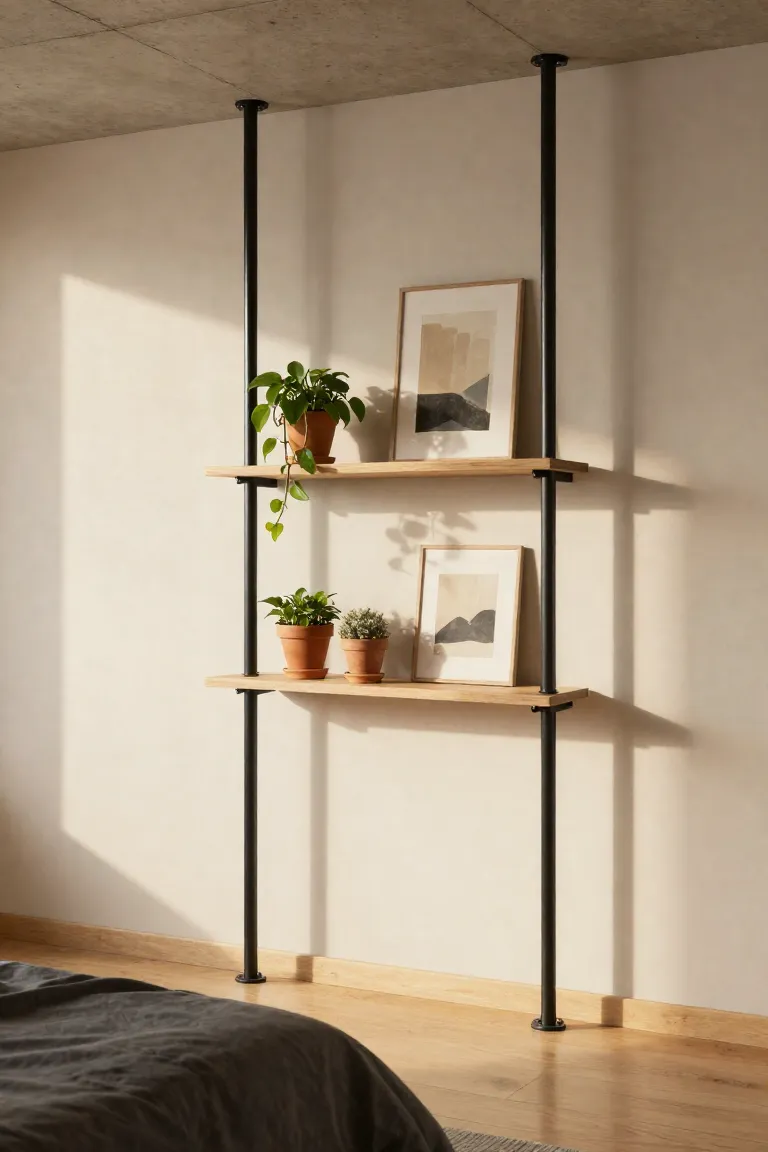
1. Spring-Tension Floor-to-Ceiling Modular Display Columns
Upright columns made from 1.25-inch steel tubing offer steady vertical support without drilling into ceiling joists. When assembling a tension pole shelf near your study desk, follow these essential guidelines for your small bedroom setup:
- Equip top and bottom contact plates with wide rubberized pads to avoid slipping on carpet pile.
- Cap each crossbar bracket at thirty pounds to eliminate torque imbalances along the central pole.
- Position display rungs flush alongside study desks for clean vertical storage that functions like an open shelving unit.
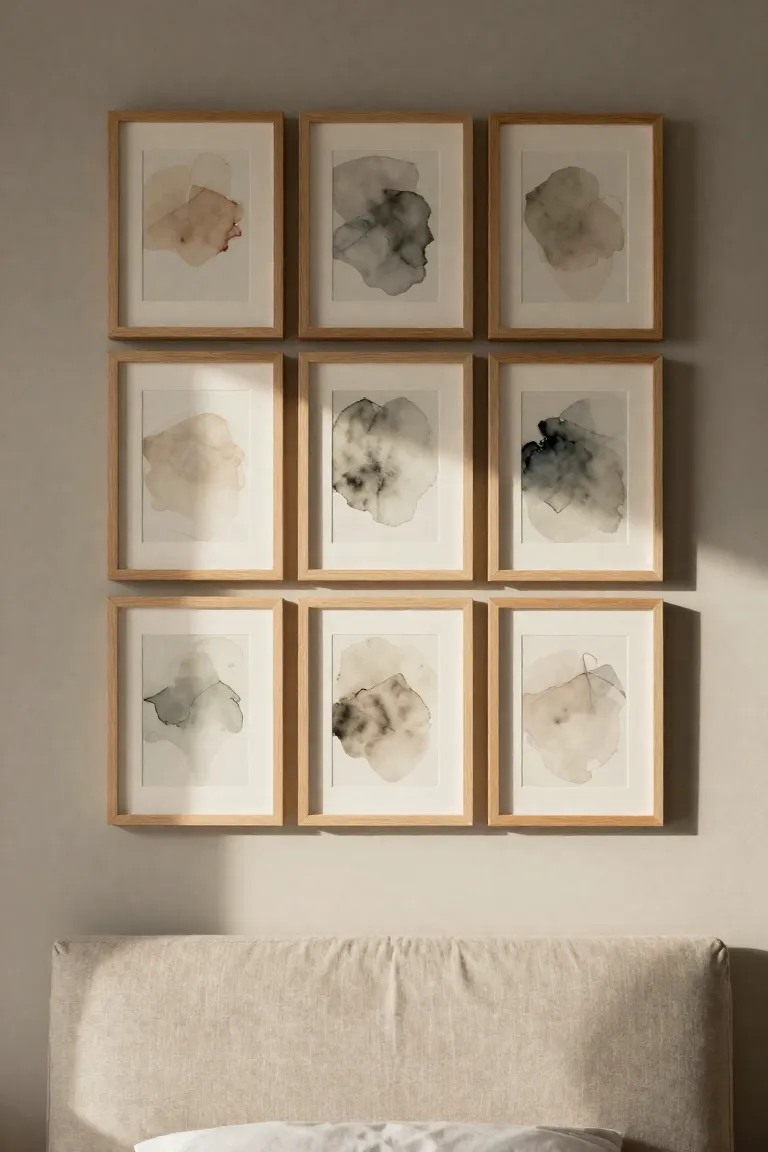
2. Interlocking Hook-and-Loop Strips for Symmetrical Gallery Layouts
Mounting framed prints over a student desk requires steady alignment without risking your security deposit. When you build a clean command strip gallery wall, snap-lock polymer fasteners offer a dependable grip without nails. A set of four pairs handles up to sixteen pounds, providing stable holding power for medium frames when you distribute them evenly along the back edges. Spacing pairs roughly hand-width apart across outer frame borders keeps each piece level against painted drywall during late-night study sessions. This setup delivers a crisp, evenly spaced grid tailored for small study corners.
Safe removal requires patience to keep fragile paint intact. When taking down your gallery wall at move-out, pull the release tab straight down parallel against the drywall surface rather than yanking the frame outward. Peeling outward shears the paper backing and chips brittle latex paint. Keeping the stretch flat and steady releases the polymer grip cleanly, leaving bedroom walls spotless for inspection.
3. Architectural Picture Rail Hooks with Braided Wire Drop Lines
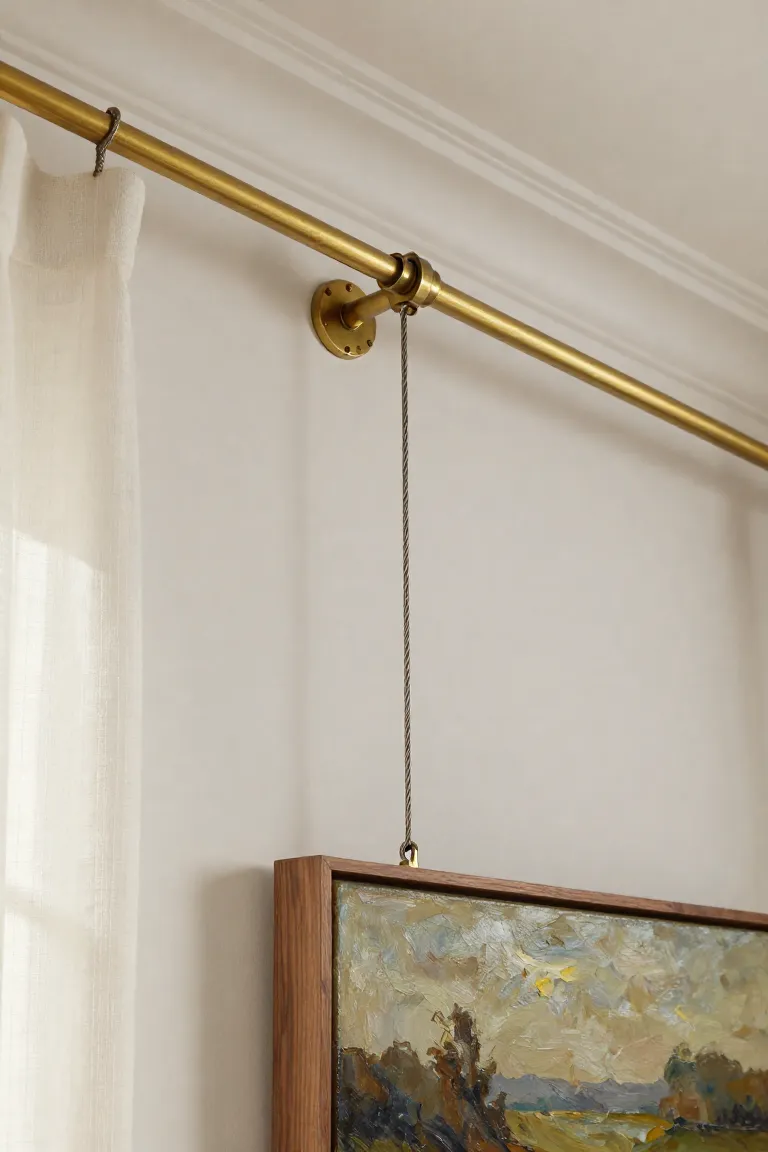
Older student rentals frequently feature historic crown molding resting just beneath the ceiling trim. Taking advantage of a picture rail hanging system allows you to hang heavy thrifted artwork without driving a single fastener into fragile plaster. Contoured brass hooks paired with slim 1.5 mm braided stainless steel cables hold up to twenty-five pounds per suspension point while preserving antique woodwork. To protect aging trim from pulling loose under sustained weight, spread heavier mirrors or wide framed maps across two hooks spaced roughly a foot apart along the track.
- Fit molded brass hangers over the rail lip to establish a stable base for hanging artwork.
- Drop twin stainless wires straight down to eyelet screws on the frame for clean wall hanging.
- Complement vintage apartment styling by pairing antiqued metal cords with dark wood frames.
- Level each drop line carefully to maintain balanced load distribution across the upper trim.
4. Heavy-Gauge Alcove Tension Rods for Architectural Fabric Partitions
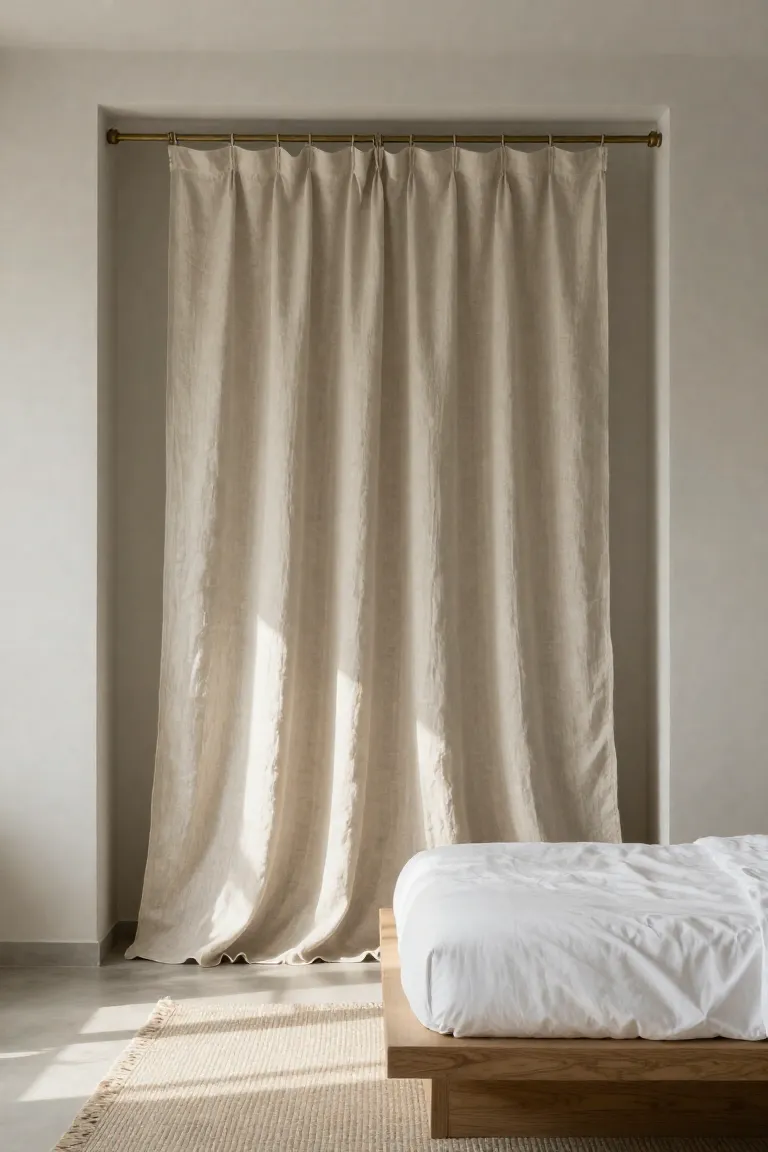
Carving out a private sleeping zone in a shared college apartment often comes down to clever room division. Installing a one-inch heavy-gauge compression rod across an alcove creates a flexible curtain canopy setup without putting holes in rental drywall. Spanning gaps up to seven feet, these thick metal rods hold up to fifteen pounds of fabric, which softens outside hallway noise in drafty rentals. To keep the rubber foot pads from slipping or scuffing flat contractor paint, clean both contact zones with isopropyl alcohol and slide thin silicone grip shims behind each cap.
Lightweight textiles work best to keep tension rods secure over the semester. For an airy fabric backdrop, layer unlined cotton panels rather than heavy blackout velvet. Washed linen panels bring relaxed texture to plain rental drywall while filtering bright desk lamps. If you want a soft canopy look on a tight student budget, hang flowing curtains that puddle slightly on the floor to reduce downward drag along the ceiling line.
Self-Supporting Partitions and Low-Tack Architectural Surface Films
Dividing a compact student floor plan doesn't require mounting heavy hardware or putting holes into your landlord's drywall. Setting up freestanding bedroom decor lets you map out distinct sleeping and study zones while keeping every square foot adaptable. When you combine movable screens with clever peel-and-stick updates, you carve out functional corners and protect your security deposit completely.
These renter-friendly makeover choices rely on balanced furniture arrangements rather than wall fasteners to hold their ground. You can define visual zones across a damage-free college apartment using a few simple principles:
- Position folding partitions perpendicular to natural window light to soften glare across your desk setup.
- Apply matte graphic films directly over flat wardrobes or hollow doors to disguise builder-grade finishes.
- Layer open-shelf bookcases as double-sided room dividers that hold daily textbooks without blocking air circulation.
5. Solid Timber Leaning Ladders with Neoprene Anti-Slip Floor Grips
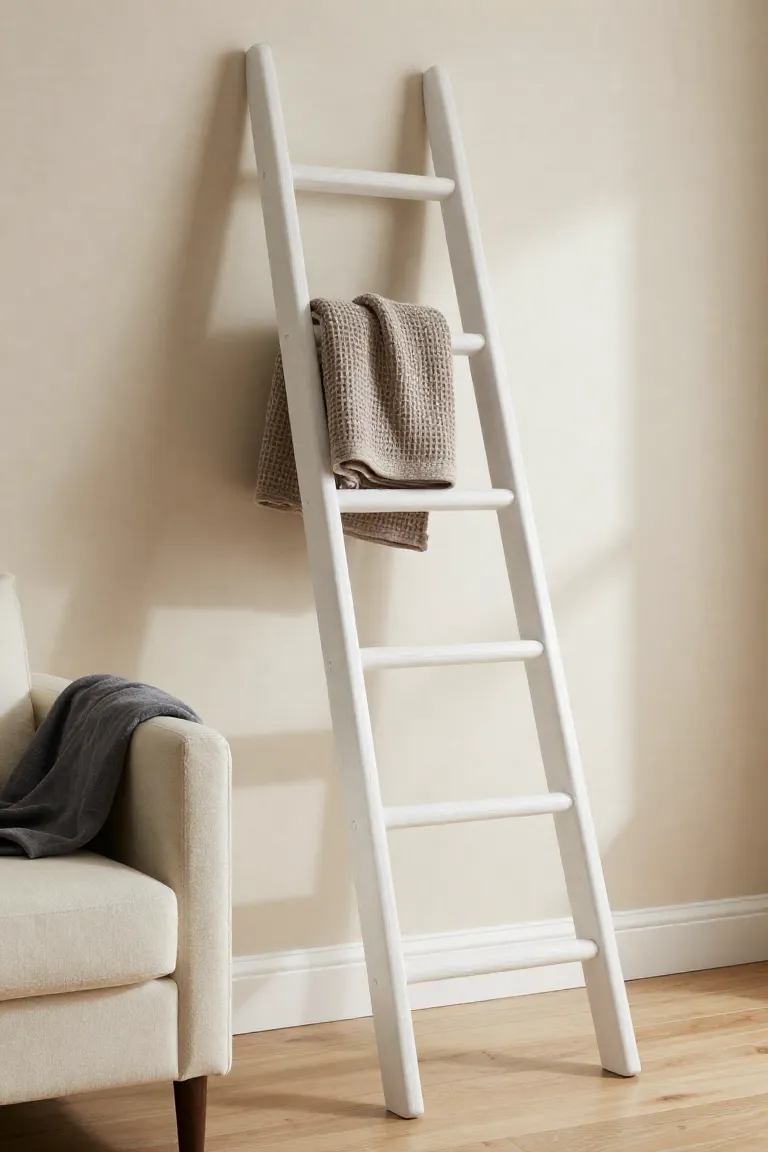
A solid leaning blanket ladder gives bulky quilts a dedicated home when tiny dorm closets run out of shelving. Angling the uprights around a steady 75-degree lean keeps the rails settled securely, while resting the base roughly a foot and a half outward prevents sudden balance shifts. To stop scuffs and kick-outs on slick laminate floors, stick dense neoprene pads directly beneath the bottom feet and top contact points.
The wooden ladder doubles as an open textile display without overloading the frame. Keep weight balanced across the rungs with these simple guidelines:
| Placement Level | Recommended Load | Ideal Textile Items |
|---|---|---|
| Top Rungs | Under 5 lbs | Waffle-weave throws, linen scarves |
| Middle Rungs | 6 to 8 lbs | Chunky knit blankets, fleece wraps |
| Bottom Rung | 8 lbs max | Heavy wool quilts, dense canvas totes |
The narrow footprint clears floor clutter and keeps cozy layers within arm's reach of your bed.
6. Low-Tack Removable Geometric Arch Decals for Bed Enclaves
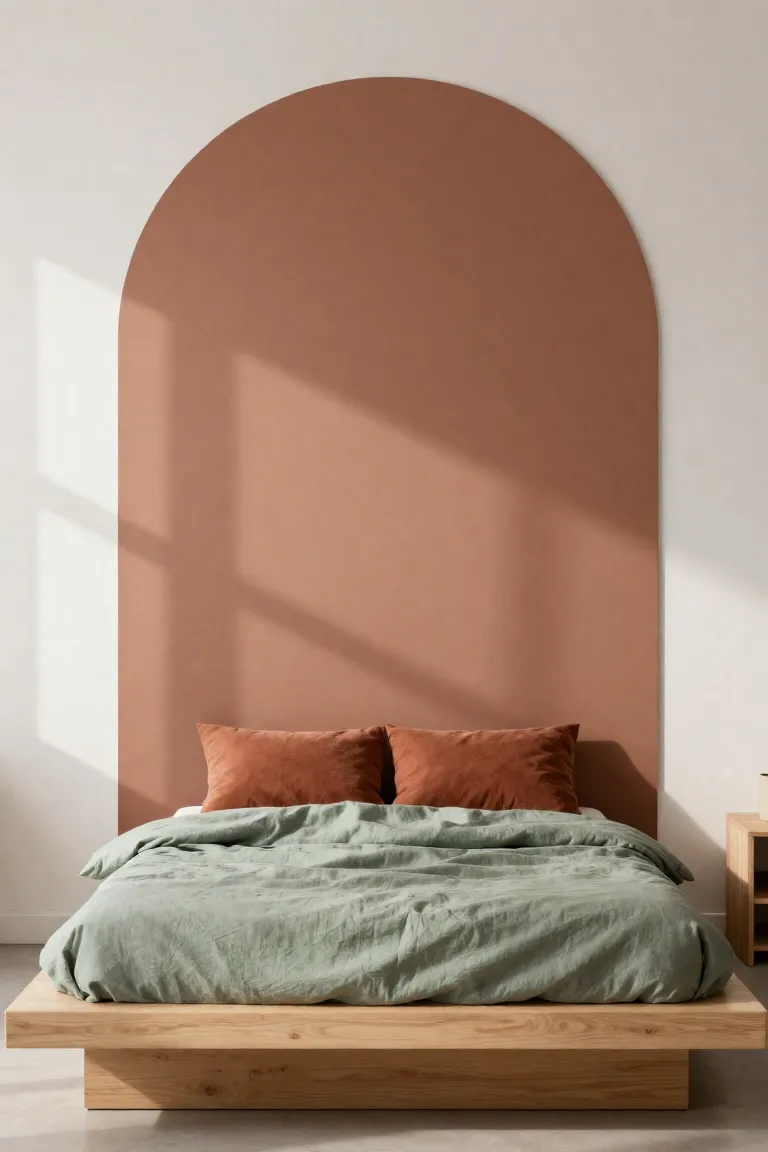
Mounting a removable peel-and-stick arch behind your mattress frames your sleeping space with warm color on a humble student budget. Made from flexible 4-mil matte vinyl, it serves as a lightweight headboard alternative that won't leave sticky residue behind at move-out time. A warm terracotta color block motif warms up sterile off-white paint and gives basic metal bed frames an intentional, built-in presence.
Before peeling the backing, wipe down the drywall with a 70 percent isopropyl alcohol solution to clear off ambient dust and oil. Installing your accent wall works best at room temperatures around 70 degrees, where the low-tack adhesive remains pliable and easy to smooth out:
- Align the top curve against your pencil guidelines, tacking down the top edge first.
- Peel the backing paper downward in small increments while pressing outward from the center with a squeegee.
- Smooth out stubborn air bubbles toward the edges with a soft felt-edge burnisher to prevent edge curling.
7. Over-the-Door Slatted Wood Acoustic Panels with Concealed Brackets
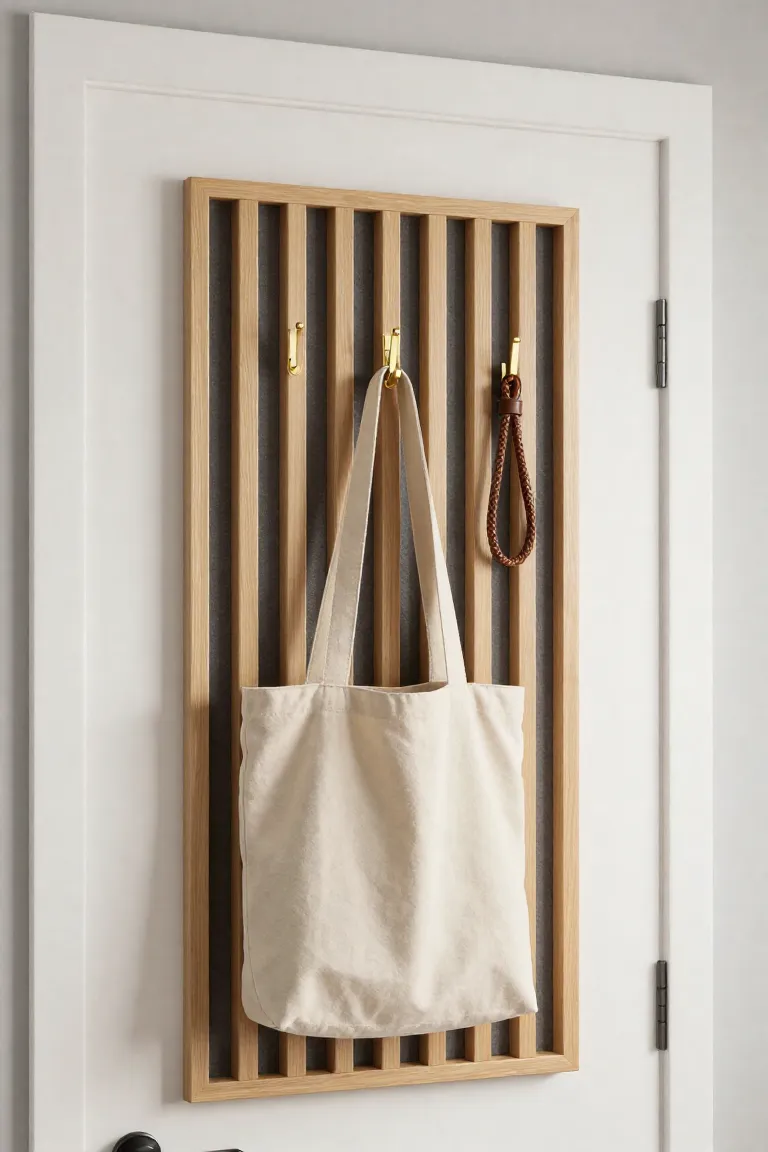
Hanging fluted oak panels over your bedroom door brings warm timber texture while dampening hallway chatter, all without putting a single screw into rental woodwork. Before hanging any hardware, slide a standard nickel coin across the top door gap to ensure you have enough clearance so the latch closes smoothly without binding the strike plate. Low-profile steel brackets slip flush over standard interior doors, supporting up to 35 pounds while transforming hollow-core slabs into functional vertical storage.
To expand your door storage, mount lightweight brass utility pegs directly into the felt backing between slats to hang bags or headphones. This setup dampens echoing noise while leaving zero holes behind for move-out inspections. Combining acoustic felt with hanging storage keeps daily clutter off your floor without risking your security deposit.
8. Free-Standing Hinged Pegboard Folding Screens as Modular Headboards
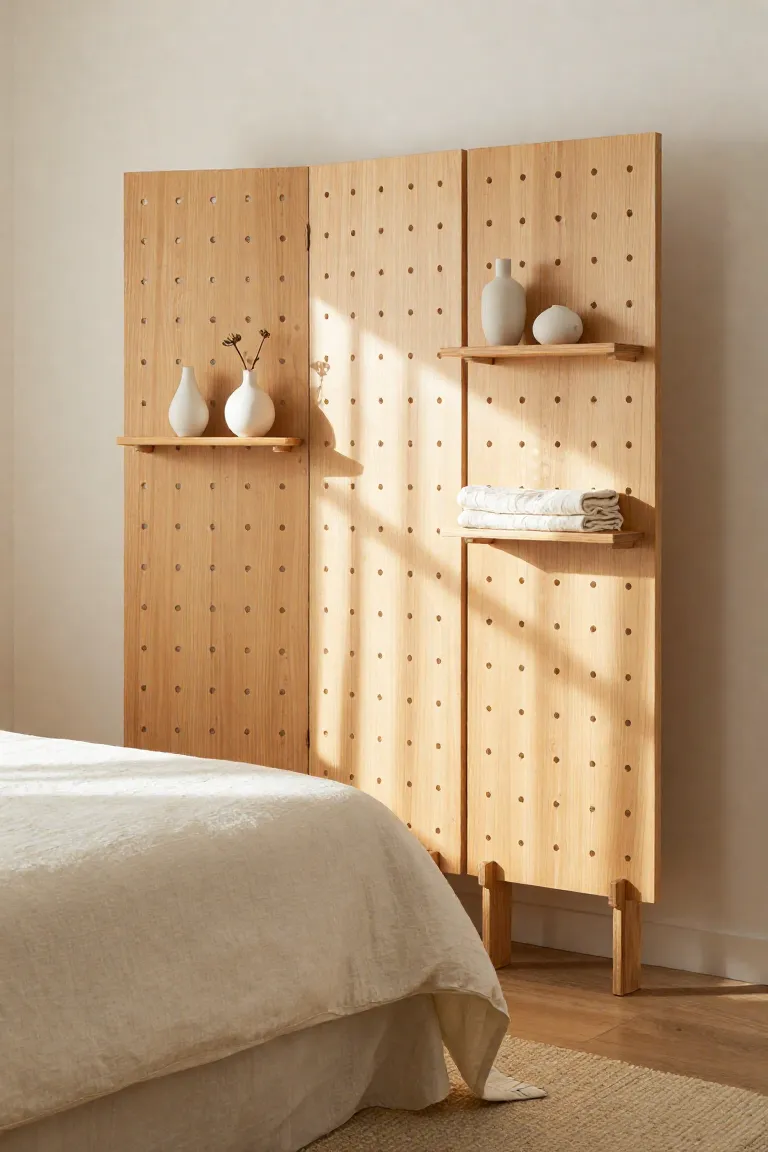
When shared living arrangements require flexible division, assembling a DIY pegboard room divider gives you both functional storage and personal privacy. Connecting three panels of three-quarter-inch birch plywood with brass bi-fold hinges allows the structure to double as a freestanding headboard without touching rental drywall. Arranging the panels in an intentional S-curve establishes counterbalanced stability on uneven floors, transforming open corners into a cozy bedroom study nook.
- Position each wing at an alternating angle so the screen remains upright without wall brackets.
- Keep accessory shelf depths under six inches to prevent forward tipping and structural joint fatigue.
- Cap shelf weights at ten pounds per tier, spacing books and desk essentials evenly across the board surface.
This arrangement gives roommates defined personal zones that fold flat on moving day.
Fastener Shear Thresholds and Substrate Load-Bearing Limits
Every temporary hanging method depends directly on the strength of the underlying wall material rather than the maximum rating printed on the package. Standard rental drywall covered in flat contractor paint offers far less shear resistance than cured concrete or solid wood trim. To prevent accidental wall tear-outs during hot, humid semesters, you must respect conservative safe working limits when mounting hardware across different apartment surfaces.
| Hardware Type | Substrate Surface | Rated Capacity | Safety Threshold |
|---|---|---|---|
| Adhesive mounting strips | Unprimed rental drywall | 16 lbs total | 8 lbs continuous load |
| Alcove tension rod | Drywall framed opening | 25 lbs span limit | 15 lbs fabric weight |
| Over-door steel bracket | Hollow-core interior door | 35 lbs downward load | 20 lbs balanced gear |
Indoor temperature swings cause adhesive backing to soften over time, making it essential to operate below published manufacturer ratings. Factoring these weight limits into your setup prevents wall strain and keeps tension hardware within stable margins.
Adhesive Delamination Hazards and Surface Residue Prevention Protocols
Even the sturdiest mounting tabs can fail unexpectedly when exposed to fluctuating dorm humidity or applied directly over cheap builder-grade flat paint. When sticky backings cure against chalky drywall, pulling them off too fast almost always tears away outer paper layers. Mastering a few reliable removal tricks ensures you prevent paint peeling issues before move-out inspections arrive.
- Warm stubborn strips with a handheld hair dryer on low heat for thirty seconds to soften gummy tack.
- Follow manufacturer guidelines on how to remove adhesive strips by stretching the pull tab straight down along the baseboard rather than yanking outward.
- Dab lingering adhesive traces with a mild citrus solvent on a microfiber rag to guarantee complete deposit protection without lifting wall color.
Security Deposit Reclamation Strategy and Long-Term Layout Prioritization
Wrapping up a lease without deductions comes down to how efficiently your furnishings pack up between semesters. Investing upfront in durable vertical tension columns and modular floor screens pays off because these fixtures transfer easily into your next rental without leaving behind patched drywall or spackle touch-ups. Smart move-out planning prioritizes portable pieces that break down in under twenty minutes.
A thoughtful small-space design strategy strikes a balance between low upfront costs and long-term utility. Choosing portable, modular pieces keeps your room comfortable and lets you walk away on inspection day with your full deposit in hand.