Cottagecore Small Apartment: 9 Sourcing Essentials for Weathered Charm Without Clutter
Summary
- Balancing Authentic Countryside Patina with Urban Footprint Constraints
- Scale-Calibrated Timber Furniture and Folding Silhouette Anchors
- Aged Architectural Hardware and Vertical Display Elements
- Tactile Heritage Weaves and Dimensioned Organic Accents
- Vintage Hardware Dimension Checklist and Small-Scale Furniture Clearance Matrix
- Patina Preservation Protocols and Structural Secondary Sourcing Pitfalls
- Curated Small-Space Sourcing Decision Framework
Balancing Authentic Countryside Patina with Urban Footprint Constraints
Bringing cozy cottage warmth into a city flat can feel tricky when square footage is tight. In cottagecore apartment living, you don't need heavy barn finds that block your walkways to create small space rustic decor. Smart vintage apartment styling relies on slender folding timber, wall-mounted storage, and honest textured linens. This approach gives you a clutter free country home feel without crowding your everyday routine.
Scale-Calibrated Timber Furniture and Folding Silhouette Anchors
When you pick large wooden pieces for tight layouts, scale and leg profiles make all the difference. Heavy, boxy sideboards quickly overwhelm a compact room, but choosing antique small apartment furniture with slender turned legs keeps floor sightlines open. Pieces like a rustic folding dining table or gateleg console anchor your room with warm, aged wood while letting you collapse the leaves during busy weekdays. Sourcing vintage space saving decor gives you authentic country texture without locking your floor plan into rigid, crowded pathways.
Prioritize furniture with open spindle legs and drop-leaf leaves so you can expand surfaces for dinner guests and tuck them away for morning stretches.
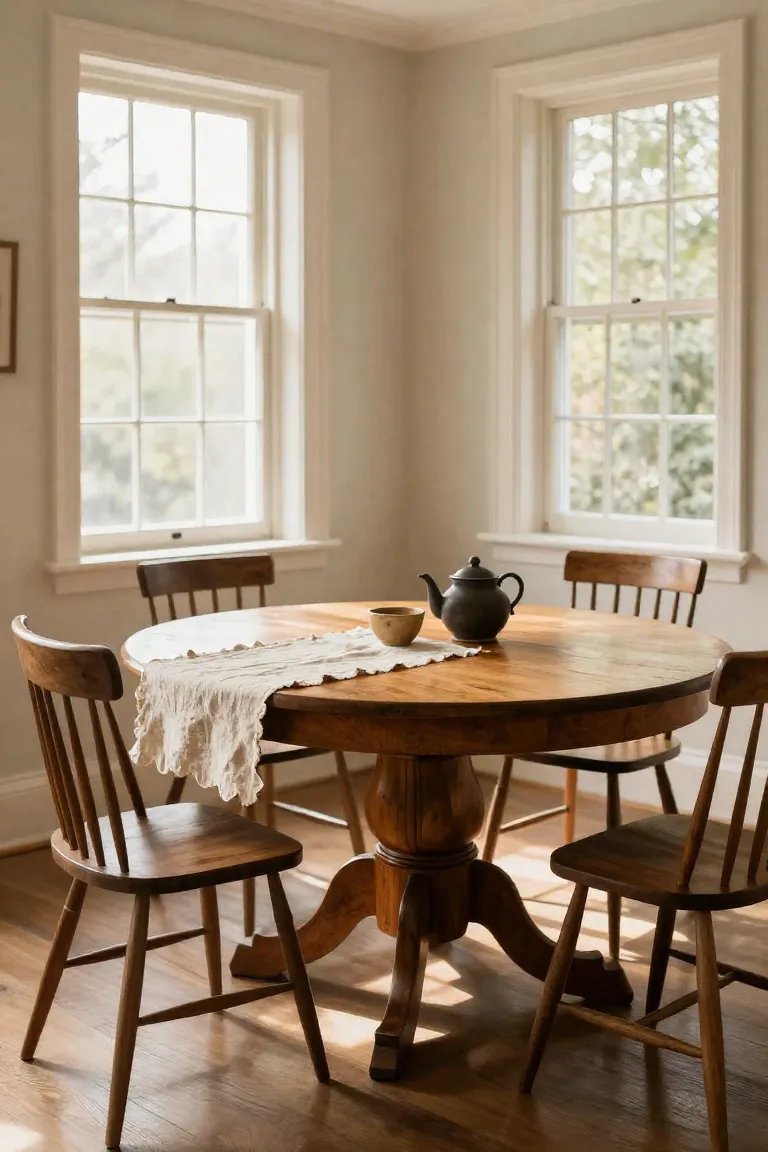
Antique Round Drop-Leaf Pine Dining Table with Collapsible Leaves
A classic 19th-century English or Scandinavian pine table serves as a dependable centerpiece for a small rustic breakfast nook. When you source an antique drop leaf dining table, you get warm country utility that shifts between work and dinner modes. It functions as flexible apartment dining room furniture, shrinking down to an 18-inch depth footprint against the wall and expanding easily when both gateleg supports swing outward.
- Measure your floor clearances carefully, ensuring you maintain at least 32 inches of walkway clearance around the perimeter when both leaves are fully extended into the room.
- Inspect the underside and tabletop joints thoroughly for warped hinge leaves, separated plank glue lines, or loose pivot pegs before buying.
- Opt for a traditional scrubbed wax finish over synthetic polyurethane coatings, which lets the wood develop a rich patina while handling daily coffee mugs and spill cleanups with simple rewaxing.
A well-maintained vintage pine gateleg table offers durable utility, giving your dining corner authentic historic character that handles daily use with ease.
Mismatched Spindle-Back Windsor and Penny-End Dining Chairs
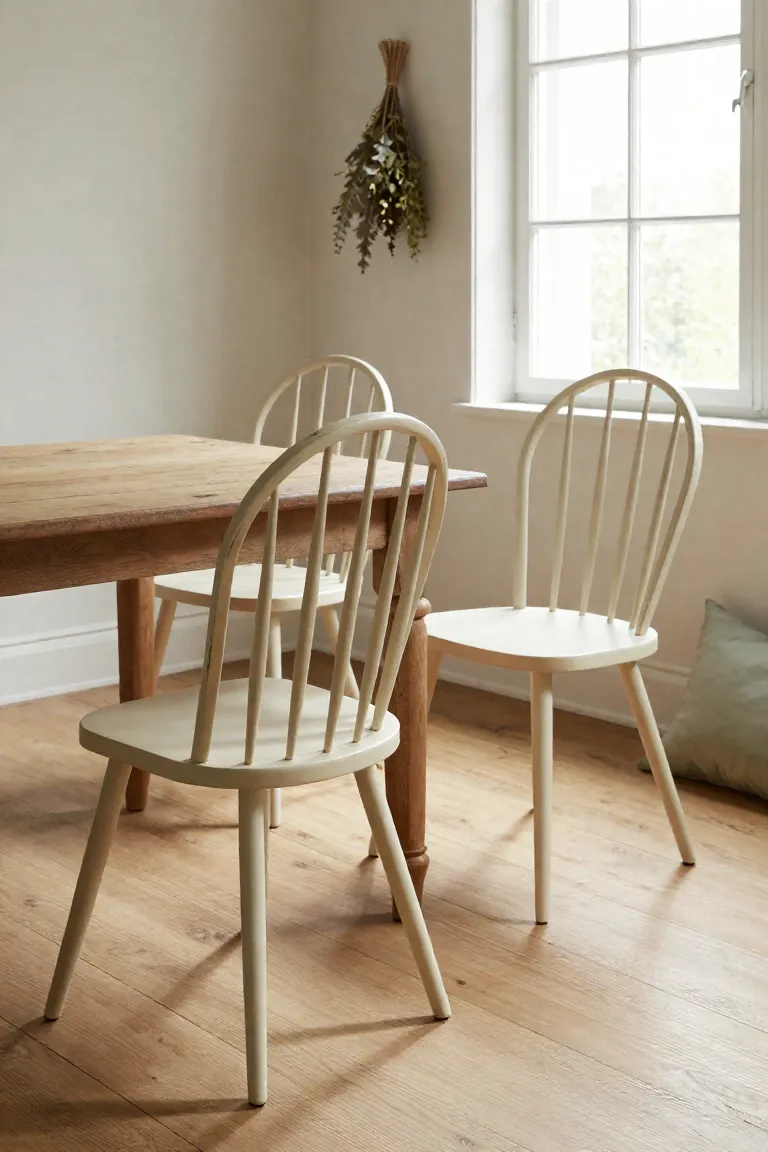
In a tight dining alcove, solid wooden chairs can block natural window light and make the room feel boxed in. Choosing open-spindle wooden seating keeps sightlines open across the floor, making a small room breathe. Curating mismatched rustic dining chairs lets you combine different historic designs, like hoop-back Windsor models and penny-end comb chairs, to build an English country dining nook full of warmth without visual chaos.
- Check the seat height and table clearance, pairing standard 18-inch seat pans with a 29-inch to 30-inch tabletop so your knees have plenty of comfortable clearance.
- Inspect crucial joinery points before purchasing, making sure the under-seat wedge-tenon joints and lower H-stretchers are firm and free from cracked elm slabs or loose dowels.
- Mix finishes intentionally by balancing chipped black milk paint with warm honey elm tones, which brings storied depth into your vintage windsor chairs dining setup while keeping antique spindle back chairs feeling light.
This thoughtful mix keeps your seating flexible and easy to shuffle when friends drop by for dinner.
Shallow Wall-Mounted Glazed Corner Cupboards in Chipped Milk Paint
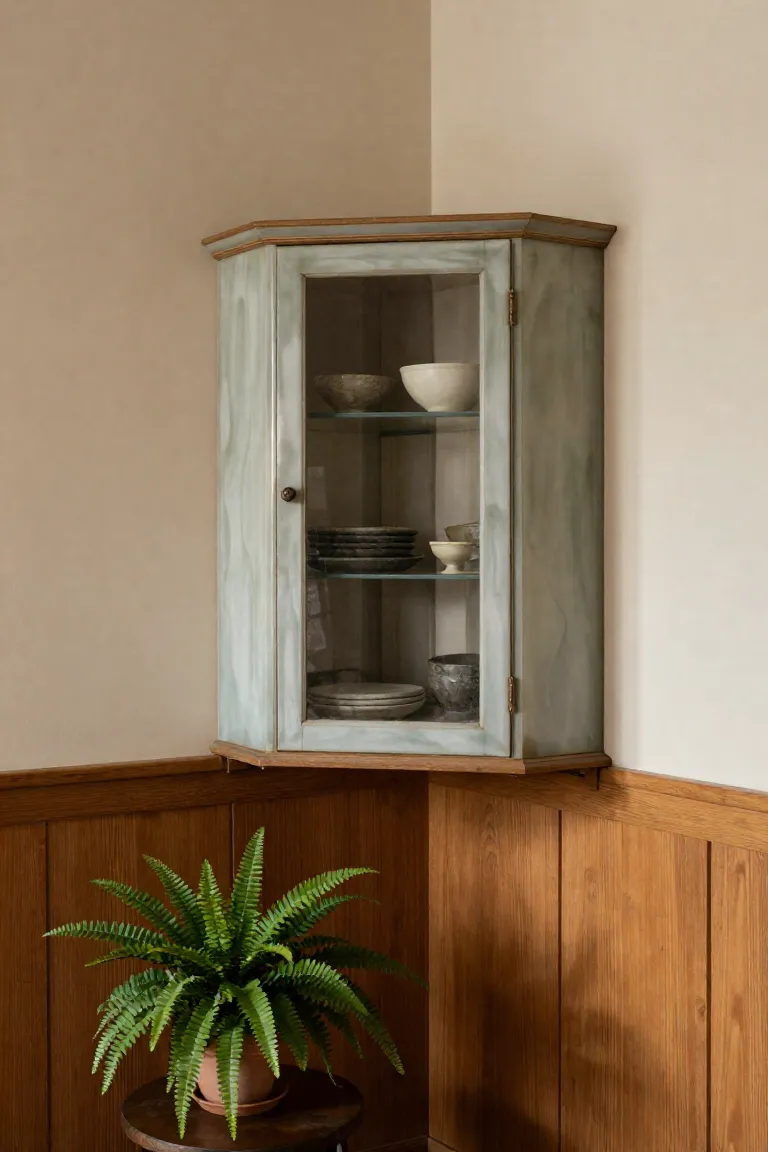
When floor area runs short around your dining setup, dead corners offer untapped potential for storage and character. Mounting an antique wall corner cabinet tucks historic warmth right into that awkward angle without encroaching on walking pathways. Look for a vintage wall hung vitrine with a maximum front depth between 12 to 14 inches so nobody bumps their forehead while getting up from dinner. The visual payoff comes from original cylinder glass, where slight ripples and air bubbles distort the light across stacks of cream stoneware. Genuine distressed milk paint storage beats factory-aged repro pieces every time, especially when genuine wear reveals older wood layers beneath soft, chalky brushstrokes.
Because you will likely fill these shelves with substantial pottery, securing your glazed rustic display cupboard requires serious structural consideration. Never rely on plastic wall anchors that pull straight out of standard drywall under sustained strain. You need heavy-duty toggle bolts or direct wood screws into framing studs to maintain a 45-pound safe load limit for heavy ceramic ironstone. Once properly anchored, the cabinet lifts your cherished ceramics safely off your counters, giving your apartment dining nook authentic country charm without stealing an inch of precious floor room.
Aged Architectural Hardware and Vertical Display Elements
Rented apartment walls often feel flat and utilitarian, but introducing vintage elements along your vertical space immediately anchors a room with lived-in personality. Instead of scattering small pictures that create visual noise across plain drywall, authentic wall fixtures provide practical function while drawing the eye upward naturally.
- Incorporate aged brass apartment hardware on floating displays or utility shelves to introduce warm metallic luster that patinas with daily handling.
- Adopt classic shaker peg rail styling along entryways or open kitchen walls, spacing pegs roughly six inches apart to suspend market baskets, dried herbs, or copper pans.
- Hang forged iron hooks directly into wall studs so you can lift bulky winter coats, linen aprons, and utility brushes completely off your limited floor surface.
These heavy-duty wall materials establish authentic vertical interest that softens drywall while keeping every square foot of walking space clear.
Unlacquered Solid Brass Articulated Sconces with Pleated Linen Shades
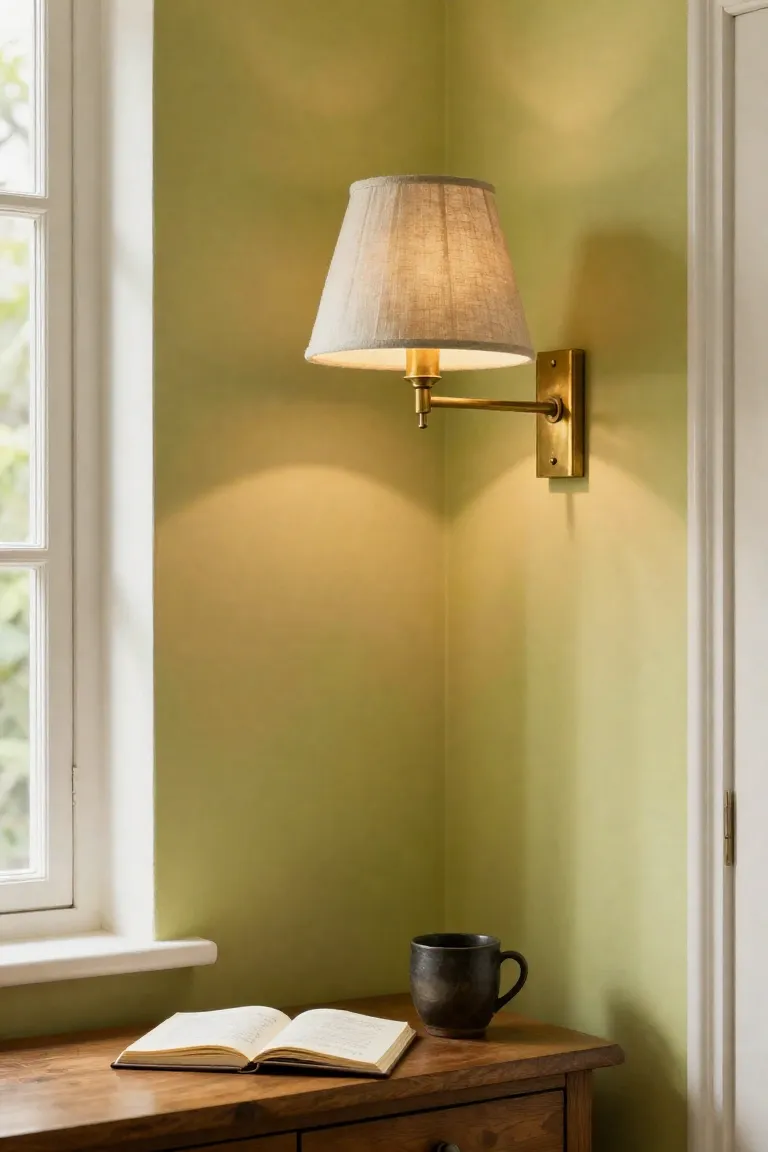
Floor lamps often crowd compact seating corners, consuming square footage that could otherwise keep your living room feeling open and comfortable. Choosing an unlacquered brass wall sconce with an articulating arm lets you direct task lighting right over an armchair or daybed while leaving the floor footprint completely untouched.
- Mount the backplate between 58 to 62 inches from the finished floor to place the warm beam comfortably at reading level without blinding anyone seated below.
- Select a pleated linen swing arm lamp with a 6-inch base diameter shade, paired with a 40-watt equivalent warm LED bulb to prevent fabric scorching while dispersing soft ambient glow.
- Preserve the evolving character of your rustic brass reading light by skipping harsh commercial metal polishes, using instead a dry microfiber cloth with a small dab of mineral oil to wipe down the vintage apartment wall lighting.
This straightforward setup delivers focused, comfortable evening illumination that folds flush back against the wall whenever you need extra elbow room.
Reclaimed Cast Iron Bin Pulls and Hand-Forged Cabinet Latches
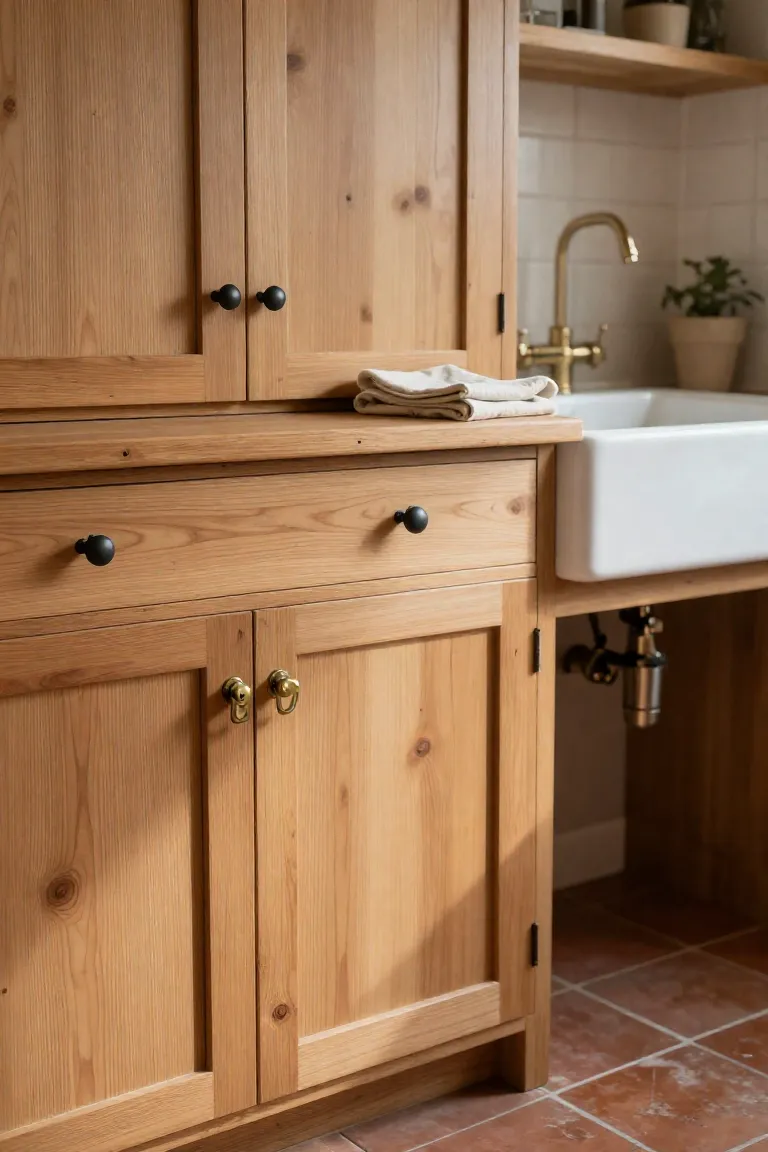
Swapping out generic modern handles on thrifted chests or builder-grade kitchen units provides one of the easiest ways to inject historical texture into your living quarters. Solid antique cast iron bin pulls and sturdy vintage cabinet turn latches ground plain painted surfaces with honest craftsmanship. Before buying pieces at salvage shops, verify dimensional clearances carefully. Measure for standard 3-inch center-to-center hole spacing, and confirm you have at least 1-inch screw thread depth clearance to avoid splitting antique pine or oak drawer fronts. Steer clear of lightweight pot metal reproductions that snap under sudden pressure, selecting heavy sand-cast iron or solid unlacquered metal with tactile heft instead.
The deep charcoal finish of reclaimed cupboard hardware establishes a striking visual anchor against scrubbed pine, pale buttermilk cabinets, or worn beadboard. When you grab solid rustic drawer pulls every morning to brew coffee or open a cutlery drawer, the cold, textured surface delivers satisfying physical reassurance. It takes only an afternoon with a handheld screwdriver to install these pieces, instantly lending historic provenance to basic apartment cabinetry without any permanent renovations.
Weathered Ash Shaker Peg Rails for Floorless Storage
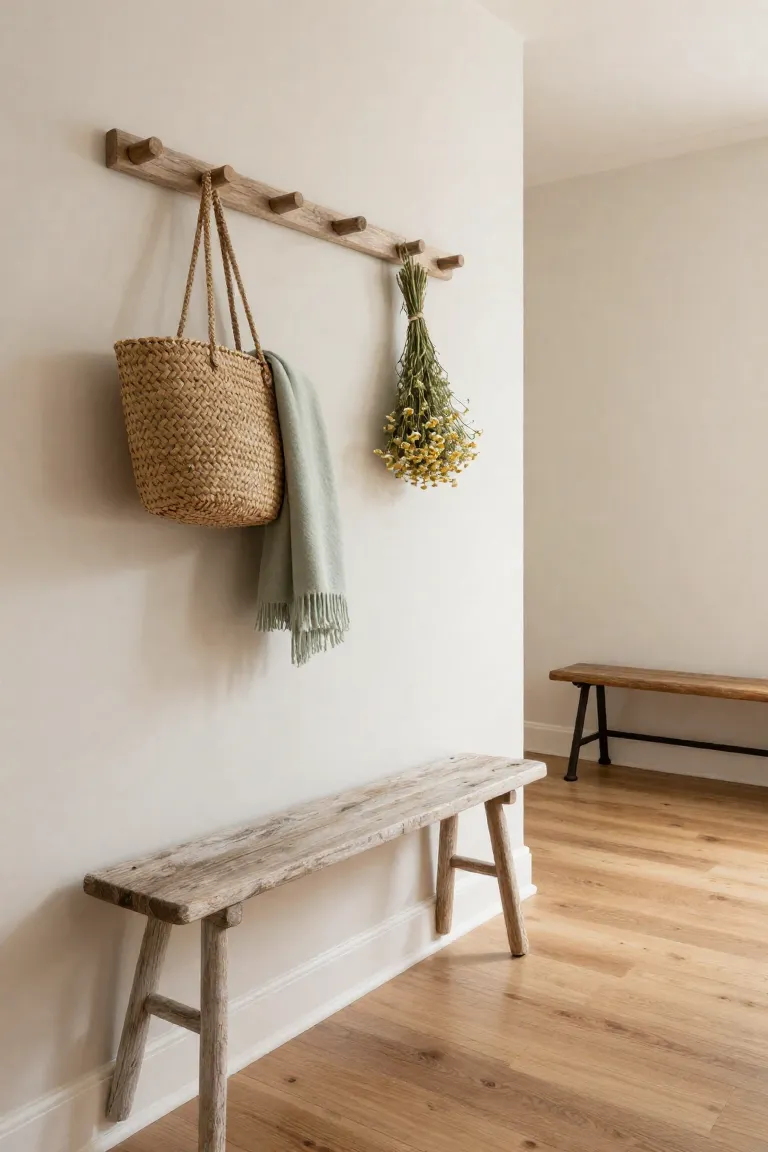
When floor space is at a premium in a compact layout, lifting your daily essentials onto vertical wall space changes everything. Running a rustic wall peg rack along a narrow hallway or dining alcove gives you immediate utility without stealing an inch of walkable room. A weathered timber rail turns an otherwise blank wall into practical wooden coat peg storage, keeping your favorite utility pieces accessible while maintaining a relaxed country mood.
- Anchor your rail into solid backing with 2.5-inch countersunk screws driven directly into wall studs, ensuring the rack can securely hold heavy cast iron pans or market totes full of produce.
- Position the rail between 60 to 66 inches from the floor, which keeps longer hanging items well clear of baseboards while sitting at a comfortable reach for daily use.
- Choose peg spacing of 6 inches on center along your shaker peg rail entryway setup, giving bulky canvas bags and wool sweaters plenty of breathing room.
- Practice minimalist cottagecore storage by hanging items on only every second or third peg, preserving calm negative space between your displayed wares.
This simple balance between open wall and hardworking hooks keeps your entryway functional, calm, and grounded.
Tactile Heritage Weaves and Dimensioned Organic Accents
Hard surfaces like drywall, laminate countertops, and rental linoleum can make a small apartment feel stark and echoey. Introducing authentic natural fibers alongside aged timber pieces softens harsh sound reflections while creating cozy depth in tight quarters. By treating your soft goods and vessels as tactile layers rather than random knick-knacks, you bring warmth to every corner without cluttering your valuable work surfaces.
- Drape rustic linen textiles across hard timber benches or drop-leaf tables to instantly dampen room chatter and add tactile warmth.
- Hang vintage botanical wall art in matching wood frames along plain plaster walls to introduce natural foliage tones without using up precious shelf space.
- Group two or three antique wooden kitchen accents on your preparation counter, keeping wooden spoons or salt crocks corralled inside a small hand-turned bowl.
A tightly edited arrangement gives your living space an authentic historical feeling while preserving clean working surfaces throughout your home.
Heavyweight Scalloped Oatmeal Linen Table Runners and Cafe Tiers
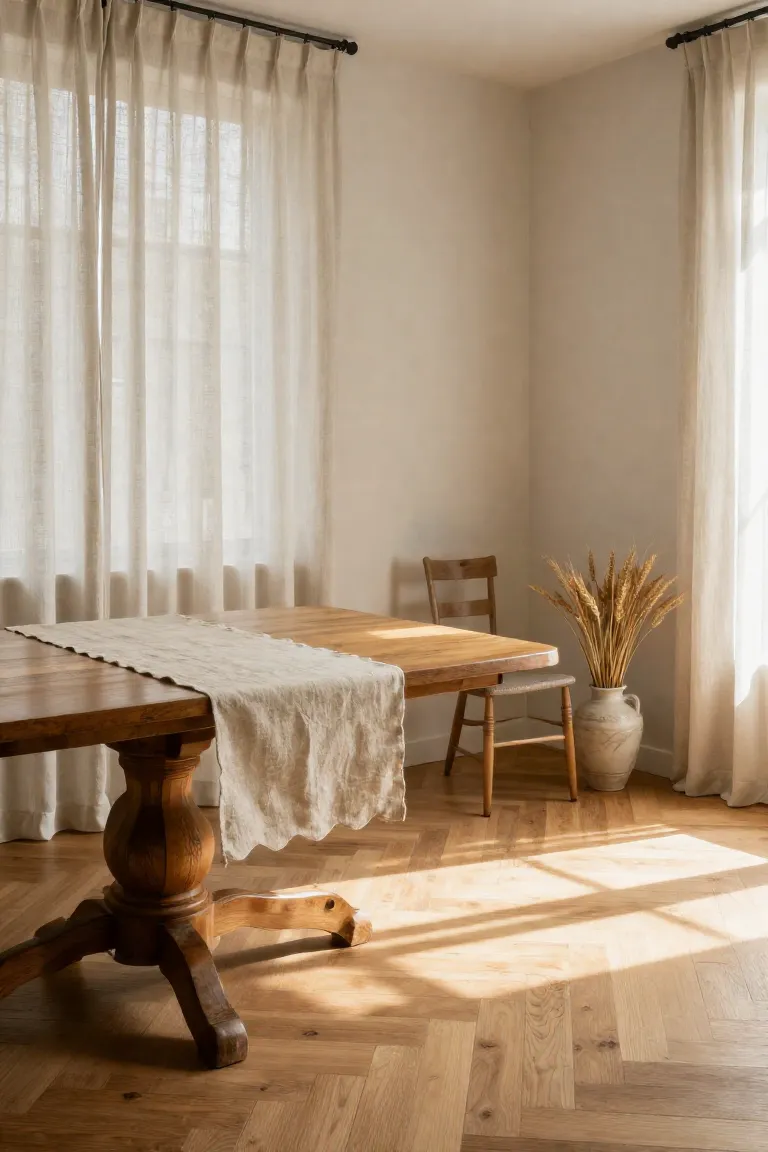
Dressing small windows and dining furniture with substantial unbleached flax brings both practical sound absorption and lived-in softness to a busy city flat. Sourcing textiles woven at 280 to 320 GSM provides the necessary density to hang straight, muffling outside street noise while filtering harsh daylight into a warm, gentle glow. These simple cloth layers channel the calm mood of rustic french linen decor, softening modern rental edges with traditional warmth.
- Size your scalloped linen table runner so that each end overhangs table edges by 6 to 8 inches, creating a soft silhouette that stays clear of seated knees during dinner.
- Install oatmeal linen cafe curtains on slender brass tension rods set at 45 to 50 percent window height, ensuring street privacy while preserving open sky views above.
- Select untreated vintage window treatments with raw scalloped hems, which frame daylight with subtle curves instead of stiff industrial lines.
- Wash your linens exclusively in cold water on a gentle cycle and air dry flat on a rack to avoid unexpected shrinkage or premature fabric pilling.
Because quality linen fibers soften naturally with every wash, these simple additions continue to gain comfortable character over time.
Antique Framed Herbarium Botanical Pressings with Distressed Oak Moulding
Bringing garden elements indoors can quickly eat into table space if you rely solely on potted greenery. Hanging preserved botanical specimens on your walls delivers that quiet connection to the countryside without taking up a single square inch of your sideboard or windowsill. These understated frames serve as charming cottagecore apartment wall decor, giving bare rental walls historic texture while keeping table surfaces completely free for everyday use.
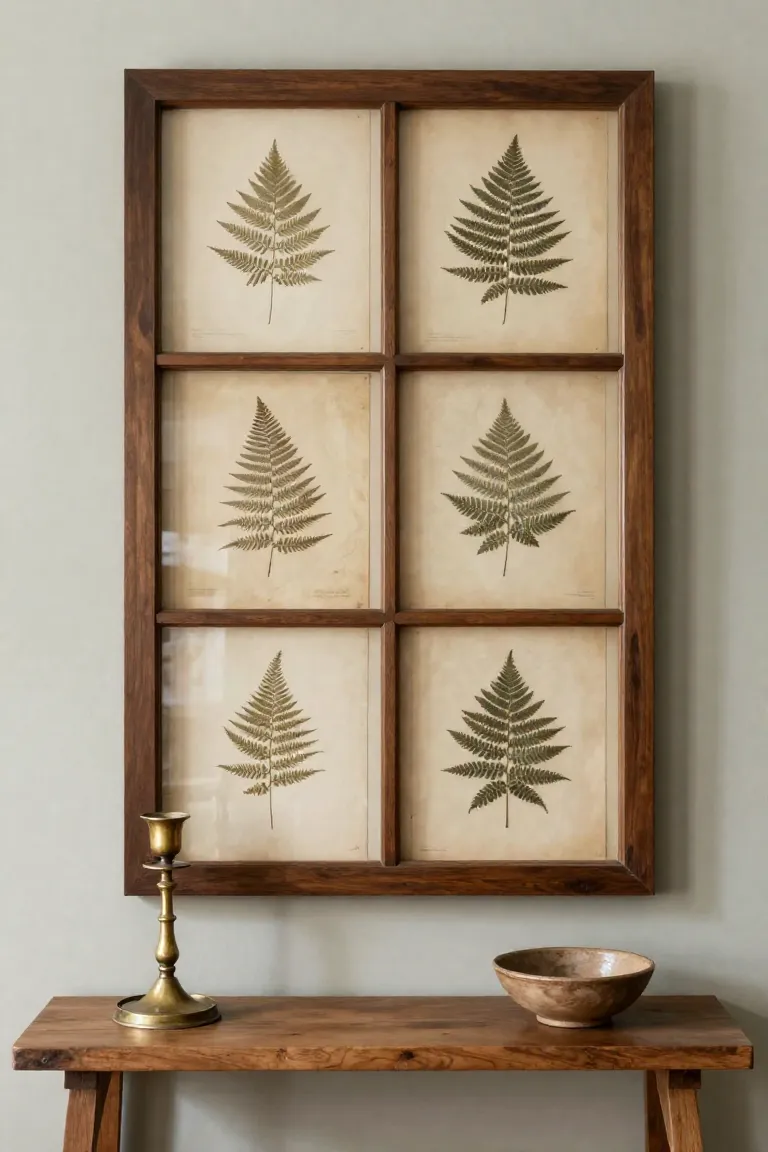
- Source authentic 19th-century herbarium sheets or antique pressed fern prints mounted on durable 100 percent rag cotton paper for rich fiber texture and lasting durability.
- Fit each specimen inside a distressed oak frame backed by conservation glass that filters out ultraviolet light to prevent fragile dried leaves from fading over time.
- Arrange your framed herbarium botanical art in a tidy two-by-two or three-by-two vintage botanical gallery wall, spacing each frame 2 to 3 inches apart to maintain calm, uncluttered sightlines.
The consistent spacing and weathered oak frames bring peaceful structure to your living area, letting aged botanical details shine without overwhelming a small room.
Hand-Carved Primitive Dough Bowls and Salt-Glazed Stoneware Crocks
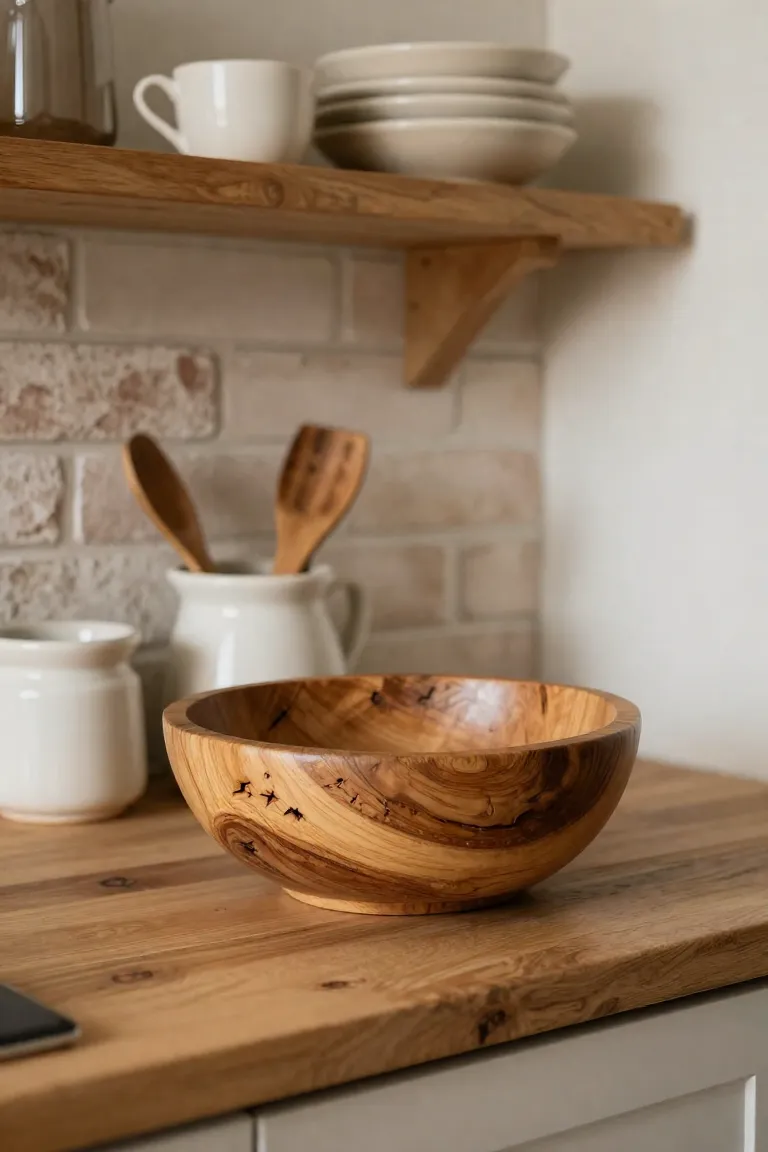
When counter space runs tight in a compact kitchen, authentic containment vessels keep daily cooking tools tidy while lending warm historic character. You can group loose produce, garlic bulbs, and linen napkins inside an authentic single-piece antique wooden dough bowl carved from solid pine or beech. Look closely at the interior hollow for subtle gouge and chisel marks from hand shaping, which confirm genuine age. Avoid salvage pieces that display deep, dark cracks or brittle grain near the rim, since old exposure to standing water and rancid kitchen fats can compromise the timber. You can revitalize dry wood safely by working food-grade mineral oil into the grain, letting it soak overnight, and sealing the surface with a beeswax paste buffed to a soft, satin sheen.
Balance the low horizontal spread of carved wood on your counter by placing a sturdy salt glazed stoneware crock right beside it. A heavy cylindrical vessel serves as a vintage ceramic utensil holder, anchoring wooden spoons and metal whisks upright without wobbling or tipping over. Combining a broad timber trough with a tall ceramic jar creates an appealing height contrast on narrow counters, giving your kitchen the grounded charm of primitive rustic kitchen vessels while corralling scattered countertop gear into two designated spots.
Vintage Hardware Dimension Checklist and Small-Scale Furniture Clearance Matrix
Sourcing vintage accents for a compact apartment requires double-checking exact measurements before you commit to a purchase, saving you the hassle of returns or cramped walkways. A reliable vintage hardware dimension guide and structural checklist will help you verify proportions before bringing architectural salvage through the front door.
- Verify all cabinet pulls and mounting screws before updating apartment cabinetry. Ensure bin pulls match a standard 3-inch center-to-center hole spacing, and confirm the hardware accepts standard 8-32 thread machine screws. Check that drawer faces offer between 0.75-inch and 1-inch clearance depth behind the cup, giving your fingers comfortable room to grip without scraping against adjacent drawer fronts.
- Map your small apartment furniture clearances around dining zones and central doorways. Keep an antique furniture size checklist in your pocket, ensuring at least a 32-inch pull-back perimeter behind dining chairs so guests can slide out comfortably. Maintain 36-inch clear walkways along primary paths, and restrict wall-mounted corner cupboards to a maximum depth of 12 inches to prevent head bumps in tight pass-throughs.
- Inspect wall composition before hanging heavy storage fixtures or salvage shelving. Hollow drywall with standard plastic anchors can only support light frames under 10 pounds safely. For heavier wooden peg rails or iron shelf brackets, locate the wall studs with a magnetic finder or use heavy-duty toggle bolts rated for at least 50 pounds to protect your plaster from cracking.
This cabinet hardware spacing guide keeps your room functionally fluid, proving that period character and practical apartment living fit together beautifully.
Patina Preservation Protocols and Structural Secondary Sourcing Pitfalls
Preserving genuine age requires gentle care rather than harsh overhauls that strip away centuries of character. When cleaning unvarnished pine or oak chests, wipe surface grime away with mineral spirits or odorless turpentine on a lint-free cotton cloth instead of abrasive detergents. Nourish parched timber with a light coat of boiled linseed oil, then apply carnauba paste wax to lock in moisture and produce a soft sheen. If you wonder how to clean unlacquered brass latches and sconces, wash them with warm water and mild dish soap using a soft toothbrush. Harsh commercial metal polishes or ammonia-based chemical dips strip off the deep brown toning and pale green verdigris that took decades to form naturally.
You can avoid major structural headaches by watching for common vintage furniture buying mistakes. During any secondhand wood furniture inspection, check joint undersides for tiny pinholes surrounded by fine, powdery bore dust, which indicates active woodworm infestations. Rock chairs back and forth to test if mortise-and-tenon joints have separated or loosened over the years. On folding tables, check that the iron hinges lie flush and open smoothly without sagging, because severely warped drop-leaf boards rarely sit level without expensive repairs. Applying practical antique patina restoration tips helps you spot salvage gems while walking away from structural dead ends.
Curated Small-Space Sourcing Decision Framework
Bringing rustic charm into an urban layout works best when you follow a steady, step-by-step acquisition plan. Rushing to fill every bare corner often leads to crowded rooms and buyer remorse, so pacing your purchases ensures each piece earns its footprint.
- Secure your primary scale-appropriate dining anchor first. Focus your budget and search time on a flexible antique drop-leaf or gateleg table paired with light spindle-back chairs. Establishing comfortable clearance pathways around your central table ensures your apartment stays practical for daily living before you introduce secondary furnishings.
- Swap standard apartment fittings for high-touch architectural accents. Install solid unlacquered brass sconces, cast iron bin pulls on stock cabinets, and a long ash peg rail along your hallway wall. These durable, touchable upgrades introduce tactile age into your rental without occupying an inch of floor space.
- Curate soft natural textiles and wall botanicals to complete the room. Layer washed oatmeal linen runners across wooden surfaces, hang pleated cafe tiers on lower window sashes, and group framed herbarium specimens on your main living room wall.
This cottagecore decorating checklist turns any vintage apartment sourcing guide into a stress-free project, proving that smart small space rustic design tips depend on patient curation and honest materials rather than piling up decorative clutter.